

🎙️Watch the video episode above or listen below



Also available on all other podcast platforms - find the links here.
✏️ Shownotes
Unschooling is often framed as a choice made for the children, but the changes run deeper than that. Over time, parents find themselves questioning inherited habits, rethinking authority, and arriving at a different relationship with their own values and daily choices.
Cecilie Conrad, Sandra Dodd, and Sue Elvis talk about what it actually looks like when parents let go of the management mindset — the chore lists, the tick-box parenting, the idea that control equals care. They discuss how unschooling reshapes the couple's relationship, how personality traits show up across generations, and how following a child's interests opens doors parents would never have walked through on their own. The conversation covers the fear at the beginning, the patience required, and the slow process of becoming a different kind of parent — not by studying, but by doing it.
🔗 Sandra, Sue and Cecilie's websites
https://sandradodd.com
https://storiesofanunschoolingfamily.com
https://cecilieconrad.com
🗓️ Recorded September 18, 2025. 📍 Åmarksgård, Lille Skendsved, Denmark
See Episode Transcript (Autogenerated)
Cecilie Conrad: 00:00
Welcome to episode eight of the Ladies Fixing the World season three. And I'm not going to tell you what time of day it is because it's not interesting any longer. But I will tell you that I am with Sandra Dodd again. Welcome, Sandra.
Cecilie Conrad: 00:15
Thank you. And with Sue Elvis. Hi, Sue. Hi, Cecilia. Hi, Sandra. It will be lovely to have a conversation with you ladies again today. I'm looking forward to it. We're going to talk about how unschooling benefits the parents. And uh I was confused for a minute this morning when I got up and looked at my calendar because I thought, haven't we done that before? But then Sandra, who remembers things better than I do, said, I think we did, but we didn't actually talk about the benefits for the parents because somehow the conversation was flying in all other uh directions. So here we are again trying to talk about the benefits for the parents, and this time we will succeed, I think, talking about the benefits for the parents. I wonder if any of you ladies have prepared an introduction or a starting point. Or do I go?
Sandra Dodd: 01:10
I can do something. I think um benefits to the parents is a good topic, but the benefits are going to start from the changes that parents need to make to become like good unschoolers. So it's going to be another angle on how unschooling works. That that ends up not with how the kids are doing, but then how the parents are doing after unschooling has come and gone. When we discussed this before, you had also talked about the possibility of us talking about what's required and when you're first starting to unschool, because sometimes people are concerned about the loss of a potential income. Um so uh we could start there about a hypothetical, a hypothetical set of parents who have some hypothetical children who are looking at unschooling because they're not benefiting much yet, they're they're freaking out, they're scared. And I think if what we can recommend that they do to calm themselves and to get unschooling going, if we follow that path, and and more likely because we've all known unschooling families, if we once we once we roll up toward that path a little bit, we can start at the end and say, here are some good results we've seen, and
Sandra Dodd: 02:30
here's how that happened, and work it back. Because that happens with most paths. You don't know, like when a when a grown child has a job, you can look back and see the 15 things that led to that, but you can't start at the beginning and build those 15 things knowing in any way what it will lead to. So it's the same with it's the same with the with parental activity and benefits concerning unschooling because it's not something that kids do on their own, it's something that families do. So it affects the parents.
Sue Elvis: 02:60
I think that's been one of the most surprising things that we set out with our children in mind. I always think of it as this is the best way so they can become the people that they are meant to be. But looking back, I never ever ex looked at it from my point of view that I would change and that there would be benefits for me. So, yes, we didn't jump in thinking, oh, this is going to be really wonderful for the parent. So it's as you said, Sandra, it's looking back.
Cecilie Conrad: 03:34
It's an interesting starting point. It's different from what I had in my mind, and I think your empathy again is sharp. We have to start from the freaking out in the beginning. Maybe those benefits we have to talk about how it doesn't feel like a benefit. It feels like feels like letting go of a lot of options, feels like taking on some pressure that maybe it doesn't always, but sometimes it feels like taking on a pressure and responsibility that you don't know what you're doing. Plus, you're letting go of your career, plus it's your responsibility. It's quite scary.
Sandra Dodd: 04:18
It's quite scary. It's like stepping off a cliff. Yeah. It is like stepping off a cliff. Yeah. And people assume they're gonna plummet to their desk, but they don't. They just find out they're in the same house with the same kids, the sun comes up, now what? So they just need to figure out what to do that morning. And then uh, you know, an hour passes and they think of something else to do. So that's another important thing, I think. And that that ties in with any references anyone has ever heard to living in the moment, to taking things as they come, to responding to questions that the kids have, or living living calmly and happily. And I think as scary as it seems, the parents can't know, and no one else can show them a whole 10-year path and say, trust us, this is what will happen. I I get very jittery when anyone in an unschooling discussion says, I promise you that, or I guarantee you that. It's like, take it back, you can't guarantee anything. So I want to remind anyone who's listening that no one has to unschool and not everyone can. Not everyone who wants to can do it. Not everyone who is being pressured to do it should do it. And it should not and cannot be something that one parent does unilaterally. If the parents are together and they have joint custody and all that, they're a couple. If a good way to find out that you're not a couple anymore is to push an ultimatum, like I want to unschool, and that's what we're gonna do, and it doesn't matter what you want. That's not the way to unschool, that's not the way to make your children happier. So it seems like a negative first step, but part of unschooling is doing it as a family. And yes, there are exceptions, and there are
Sandra Dodd: 06:05
single parents, and I've been accused in the past of saying that single parents can't unschool. I'm saying it's difficult because if you had to give up one of two incomes, what are you gonna do if you have to give up one of the only one you had? And so it may not be an option. And and if I've seen situations where one parent and I've seen many, I've seen dozens of situations where parents where the parents weren't even getting along very well, but they really thought unschooling was a good idea. And through doing that and doing it well and doing it attentively and happily, and seeing it as something that was fun to wake up to, their their relationship got better. I've seen that a lot. What I've also seen is one parent, usually the mom, saying, Well, I don't care what he wants, I'm gonna do this. And then they get divorced, and she thinks that divorce is he's disappeared from the planet, and it's not quite that at all, because very often, and one particular I'm thinking of, he might have been, he might at first go, Yeah, yeah, sure, keep on schooling, that's fine, it's working. And then, in one pretty prominent in those days case I know of, his new girlfriend was a teacher, a very gung-ho professional educator. And you can imagine that that went downhill very fast, the unschooling at the other family, and the kids ended up in school against their will. And it was it was kind of a nightmare. But you know, even worst-case scenario is both parents get new partners. Now it's not that now the fight is not just between the parents of those kids who loved each other very much at one time. It's among four people, four adults, insulting each other, you know, uh trying not to badmouth each other in front of the kids. So there are all of these at the starting gate, people need to figure out is this something we can do as a family? And you might it might take four or five years to ease into it, even if the kids are in school, to get both parents to understand what it is, what the plan is. And if if both of them don't agree, it's just a recipe for disaster. The examples I've used in the past were if uh if the husband wants to buy a really expensive Harley Davidson motorcycle and he didn't ask his wife, because it's not just buying the motorcycle, now it's you've spent all that money, now you're gonna go on trips. Now you need the clothes that go with going on long motorcycle trips. And that's if that's not something the other person bought into every time you she hears that motorcycle, every time he touches that motorcycle, it's more problem. And unschooling could become that motorcycle, and that's not a good idea.
Cecilie Conrad: 08:40
But it can also work, let's just put that out there to it can be really wonderful, but even in the circumstance of being single parents and parents even surviving a divorce, and I've I've seen that and seen it several times. I've seen a lot of single parents on school. Of course, it's a struggle, but it's a struggle to be a single person to provide for a family anyway.
Sandra Dodd: 09:06
It's not gonna be easy, and we can't give the recipe and we can't fix problems that come up. We can just help people see what would be needed to make it work better. And there's always better. It's not here's perfect, here's fail. It's where are you this morning and what can be a little better for today? What can make today more peaceful, more joyful, more learning? And people can work up and up and out from their dark places. But when they do, when they can and when they do, the results can be just amazing. There are people who say, uh my husband and I hardly had anything in common, but then when we were unschooling, we we just saw more of each other. We we got more interested and curious, and you know, started seeing the wonder and whatever what our children were learning, and it brought us together. So I even before we had kids, my husband and I knew that working on a project, working successfully, completing successfully a difficult project can make you more solidly a couple. It makes you a couple separate from your families of origin, that you have these things in common, that you worked really hard to do this, that you had some emergency and you settled it, that your friends had an emergency and you helped them. All of those things build a relationship. And there's almost not a bigger project than you can do than to help your children grow up in a solid environment learning in their own fun ways for years. And it it just changes everyone involved. And that's not what we're advertising when we're saying you want to try to unschool is an alternative to school. It's fun, it's learning without a curriculum. That all sounds so simple, but it the the people who need to be in that environment to be the unschooling
Sandra Dodd: 10:56
adults end up changing, they end up changing their view of their own history gradually, gradually, gradually. Because it's not like we say, okay, now start reviewing your entire life, because we need to disassemble that. But it's just as things come along, you'll consider how your own childhood was or how your own education was, or how you felt when you were 12 or 15. But you don't start thinking about that until you have a child who's 12 or 15. You can't really. So part of what's going on is a gradual review of their own life and beliefs and experiences. And by the time your kids are 12 or 15, you've done that several times over several topics. And parents sometimes share stories of their own schooling and stuff that they hadn't shared before. It never mattered before, it hadn't come up. And so that relationship, as it develops with this focus of peace and learning, can't help but be peace and learning in the parents, too. And it's it's sweet, it's sweet when it happens well.
Cecilie Conrad: 11:58
It's also interesting how when we think about unschooling now, we three, and others who have been unschooling for many years. Of course, it is an educational style, and it's about what the children are learning and how they grow up and all of that. But it becomes very quickly so much more than an educational choice. It penetrates everything because it has this question everything element. Does it even make sense? Why are we doing this thing we think we're doing? All kinds of things that wouldn't normally be considered part of the children's education are affected by this. As you said, Sandra, the relationship between the adults. Um, but also you know, how to plan a trip or or wondering how do we organize our home? Does it have to be like everyone else? Um could be choices of how do we want to work, how do we want to make our money, how do we want to orchestrate our daily life and all these things, maybe how we sit down and eat has nothing to do with the children's education or how do we celebrate birthdays in our family. It's like everything comes up and becomes a subject of just wondering do we need to do it in the way that is the tradition or the standard way where we're living? So being an unschooling family, at least for us, has become a question of how we do everything, not just how we learn. It affected all levels. And I think that's a benefit now for the parents that we became this unit of people who would make choices as to how we want to do the things, why we want to do the things we do, and how we want to do the things we do. I think that's one of the really big ones. How we learn has become such a small part of it and what we learn. Or maybe such a penetrating part of it, because we realized well, we are learning whatever we do, we're learning something. So it it just I can find it a little bit hard when I talk about it on the podcast to stay focused on the education bit because the unschooling is that radical unschooling, maybe I can anyone not radical unschool? How does that work?
Sandra Dodd: 15:13
Yeah, you know, they do because anybody who's still scheduling and requiring and um telling kids what to eat and when, it's not radical unschooling. If all they think I don't like the term education because education is something governments pay for and require, and that someone has to do to another person. So then what I like learning because learning is real, learning is actual normal language and happening, and adults learn, everybody learns. But I think um I'm only personally interested in radical in schooling, but there is unschooling without being radical in school. Okay, I just don't see how that works. So you would I think not very well.
Cecilie Conrad: 15:56
I have a prejudice. Oh, thank God, you're human, Sandra. I'm just wondering because maybe I just can't stretch my mind to it. So if we let go and we say they will read whenever they read, and if they never read, that's probably fine. They will be one of the three people on the planet who never reads and didn't need to learn. Um, if we can let go of that, how can we say eat your greens? Can that happen in the same mind to have that distinction? Only the things they would have learned in school. I let go completely. And everything else, I'm in charge. That makes no sense. Okay, we can't go there because we don't understand it. Radical unschooling is the only way to do it. It really is. And I I mean, I didn't consider myself a radical unschooler until I talked to, so I think it was Erica Davis Pitcher I talked to at one point. Because I think I don't want to be,
Cecilie Conrad: 16:55
I mean, it's strange enough. Why would I put the word radical on top of this? But she said it's radical if you're have the same philosophy with everything. So unschooling without the radical is only for the what would normally have been learned in a school setting. Radical unschooling is if it's everything. So, well, I'm radical then. I'll own it. And I think that's one of the benefits. That's exactly what I was trying to say, not very clearly before, that I have learned. Well, maybe I've done it all along, even before we were unschoolers, but it's just become a bigger thing for everyone in our family to just stop and think. Why am I doing this? Why do I think it has to be done in this way? Am I enjoying it? Could I do it with someone? Could is there a way to do this that makes more sense? Could it wait? You know, ask all the questions around things, elements of life. And it doesn't matter if it's the way my kids are learning to speak a different language or or the way we organize our fridge. It's the same mindset. Or when we go to bed and all these things. So I think that's one of the great benefits, and then one that comes with it is if you didn't already have a leveled relationship with your children, you're going to have to evolve one to unschool. You the whole I know better point of view. What do you call that? Like hierarchical or exactly that one. More coffee before I can say hierarchical. Hierarchical. Hierarchical. I can't say it. I'm not saying it. Top down. I'll say top down.
Sandra Dodd: 18:39
Um I think that's part of de-schooling for most parents is going from they might have a traditional mindset that might have come for their grandparents or great-grandparents that having kids is a way to have more farm help or more help in the house, or babysitters for younger kids. You know, that's sort of yay, more personnel for me to boss around. If to go from that to I some one way or another chose and cooperated in having these children. So I should welcome them. I should try to see who they are, not tell them who they are, not try to build them into a model of something that I thought up in my head. So to be accepting and welcoming of children, that for some people is a radical thought. Is say, wait, I'm I'm seeing that this is another whole person that I invited into the world, and now I have a responsibility to make sure that I don't abuse them or make them miserable. And that right there was not standard thought thinking when I was a kid. So the parents, if the parents depart from schools, they might also depart from occult cultural or family views of what it means to have had a child. But it's not something they need to study, you know, read a big book on and make a big decision about. It's just something that you can gradually step by tiny step.
Cecilie Conrad: 20:05
I think also one of the I mean, another really great benefit is okay, we said the word relationship probably 9,000 times on the podcast already, and now I'm going to say it again. You're going to have a way better relationship with your children in an unschooling setting. You get to be in that relationship and have a really close and powerful journey as a parent. There's no way your children are not going to be the most important people ever in your life, no matter how it unfolds. Those are going to be the most important ones. So, for the parents, the fact that you get to have that relationship, explore it, work on it, um, just all the hours you can put into it, the tight-knit way it works when you have been on all these learning journeys and watched all the musicals and gone for all the walks and had all the conversations and made all the meals and all the things over all the years. Makes for such great relationships and it makes for unfolding the job, let's call it a job, or the role as a parent in a way that makes so much sense and is joyful and present and wholesome. It's not a management project, it's not a list of things you have to tick. Did I do all this? It becomes a real part of a real life, the relationship with the children, all of the interactions, because we're not managing them, because we're not telling them what to do. I don't have a mental list of things. I have to teach my children. I don't have a mental list of things I have to push them to do today to become to be a good enough parent. It could be a toothbrush on that list when they were younger. Now they are just doing those things themselves. But that how I've seen that
Cecilie Conrad: 22:20
mindset. Parents want to do well, and then they have this mental list somehow. I have to read them a story. I have to push them to do their chores. I have to make sure they brush their teeth. I have to make sure they do their homework. Becomes this, you're this pushing person and this demanding person. Some people have a list on the fridge of the things the kids have to do. Some get their allowances, I think is the word. If they take all their boxes, there are all these systems where it becomes this. The parent is the project manager of the children, and that becomes the relationship. Or that becomes maybe not the relationship, maybe that's too hard, but but it becomes a lot of the interactions that you can do.
Sandra Dodd: 23:13
You can prevent a relationship. You can prevent the development of a good and close relationship because it's the parent setting up requirements. That's about rules, which we've already talked about in other podcasts, but it look it's part of everything and control. So if parents are to become good, sweet facilitators of unschooling, they need to step away from feeling like they are in charge of making rules and that they're in control and to look at peace and learning. Because if that's not going to add to peace and it's not going to help them learn, except to learn to do a half-assed job. Because if you say you have to mop the floor, they'll go, okay. I put I got the mop, I put water on the floor, I swished it around, and now I'm done. Give me my allowance. There's no incentive to do a good job. It would be stupid to really, really clean this floor as well as you would because you wanted to. You would be a loser. Because if there's a deal, the parents make a situation where there's a winner and a loser. Everybody loses. Yeah. And so that's the bad thing about requiring chores. Joyce Federal has written some of the most beautiful things about not requiring chores. And all of us, she of the of the three who ran a couple of groups for a long time, she and Bam Sarishi and I all tried to get our little kids to do stuff, and we all separately different ways failed. And in in discussions over the years with other people who had tried and failed or tried and succeeded, but didn't like the resulting unhappiness or frustration or sneakiness or whatever came of it. Joyce came up with some really good writing about if you want something cleaned up, do it yourself. What if your husband woke you up one morning and said, We're cleaning the garage? Five hours, garage now, you mop the floor, you do this, you wipe the tools. You know, you wouldn't like your husband very much. And if he wants the garage cleaned, he should do it, or make it seem fun. That's another thing Joyce said. If you if you make laundry and dishes seem like the most horrible, disgusting, yucky thing you ever saw, nobody's gonna want to help you. You have to make it, you have you have to first see the fun in it yourself, see the happy purpose, the the service that you're doing for others, see it as a gift you're giving to other people, see it as how nice it is that my washing machine's w working and that we have clothes to wash. So even on things like that, the parents can become better people by looking at it through that lens of creating a really sweet, fulfilling, unschooling nest where relationships are peaceful and learning can happen. But it's that can't happen all at once. None nothing can happen all at once, but slowly and gradually, if the parents see where they want to go, they just take one step toward it every time you make a decision. It's like, am I gonna do the laundry now or this afternoon? And then think of you know why? What is what's the advantage to waiting? Sometimes there's an advantage to waiting, sometimes it's better to just get it over or let it run while you do something else. And as parents, instead of saying, I have to do the laundry because it's Thursday, say, okay, is Thursday a necessity or is Thursday a habit? What if we do it when we have two baskets? What if we do it three days before we really need stuff so that there's time to get it through the dryer and get it folded and all of that? So it can be different every time. And sometimes the parents have to recover from their own habits and the voices in their head saying, What why haven't you done the laundry? It's Thursday, you know, whatever they grew up with. That will make them different people and it will help them set an example for their children of how do you decide when and how to do things that need to be done eventually. And sometimes talking through it helps. Like I don't think I'm gonna do the laundry today because blah blah blah, we have to leave this afternoon, but it's I'm gonna put it here and start it in the morning.
Cecilie Conrad: 27:22
I think that's one of the I mean, it's one of the another benefit thing that you you really get to know yourself because you get challenged in these ideas about oh, this is how it's done, or or this is how it's supposed to be, or even when you understand well, maybe this is not how it's supposed to be, but I actually can't handle if it's not like that. So I'm here, I have this personality, and I can't handle, let's say,
Cecilie Conrad: 27:55
a sticky counter in the kitchen. I need it to be wiped, and it annoys me when it's not. Do I have the right to ask everyone to wipe down the can't counter every time they've used the kitchen? No, I don't have the right, but I could have the conversation with my family about which things that would might annoy me so much that I become uncomfortable. And then at some point, you arrive at understanding yourself. What is just something you took with you from your childhood, some idea about it has to be this way, this is how it has to be done. And what is part of, or who you really are, I don't know if that's a term, but what is so hard to get around and change that it might not be worth it? So it becomes this, not that unschooling per se is an exploration of your own personality, because that's not the main point. The main point is to live a family life that makes sense and give your children a different, possibly better education, better childhood. But one really great benefit is that you really get to know who you are in that journey through all the questions about do we need to do it this way? Is there another way? Is there a better way for our family? And you get to know all the family members really well, and you get to know, you know, what really annoys this person, what really makes this person happy, how can we carry each other? That must have been quite the matrix in your home zoo with all the people.
Sue Elvis: 29:27
Yes, um, yeah, because you got uh a lot of people, and each person has a relationship with each of the other people. But when you were saying about um we get to know ourselves and we learn about ourselves, I was thinking about how when we started out, I thought I was a pretty good person. And that actually learning about yourself can be a little bit painful. Uh that when it is that we're not you I I remember setting out and I was going to be the best mother in the world, and yeah, I was um infrared. But there's a lot of pressure online, I think, about how to be a good parent. And a lot of it is that top-down um way of relating with people, and I'm in control, I'm in charge because this I want my children to grow up and be responsible, have a good education, whatever. And I think a lot of people think that means that we have to do our duty as parents. We have to be in charge, and we have to jump on everything that our kids are doing that we don't feel is acceptable. I just think there's a lot of a big following for people online. For people, I think I might have mentioned it before. I've written loads of stories and talked about this story a lot. But there is a woman on YouTube what she was on a few years ago. I always wonder if she's changed her mind about the way she's parenting, but she was encouraging parents to take back control. It was like a movement. We're gonna go out there, take back control. Come on, parents, be brave, have courage. Let's band together. We're not gonna let our kids walk all over us, we're not gonna spoil our children. We're going to take back control and be good parents. And it doesn't matter if they're gonna complain, it doesn't matter if they don't want to be friends with us, it doesn't matter if they don't like us, because this is our duty in life, and there'll be plenty of time later on when our kids are grown up to have that relationship that we're talking about. And I remember one of my girls saying to me, we were discussing this, and they said, Well, mum, by the time uh the kids grow up in that way, uh they've had that sort of parenting, and the parents haven't wanted to be their friends or to connect, they haven't wanted to listen. They've just said, This is the way it is, and this is the way it's going to be, and you're going to have to fall in with what I say. Well, my daughter was saying, what are the chances that you get to the end and some children don't want to be your friend after all, that it's too late? Or if they do, she said, What about all those wasted years? Years you could have spent having a good relationship and enjoying each other's company and getting to know each other and doing things together instead of always having that battle that child against parent. And it's how can you live life like that all the time? And thinking, I guess the only way you think is that it will be worth it in the end. This is what parents have to do. And I don't think it is what parents have to do. That's why I've written some uh um what do you call it? Uh I'm not answering responses to that particular video and that particular mindset. I got all, oh no, no, no, no, don't influence any more parents because everybody was liking it and it was a viral video, and I thought, no, I need to give the other side of it. And um, I don't know if I did any good, but it sort of confirmed to me that we're on that they were on the right pathway, or that we've made the right choices, or I don't know. I'm glad, maybe. Glad that we found unschooling.
Sandra Dodd: 33:58
When people are deciding what path to take, and I don't mean big path, I mean in the moment again, when you step out a doorway, are you gonna turn left, right, or go straight? Or just sit there a while and listen to the birds? Those kind of decisions are made all day, all day, all day. And if you can make those decisions in light of how you would like to be more like, you know, which which way would you like to nudge your life, your mood, your personality, your reactions to your kids, all those things. So gradually you're doing those things. Um I I lost track a little bit. If the parents start being that way with their kids in mind, it's not a very big jump then, pretty soon, that they start giving their partner more slack or their neighbor more slack. Their neighbor has a hobby, maybe, that's piling up a lot of wood by the side of the house or car parts or whatever the neighbor's doing. And they can't just say, Oh, my neighbor's house is looking junky, so therefore I'm that's a bad neighbor. Maybe that neighbor is really sweet and and will take care of your dogs and just happens to have a really cool hobby. So if you have accepted your children's hobbies and your husband's collections, and you've calmly and sweetly accepted that each individual has their own preferences about how clean surfaces need to be, then it's easier to be nice to your neighbor, nice to your husband, nice to your parents, maybe if they're still living and you're thinking, why do you have all this junk? Or why do you have to have the house so clean? You know, why when I bring the kids over, do you get so cranky because they got jelly on the counter or whatever? It's easier to
Sandra Dodd: 35:40
look at that from a from a point of view where you're accepting that people are different, where you're accepting that you don't need to try to control everybody or everything. Uh the counterexample is interesting. This is kind of a side side story, but it comes back to my respect for my own husband. He's not very good at keeping counters clean. But if he cooked for himself, I didn't have to. If he brought me a snack and left and left stuff on the counter, I just think that was a nice snack, and later on I go clean up the counter. There are some parents who will tell their kids, you have to clean up the counter, especially around the toaster, maybe. You know, this is a mess. There are crumbs, there's jelly, there's a knife, blah, blah, blah. So if the kid were to come with a paper towel, wipe the knife, put it in the sink, wipe the counter, put the paper towel in the trash, some moms would come and say, No, you have to use a cloth, and then you have to rinse it out, and then you have to hang it here. And if it got if it was too dirty, now you have to put it in the hamper like this, so it can dry. That's not fun. That's too much control. That's too much rules. So if you go not to what has to be done, but why do I want this done? Why is it good not to just wad a wet rag up and throw it in the corner where nobody notices it for two weeks? Why, why is if the cost of therapy is say $100 for a half an hour and a roll of paper towels is a dollar, let's use some damn paper towels to keep from having to be in therapy.
Cecilie Conrad: 37:12
True, true. And it I mean it unravels from the idea this is how things are supposed to be done. That mindset. Sometimes you hear the argument, I grew up in this way. When I grew up, we did it this way. As if that was a reason to do a thing in a specific way. It's just one way of doing it. And I think the unschooling idea, once you start doing it, you can start doing it around the schooling part. And that's the only part, and you keep telling your kids how to wash their hands and eat their greens and things, but it will unravel. Most unschoolers I know eventually become radical unschoolers. It happens pretty fast. Lots of kids parents come from being radical unschoolers in some way with everything else. And then once they have to put the kid in school, they realize this just doesn't align. Anyways, the counter example. Maybe you grew up thinking you have to teach your children to wipe down the counter and clean up after themselves, and it has to be done in a specific way. That's what how you grew up. It's kind of a routine thing. Um, and you you almost say it or you actually say it, and then you have to take it back, realizing, hmm, maybe you don't have to wipe down the counter. Maybe the counting can be chaotic and gross. And you just wipe it down before you cook the big meal, whatever. It doesn't have to be in a specific way. Why do I think it has to be in this way? And this could be a good example of this makes me really uncomfortable. I do not want to live in a house with the ants everywhere and cockroaches, and that's the consequence of things on the table all the time. So I can't handle that. Either I clean the kitchen every half hour, or I teach my children to keep it safe from bugs. Let's say that's a problem. Fair enough, but you have a good reason for it, and then you start from there. I remember we've talked about this before, how I think you said it, Sandra, how if children want to cook, and it immediately becomes this thing. If you cook, you clean. You have to clean it up. You made that cake, and now the kitchen is a mess. You have to clean it up. That kid is never going to make a cake again, or is not going to anytime soon, because it got this reaction from the parents. And I thought about it last night as my children. I was obviously as always, uh, had too many things I had to do that day, too many people to cook for. I was late with the cook. Quite chaotic, but that's me. It's fine. Um, so I was cooking a meal, the children were preparing a dessert moment for someone's birthday that was going to happen right after our meal. That was only the six, seven, eight of us that we were, and then some people more people would come and have cake and play games. Um, and they were doing that, and then they kind of evaporated. I had three children helping me, and then I had two, and then I only had one, and then suddenly the last one said, I really don't want to do this. Can I just leave? And I was about to say, or felt like saying, No, you have to finish it because I'm so busy and I don't want to do it. But then I learned from my friends here and from my process as an unschooler to say, fine. And it's just so much nicer when they can't, when they actually can say, I'm not enjoying this. And this is not a young child, this is a teenager who can say, I'm not enjoying this. I'd rather do something else. Can I leave? And they'd made the project way more complicated than I would have made it. And they'd used a lot of bowls and a lot of things, and now I had to clean it up. Am I too much ranting about this? It's just that I've learned it's my job to do it. I had the I was I was the one to offer that cake table for that birthday party. And the children, yeah, they wanted to help out, but it was not their project. And it's not that big of a deal if I left some things in the sink, or so allowing for everyone to do what makes sense just makes my life richer in a way. And it's not that big of a deal to finish a process the children started.
Sandra Dodd: 41:29
It might be on the first day. The first day somebody starts unschooling, they might be very resistant to a mess because they don't have the philosophical tools to calm themselves, to see it as a learning experience, to see it as less work to clean up after it than to have stood there with the kids and said, Okay, do this, do that, here's the cup that you need to use, here's the knife to smooth off the flower, you know, so that you're also controlling how they do it, because then you're taking it away from them. So if they do it on their own, they figure it out on their own, but they make more mess than you would have. If a parent is able to look at their children in a loving, happy, sweet way and say, oh, that they must have really had fun. And eventually they'll figure out cleaner ways to do this. And all the time that you're cleaning up after them, you can be thinking sweet things about them. That makes the person, the parent, a better person. It makes the unschooling sweeter, better, richer. But for someone who just came to unschooling and is having to clean up after cake mess, they they may be having all of those voices in their head going, they're just using you. They don't care what you do. This is going to be like this every single day for 12 years. Why are you letting them walk walk all over you? You know, you can. It's possible for a person to just have a head full of voices saying, Let's take back control. You know, don't let our kids walk on us. And that that's that's something that unschooling parents will need to gradually, gradually step away from and don't look back. Don't live there. You can't live there and be a good unschooler. You can't stay where you were. You can't stand in the school parking lot and forget all about school.
Sue Elvis: 43:13
I was thinking about mess there and how sometimes you don't intend to make a mess and how you can get yourself too far into the mess and you just need help or you can't get out of it. I was thinking about um last school holidays when my husband was home. I decided that I was gonna go do a bit of deep cleaning
Sue Elvis: 43:35
around the house. And we have this uh suspended uh saucepan. Um, it's got hooks on it, it's a rectangle suspended from the ceiling, and it's got hooks on. And we put all our pots and pans up there, but it had gathered a lot of dust, and I'd been ignoring it for a long, long time, thinking, oh, it doesn't really matter. And then one day it did get. To me, like you saying about the counters, um, Cecilia, it was bothering me, and I wanted to get it clean. So I started pulling everything down. I pulled all the saucepans down, I got all the hooks down, and then I was just about uh and I got up on the a chair just to clean it all, and then I got overwhelmed by the whole thing, and I thought, this is gonna take me hours. And my husband came in and he said, Sue, would you like me to lift the uh the rack down? I can take it outside and I can hose it down for you. And it was like, oh wow, you you've rescued me from this this task that I chose to do and which I didn't envisage would take me so long and would be so difficult. So he took it out, the rack outside, and he got the hose and he got a brush and he cleaned it all down, and I washed all the hooks while he was gone. We put it all back together again, put all the saucepans up, and then we took the ducks for a walk. And I thought, that's what we need is to somebody to come along and see that we're struggling. It might be our choice to do something, but we've got ourselves in too far, we're in too deep. And isn't it wonderful when you have those connections within a family? Someone comes along and is willing, they don't say, well, uh, hopefully not too often anyway, because I'm sure it's not we're not all perfect, but well, you decided to do this, so you're gonna finish this. I'm gonna go sit on the sofa and read my book. Um, but I will come and help you do that horrible job and get you out of that mess, and then we will go and enjoy ourselves. Um, I'm not saying it always happens perfectly, but um I love how we can work together that way and how you can build up a relationship like that. The other story I had quickly with my husband, I think that when we're talking about unschooling, we talk about uh the children first, and then we've been talking about how it affects all our relationships, our um immediate family, our neighbors, as you said, Sandra. But, and as you were saying, Cecilia, about we have um ways that we do things. And my husband washes the dishes every single night, whether he's tired or not, but he never rinses out the sink. And so he pulls the plug out and he works off. And then all the rice or whatever's in the on the plates, it gathers at the bottom of the sink. And I want to say, well, I used to want to say, but couldn't you just turn the tap on and finish the job properly? And you were saying, Sandra, about um, I can't remember exactly what you were quoting, but how we can give the idea that who who what child is going to want to help with the chores if we're always complaining about, oh, this is such a terrible thing to do. And I think a lot of I've learned a lot about not expecting other people to do things my way and not complaining about them, because just welcome that somebody is willing to do something for us. And I I wrote um a blog post, I was only a few months ago, called Complement, not with an E, not an I. And I was thinking about how we all complement each other. My husband washed the dishes, I drained, I cleaned the sink. My job took less than a minute, his job took him 15, 20 minutes. But we fill in the gaps for each other in a family. We don't have to say, well, you should have done this and you should have done that. We come along and say, Oh, look, he didn't pick up his clothes, look, I'll just pick those up for him and fold them, or she didn't take her clean clothes off the dining room table where I left it. I'll just ferry that down to her bedroom for her, and everything gets done if we all do our little bit, but you have to get over that fact is I'm not gonna do that for you because that was your job, or I'm not gonna do that for you because you should have done it my way, which I think is the proper way, or you, I'm not gonna do that for you because you didn't do it properly in the first place. Um, and I've learned a lot about myself standing back and thinking before I start reacting, and it's helped. Um, it goes it makes more peaceful life when people are willing to listen and help each other in the little ways and not just the big ones.
Sandra Dodd: 48:53
That's a sweet story about the saucepan rack. That was really nice of your husband to do that. That's an easy I think when parents accept uh the differences in their kids too, if you have more than one child and you see, well, they're different, especially if you're living with the other biological parent and you see you can see parts of you and of the other spouse of the other parent in those kids. So they're different combinations of the parents. I think it helps a lot to be more patient with Keith, with their dad, too. When Kirby was born, the day he was born, the moment he was born, he gave me a really dirty look. And it was exactly it was Keith's face. It was the same dirty look that Keith had been giving me. And when Keith did it, I thought, oh, Keith has some serious thoughts behind that dirty look. But when I saw it on Kirby, I totally forgave Keith every time he looked at me like that. It was just their face. Like, like the face of like, what's going on? What where am I? You know that it wasn't meanness. And Marty, as he got older, was so much like Keith the personality. And so when Marty did it, I I thought it was cute. When Keith did it, I thought it was irritating. So gradually, as I got to know Marty more, I forgave Keith. I accepted those same things in Keith, and I thought, oh, he's that's just how Keith is. And when Keith was little, he was probably like Marty, and people were mean about it or harsh about it. And Marty is like Keith undamaged. And so I started that thought made me like Marty so much because I liked Keith a lot, and Marty was like a cute miniature little Keith. And that helped that helped me with the kids and me with Keith. And that was nice for me to just be more calmly accepting of the way people are. And I wanted to say this about wiping down counters and the way people are. I was trying to look just now to find the exact study, but there have been a couple of studies in the late 70s and 80s about separated twins. There's a really controversial one where they purposely separated some twins in New York City. It's not that at all. It's people who were adopted at birth as singles and they didn't know they were twins. And so years later, people wanted to study this, they found the records, they wanted to, so before those people were reunited with the twin, they went and interviewed them. And I think they went and said, You have a twin, and we're doing a study, and would you like to meet him? And but we wanted to, you know, find out how well we're we're studying traits and and heritable, heritable personality traits and people and stuff. So there was one, one that I remember, there were two, and they were both male, the ones that I'm thinking of. And one was about how they organized their closets and what kind of clothes they liked. And they had been not raised together at all, didn't know they had a twin, and it
Sandra Dodd: 51:45
was very similar. You'd think that if they lived in the same house that the mom made them do that, or that they copied one another, then there was, but the main one is a couple of guys, they were in their 30s, I think, and they were super neat, like everything really clean, really well organized. Nothing, if there's something on the table that's parallel to the edge, that kind of like really OCD neat. So when they're interviewing them, one of the guys said, Oh yeah, when they were raised like one in a Jewish family, one in a Catholic family, very, very, you know, there's no cultural justification for this. And so one of them said, Oh, my mom was a real slob, and I just swore when I was a kid that I would never be that way. And the other one said, My mom taught me how to do this. So they were both adopted moms, and the the boys had justified why they were that way by their moms. But it wasn't, it was genetic. And so that's something that people have looked at other times too. The proclivity or the desire to be really clean or really neat seems to be genetic. It's it's uh it's a trait, it's a personality trait more than anything else. So training doesn't help it, shaming doesn't help it, opportunity can help people be, you know, make a bigger pile or or clean up extremely. But that's interesting that that it's that there are things about twins, separated twins, that are more the same than different regardless of their upbringing. I think that's really worth knowing for unschooling parents.
Cecilie Conrad: 53:20
It's very, very interesting. And it comes down to I remember my dad, he said that he'd even read a study about did they find something similar in seagulls, the way seagulls hunt, that they could see that that was a genetic thing. And he used the example one day when I was visiting. I didn't grow up in my dad's house. I grew up in my mom's house, and I was more of a guest in my dad's house. Uh we had a very strong relationship, and one day he was living in when I was a teenager, I think I was maybe 14, 15, he moved to Brussels. I still lived in Copenhagen, so that would be me coming for days. You know, you don't come to visit for an afternoon when you go to another country. So I'd come for a few days when I saw him, and we spent time in them in a different way. It was very nice. And we were making coffee in the morning. And when I open a bag in the kitchen, I'll always take scissors and I'll cut off the entire top of the bag. I don't like that little corner hole thing. I think it makes a mess. I like the whole top off. And I when I close it, I roll it and I use a rubber band. I like doing it that way. I it's organized in my mind. Um, and my dad does the same thing. Cuts off the whole thing, closes the bag by rolling it, and and um puts a rubber band around it. That's his way. And he was like, that's so funny because his wife does it in a different way. And his wife had two children when he married her, he adopted them. And so we grew up as siblings, but we're not genetically. Um here's a that's just so funny. You grew up in a different house and you're doing exactly that thing. I think it's genetic. I think it it's so and I was like, how can it, how can it be in your genes? Genes come from way before there were even scissors or bags with coffee from supermarkets that I had to open. But it makes understanding these things that it's not a moral code, it's not a cultural trade, there's nothing right or wrong about how you wash your clothes or how you study. I mean, we also have, I think it would be nice to circle back to math. There's no there's no real or right way these things are done. It's it's maybe even genetic or a nice chaotic mix of genes, culture, personal story. But it's not right just because this is what makes sense to me, this is what how I want it done. It's just what makes sense to me and how I want it done, and I have to make that work within the framework of who I'm living with. So I get to know me better and I get to know my family members better, understanding this is how they function. And that has to work with how I function. We have to find a way. When I started living with my husband, he had the habit of um he would come home and he would take his coat off and he would leave it on the floor. He would just let go of it and go into his apartment and start doing things. And that annoyed me very much. I had to could you please hang your coat? And he was like, it doesn't matter. When I leave, it's right there on the floor, it's right next to the door, and I'm leaving. I'm not walking there until I'm leaving. And it's there. I need it. When I go, I pick it up, I go. I'm like, what if I have to leave the apartment? Well, I don't care if you step on my coat. You can step on my coat, I don't care about it. You can just step on it, he said. And then we had to have a long conversation. We were young, we didn't understand these things fully at the time. But we had to have an elaborate, long, prolongated, whatever word I need to use in English to make this make sense, conversation about whether I liked to step on a coat or not, or whether I had to learn to like stepping over a coat or stepping on a coat. And how I actually find it uncomfortable to the extent that I find that part of the floor unavailable for me because I'll just avoid it, which almost means I can't leave the apartment without cleaning up after him, because that's how I function. And well, it's been a journey, obviously, it's a marriage. Um, but it's quite interesting how we arrived at a point where it's not about the moral code of coat hangers or are you a better person hanging the coat or not? I see the logic, as long as you live alone, it doesn't matter. But now we have to make these two different ways of functioning in the world work together. And how do we do that? It's a nice challenge, and the more children you get, the more of that comes up. And if you can approach the children that way, there's nothing wrong with a child who wants to do it in some sort of way. It's not a moral code, it's not a standard. It's just here's a person who is functioning in the world in this way, and I don't have to fix that. It's not a problem, it's not like they are some sort of raw clay, and I have to make a sculpture out of it. It's just one way of functioning in the world, and very rarely will that make real problems, or maybe very often, I don't know. I have to think that one through.
Sandra Dodd: 58:42
At Pam Sarushian's house, they had a swimming pool, and the girls would come in sometimes and just put the towel, drop the towel on a car on a carpet or something. It's not good for the towel, it's not good for the couch. And Pam said, at first she used to say, hang your towel up so it doesn't make a mess, and the kids are just not listening to her, right? And if she says, hang your towel up, they give her a dirty look and they hang the towel up. She said she figured out after a while that if she just said towel, they would grab it and put it in a better place. So the the the noise, the justification, the explanation was really irritating. They didn't mind putting the towel up, but they didn't want to be shamed, kind of I guess. But she said sometimes just one word's better. So if you had a kid and you really wanted them to hang a jacket up, you could just say coat or hook. But I think sometimes people want kids to hang up a coat when there aren't any hooks they can reach. So having a low coat rack or low hooks that they can hang things on or help, that's helpful too.
Cecilie Conrad: 59:42
So the question, everything, it is why do we need to hang the coat? Do we need to hang the coat? It's question it again. Like, do we really need to learn math when we're nine years old? It's everything that we think
Cecilie Conrad: 59:55
we have to do that has to be done in a specific way and a specific time or whatever, we have to stop and think that's the unschooling way, that's a base element. Stop and think, does it have to be this way? Question everything is like the headline, right? Right? So if we're having problems with does the kid read, or do we think they're learning, or do they hang their coats? When we come with this, you have to hang your coat. The question, do I have to hang my coat? It's a relevant question. Maybe we just need a big basket and you can throw your towels there, but then you're gonna have to pick out a moist towel next time you go because I'm only washing those towels, let's say, once a week. I'm not volunteering to do it twice a day. So, but you can have these. How do we make this work? Do we have to do it this way? What makes sense? All of these questions. We're talking about the benefits for the parents, and I think this is a great benefit to stop and think, why am I doing the things the way I'm doing them? Why do I think they have to be in this specific way? Is there a better way? Is there a way that works better for our family? Is this just some sort of arbitrary way things are done that I've carried on from generations? There's this story, I don't know if you have that one. Maybe it's a very Danish one. There's this story of how to cook. Would it be a piece of ham? It's a specific meal here. Doesn't really matter. And in this family, there's this way to do it where you cut off two ends and you put it in in the pot and you add um um some herbs and and the water and the salt, and then you cook it slowly over this amount of time. And but some and this goes in the generations in this family, and this is how you cook it. And one day one of the daughters says, Why are we cutting off the ends? And the mom says, I don't really know. My mom told me to cut off the ends and add the herbs and then the water, the salt, and cook it slowly over the stove for this time, and and that's the way we cook this ham. And and she calls her mom and says, Why are we cooking cutting off the ends? I don't know. And she said, Oh, that's what how my mom told me how to do it. And so the story goes. Uh, the grandmother calls the great-grandmother, how why are we cutting off the ends? How do we and she said, Oh, that's because otherwise the ham can't, the pot is not big enough. And the end piece is not very good. So I just cut off the ends and put it in so that it fits in the pot. Obviously, not everyone has the great-grandmother's pot. Could be a different pot, right? You can just cook the whole thing, doesn't matter. You don't have to cut that thing off. But that's a rule that travels through generations, wasting maybe 8% of that piece of meat for many meals.
Sandra Dodd: 01:02:52
The story, the way they tell it here, is that the the granddaughter is grown and she's making that ham and and uh she has and the grandmother came to have dinner with them and she said, Why'd you cut the ends off? She said, Because mom did. Ah, yeah, same story. And the mom says, I cut them off because you didn't, and she said, I had a really small oven and a little bitty pan. Well, same story, yeah, yeah. It is doing it without knowing why.
Cecilie Conrad: 01:03:19
Yeah. So why are we teaching children? Why do we think children have to read when they're six? Right. Why do we think they have to learn math when they're young? Why do we think coats have to be on rags? You have to stop and think. And sometimes it makes total sense, and sometimes it makes no sense. And it's just such an interesting reverse puzzle. The deconstruction of all these rules that we think we have, all this knowledge we think we have about how things are supposed to be. This is one of the really great benefits. It's become so interesting. It's playful playing with what life is. I find it really still really, really interesting. Could we do this in a different way? Would it be more fun? Would it be more peaceful? Would it be more beautiful? Would it make sense?
Sandra Dodd: 01:04:11
The hardest thing I've seen over the years is when a family, I've seen so many families do well. You know, they might not be. It's very rare that both parents are on the same getting to unschooling at the same rate of speed. You know, one's usually more interested than the other one's kind of ignoring it. But when they both get to the point where that they understand it, it starts flowing really well, and the parents are excited about what they're seeing, and that just encourages another wave of acceptance of the kids, acceptance of each other. It's beautiful. Where when I have seen families that can't do that, it's when one or both of the parents are really proud of their negativity, their cynicism, their pessimism. And there are some places, apparently, all of France, according to some French unschoolers I I met, uh, or New York City in the United States, where where there's sort of a culture of being cynical and critical. The first assumption is that everything is stupid. Prove it's not stupid. That's a huge waste of energy for unschooling. It doesn't help. If somebody's young and single and wants to do that for fun, for entertainment, to be sarcastic, to be negative, go for it. But if you want to create a good environment for your children, that needs to go. It needs to go fairly quickly. But anyone who's so sure that that I must be an idiot because I think that people can be happy and cheery and that it's necessary for learning, they go, Well, I have a fucking degree in you know, philosophy or whatever. And I know everything sucks. It's like, okay, okay, look, here's your position, here's mine. I've unschooled kids to to adulthood, and you haven't. So would you be happier if your kids were in school? Let's you just you can't say I'm gonna Be as negative and hateful and mean, and I'm gonna watch the news all the time, and I'm going to tell everybody what's stupid, and I'm gonna be an unschooler and you can't stop me. It's like I can't stop you, but you're about to stop you. So if the if the parents also overcome whatever negativity or fear or irritation that they have been living with, it kind of cleans up their psyche a little bit, which make helps them be better people, helps them think more clearly, helps them see the world without that overlay of dirt and doom. That makes them better people. And one example I've used sometimes is if you were gonna leave your kids for five days, you have some sort of family emergency, you've got to leave your kids for
Sandra Dodd: 01:06:40
five days, and it's gonna have to be somebody you just hired because you don't have a relative to do it. What traits do you want that person to have? Do you want to be patient, cheerful, um, not to be foul mouthed and threatening in front of your kids? You know, how about you know, just a long list, like just in the discussion. What how do you want this person to be? You need to be that way. True.
Sue Elvis: 01:07:05
I was thinking I go back a little. Um you were talking about um learning um about ourselves. And you, Sandra, were talking about um recognizing Keith in your baby, Marty. And I was thinking about we can see other people in our children, but sometimes we miss seeing ourselves in them. I had um a really interesting conversation in a cafe one day with one of my daughters, and we were just you know, not nothing serious. And I the question came up and I said, All right, then we've got lots of children. Which ones do you think are like dad? And which ones do you think are like me? And so she's rattling them all off, and then she said something very surprising. She said, She's like you, Mom. And I said, No, she's not. She's she's mom. And she rattled off a few qualities that I have. And they weren't all positive. And uh, for example, well, they could be positive. I have strong opinions, right? And sometimes I want to be right, and I get a little bit arrogant here and think, oh, you know, she doesn't know what she's talking about. I recognize that in one of my children. But when you have two people who both are trying to be have their opinion accepted, who are telling each other this is the right way, you don't get on very well. So sometimes being alike isn't uh, you don't always get along with the people with the children that are most like you, because sometimes they remind you of uh problem not problems, but characteristics about you, which could be positive, but sometimes uh are difficult. Um another example was when I was a young person, and you're talking about being sarcastic and cynical, I always had to make a joke of everything. Nothing was straightforward. I was hiding behind uh sort of like I'm I'm a funny, witty sort of person, and I'm holding everybody at arm's length, but I'm the really funny, clever one. And I noticed one of my children was doing a similar sort of thing, and it was really irritating me until I realized that that used to be me. And uh it it's uh illuminating, and it makes you accept your children a lot better because of course we want to be accepted as well, and that we work our way through things like this. People can talk to me now, and I look up that strong opinions can be very useful because my my daughter in the conversation, she backed it up with, You've got very strong opinions, you both got very strong opinions. And then she said, and I was thinking that was negative because sometimes I want to talk over people, and she said, Nobody will, when you have decided something is right, nobody is going to influence you, you're gonna stay there. And I thought, well, that's pretty good, isn't it? To have children who are willing to stand up and say, this is what I believe. Uh nobody's gonna keep changing my opinion, I'm not gonna go with the crowd. I believe this, and I doesn't I don't want to hurt you, but I'm gonna say it. I'm not gonna say what you want me to hear. And I guess what I'm saying is that uh not only have I learned a lot about myself, I'm learning a lot about my children because we have those, all that time, I think, all those opportunities to do things with each other, to talk, to listen, to share one another's interests and find out more about each other. And yeah, it's been it has been really, really good. But going back a long way, I was writing a few notes here, but um, I got listening to other things you were saying, and uh my mind moved on. But you were saying, um Sandra, about there's no promises. You can't say, I promise this will happen, and I promise that will happen. And then you said, Cecilia, about the good relationships with our kids. And I think that in a way, sometimes there's no promises that way either. But you do it anyway, the way you bring your children up. Because I well, because it's the right thing to do. It's to talk to people properly, to listen to them, to respect them. But we don't do it. I mean you know, it's manipulative we're not trying to manipulate children so that they're always gonna have a good relationship with us, and maybe I want to come back home, mum, all the um every so often, and I can't wait to see you. I think there's no promises, but it's a good chance that our kids are going to reciprocate what we've given them. So I just was going to say that sometimes like we've talked about it before, unschooling lives aren't fairy tale. They're not fairy tale lives and we still have difficulties. But I think we have that foundation that helps people work through difficulties
Sue Elvis: 01:12:36
rather than saying, you know, well telling people what to do. You're you're working from a different t foundation to get through challenges and difficulties.
Cecilie Conrad: 01:12:47
I also think we have we've made a choice. This is a philosophy, this is a way we want our life to unfold and uh respect. We want our children to grow up in this environment, giving them the space, and on a philosophical note, we I think believe that we do not have the right to steal their hours and tell them what to do, and the right to tell them how everything works and what's right and wrong. We can have some conversations about morals and about being a good person and all these things. But we're not, it's not a top-down thing. This is what we chose because we think it's important and we think it makes for a better life while living the unschool life, while the children are younger, but also moving on into adult life, we believe that that's a better life. It's going to be a better life because it stands on a solid rock in a better way. We believe that. And of course, there will be obstacles, and and maybe even some of the teenagers or young adults will come back and say, You ruined my life by not putting me to school. There's always the risk that they will criticize that choice, and we have to, we're going to have to stand by it. And hopefully we can. We all make choices. Uh, some kids will come back to their parents and say, You ruined my life by sending me to school, and they are gonna have to live with the choice they made. This is just a little more hardcore because we're out of mainstream and we we have to face that we're doing something different, and we're going to have to stand by it. And I think we've been working way more with philosophy and value systems, and standing by who we are and understanding who we are in the context of the society that we live in. That has been a very interesting journey. It's made us stronger as a couple, and it's been spreading out into the children. We have these conversations, and as the children grow up, we have them with the children. What are is really our value system, and how do we how do we want to live our life? What is important? I think this is one of the really great benefits that we learned. All of us has grown stronger, and we're still growing stronger and basing all of our choices and values, basing all of our choices in what we believe is right and why we believe that to be right, and and understanding that there will be sacrifices. There's something we don't do because something else is more important. And then we can stand by it and we can walk through the consequences. There will be consequences of any choice, and we can take the consequences of our choices, I think, in a in a more powerful way, because we know why we did what we did. So I'm paying this price now, but I know what I was aiming for when I made the choice, and I'm getting that thing I was aiming for. So I'm not getting that thing that was not important. And maybe right now that hurts. Right now, locally, this week, it's annoying. But on the big scale, this is what I wanted, and I went for it, and now I'm going this way, and it makes sense. And if it stops making sense, we're gonna have to stop and question everything again and maybe come up with a different philosophy. It's not gonna happen to me, but it could be could, it could. If it doesn't make sense, it's you you have to change course. So, yeah. So that was one thing. Another thing I just wanted to circle back to before we uh continue our day, uh, was the whole thing about learning. We haven't talked much about that today. It's a lot about philosophy, a lot about personal development, a lot about relationships. But if we circle back to the learning journey of the skills and the academics, all the things you learn. Uh, the children learn things. They're little kids, toddlers, and then at some point they're young adults, and in between that we unschooled them. Um they learn a lot of stuff that would normally have been learned in a school setting, or maybe after school activities, like doing a backflip on the trampoline, cooking a meal, speaking a language, doing some math, knowing where rivers in Africa are, maybe. Um I don't know any. Well no, one or two, whatever. France, rivers in France, we've had that one before. So all the things we learn that looks like learning, where you could maybe take even take a test. Um I think one of the great benefits fits as an unschooling mother is I get to be on their ride. I have to walk out of my idea of what's interesting and see the light of new things. And that has been very, very interesting. The youngest is now almost 14 years old. The oldest
Cecilie Conrad: 01:17:56
of my children is 26. It's been a lot of years of exploring with them. I've been reading novels I would never have read. Yesterday I was in the trampoline park. I would never even have walked in there if it wasn't for my children. It's just not my thing at all. Uh, but now I have a month pass, I have a little yellow wristband. Uh sometimes I have nine on my arm because we keep going there all the time. I have a month pass to the trampoline park, only with my youngest. And we go and we do all, and he's amazing. He can do all kinds of things with his body, and I can be over 50 and and uh and have fun. But he's teaching me all kinds of stuff. Yesterday I had to stand up and just fall backwards, no one catching me except for that mattress behind me. Just getting to know, you know, I can't do this. I just can't do it. I I I changed my mind halfway through the move. And so this is a thing I would have never worked with, and it's so interesting to do it. This is just one example of many things, and I think it's a great benefit. I want to circle back to the relation. I'm really trying to stop myself. Obviously, it's really great for the relations to walk with the children, with their passions and interests, understanding it, enjoying it, learning about it, doing it yourself. You're not buying the month past to the trampoline park only for the kid to sit in a sofa outside with your mobile phone, waiting for them to be done jumping. You walk in there with them and you jump with them. And that's the difference, I think, between unschooling and a not unschooling context. That you're part of it. So if one of them has a passion for Legos, you you learn to play a lot with Legos. Maybe you never did as a child, you don't understand what's interesting, but you will learn. And and uh I've learned so many interesting things from different angles in different ways because of my children. It's made my life way bigger academically. I'm trying to separate it from the relation, which is hard. But even without the part that is this is empowering for my relationship with my children, I now know things and can do things that I would have never known and would have never learned if I wasn't an unschooling mom. This is a great benefit to walk outside of your normal paths, outside of your comfort zone, outside of what you think makes sense and find treasures out there.
Sue Elvis: 01:20:29
That makes me think of uh we can share our kids' interests and they can lead us on all kinds of unexpected adventures, but we can also discover our own talents that we weren't aware of. I think it was uh Sir Ken Robinson, I think that's his name, was saying that uh sometimes we don't discover our talents, or our children at school don't discover talents because the conditions weren't right for that talent to um become visible, to develop. And he gives the example, I think, of uh no, one of the Beatles, I think it was, who was told at school that they couldn't sing. And of course, that Beatle went on, and uh whoever it was, Paul McCartney or whoever it was, and became a worldwide star, of course he could sing, but school didn't bring that out. Um he didn't uh he didn't discover that talent. Well, if he thought he could sing, nobody would was was encouraging him and nobody recognized it. And I think that's one of the benefits that I've got from unschooling is that I've had the time and the opportunity to discover what my talents are, the ones that, you know, are part of me. Like when I think of my children, that some have musical talents, some have um maybe athletic talents, whatever it is, but we all have talents as well. And I know, Sandra, you've discovered what you enjoyed doing. You went off and became a teacher, and I didn't have that experience. I went off and did something completely wrong because I didn't have the opportunity to discover that what my real talents were. And that has been so wonderful to have that opportunity and the permission to experiment and to become more skilled in our talent, my talents. And not only that, to use them. Uh,
Sue Elvis: 01:22:40
for example, to write a blog, to write books, to talk here with you today. When I was at school, I was one of the kids that when had speech day, I'd be quivering away, and I would hope the teacher wouldn't pick me to come up the front and give a speech. And it was just torture. And I could never have imagined that one day in the future I'd be sitting by myself with a mic, chatting to the world, or potentially the world, and having no problem whatsoever, and talking here with you today without any real preparation, just talking in a conversation. It's not word for word preparate prepared. And then even I've done some speeches and I've spoken at uh events, and it hasn't bothered me in the slightest, and I've actually really, really enjoyed it. And I think school didn't teach me that. It didn't, it gave me the idea that I was hopeless at speaking. And I have discovered that, hopeless or not, it's something that I really enjoy. And that's half the half the thing, isn't it? That we have the opportunity to do what we enjoy. And if people don't like what I what I do, they don't have to listen. But to have that opportunity to do it has been really wonderful, the permission, the confidence to do things, explore interests and to do things I love. And that's a real benefit. Isn't that probably sorry?
Sandra Dodd: 01:24:21
Well, since it probably your husband, from seeing how well it worked to encourage kids to express themselves however they wanted to, probably found it really easy to appreciate and to be impressed by the things that you were doing. More than if it had just been the two of you for years and years. I think probably the practice that we get responding well to our children it rubs off and makes better marriage, makes a better relationship with other friends and neighbors and relatives. I've seen that. I was nicer to my dog and my cat after I was on schooling because I thought, what does this dog need? What does this cat really want? Why am I ignoring him so long? You know, I can give this dog a half an hour. And I wouldn't have before I would have had that same feeling as that woman saying, Don't let your dog pus you around, you know, let's take control over our pets. Yeah. Sorry, go ahead, Cecilia.
Cecilie Conrad: 01:25:12
No, I was just thinking about the dynamic um of having a general idea, like a moral code, a standard, this is how it has to be done. You have to hang your coat under a hook when you come home, uh, kind of thing. Otherwise, you're a bad person. This is how it has to be done. And it's the same thing. You have to learn to read when you're six years old because otherwise you're stupid. You know, you have to learn to read at that point in time. All these, it has to be done this way, and you enter into your moments in life doing things because someone outside of you, the culture or the moral code or the curriculum, the school is telling you it has to be done in this way, and you have to success looks like this, and you have to succeed, and I'll tell you to what extent you succeeded. All of that, when you let go of that on behalf of your children, you realize that you can let go of that for yourself. And that becomes a whole inner journey of freedom and joy. It becomes, oh, I can do the things that make me happy, I can do the things that make sense, I can do them when they make sense to me to do, in the way that makes sense to me, and the outcome can be an adventure. I can arrive at results that I didn't see coming. And I can define whether I succeeded or not. That whole dynamic gets uninstalled in us. We call it de-schooling, or it's part of what we call de-schooling. That happens because we unravel the structure of the children's life when we start unschooling. That changes a mindset in our own minds. So you can become a public speaker as an adult, even though in school, when you push to do it and someone was telling you when to do it and how to do it, and whether you did it well or not, all of that was ruining that experience for you. But when you start doing things voluntarily because they make sense to you and you wanted to explore how it can be done in a curious and playful way, it completely changes the picture. That is a very big benefit for the adults, but yeah, basically for everyone in the situation.
Sandra Dodd: 01:27:29
I used to be sarcastic too, Sue, when I was in my 20s and I was good at it. And then I just thought one day I said something and it embarrassed somebody. You know, a friend of mine, I really liked him, and and it just was mean. And I thought, oh my gosh. It's like a it's like a verbal sparring tool, like a you know, verbal dueling. And we don't, I didn't need that. It was out, it was misplaced. I was me. And there's no way that sarcasm doesn't hurt somebody or c cut someone or challenge them to zing you back, and if they don't You win and they lose. And so I just decided. I just saw it one day, how how mean it was and how it wasn't helping my communications or my soul. And I just stopped. I told him, I'm really sorry I've been sarcastic. It's not respectful. It's not kind. I gotta stop. And so I just stopped. And if people would do it to me and they expected me to, because I always had for years, I just wouldn't. I I just quit kind of cold turkey being sarcastic, and it was better. But then um, a couple of my kids, you know, the boys when they were in their mid-teens, they did it because that's what kids do. It's a thing to learn. It was a thing to do and didn't hurt my feelings if
Sandra Dodd: 01:28:35
they were doing it. But I knew that they already had that idea in them that it's not good to hurt people's feelings more than I'd had when I was their age. So that wasn't as dangerous a tool with them. And they they didn't, I had just picked it up as a habit, like a tick almost, that I would say something sarcastic. I think that the the example of or the tool of having parents consider what kind of person they want to have taking care of their children is useful and not threatening. Um, another thing is have to, I anytime that I, when I started trying to be, trying to make choices to be a better unschooler and to try to help see that I wanted to help my children make choices, that I needed to set an example of how do you decide when or what or what what to say or do, um, how to react, that I was making myself be the kind of person I wanted them to be so I could be setting a good example. And so I wanted to be soft and sweet and open. I didn't want to be harsh and negative and critical. And it took a while. And I want to remind our any new listeners who are just starting to unschool, it takes maybe years to get the way you want to be. So don't think that if you decide in in you know three months before school starts that you want to be an unschooler, you have three months to become an unschooling parent, because you can't really do it without doing it. You can't you can't study it in advance and then go do it with your kids. You learn it by doing it with your kids. So if you do something or react in a certain way or you're impatient and you feel bad and you're like, ah, I could have done better, say, oh sorry. And then, you know, make that moment better. And then the next time you come to that choice-making moment, make a choice you wish you'd done last time. And gradually that gets really that that seems like it would take years, but the but the more conscious you are of making that choice and not just doing what you think you have to, the sooner you will get a long way from where you are now. I don't know how else to describe that. But I was interviewed by Pam Laricia about things kind of like this a few years ago, and I and I listened to that again today to see what I needed to say today, and I only brought one thing, and it's this exactly what I said last time. It was pretty good. You get to a place by physically getting there, by emotionally getting there, by mentally getting there. So good luck to all the new unschoolers, and I hope that things go well for you, and you see a ton of learning in your kids and yourself, too.
Cecilie Conrad: 01:31:04
Yeah.
Sandra Dodd: 01:31:04
Thanks for letting me tell my stories.
Cecilie Conrad: 01:31:07
I'm grateful for your stories. I will let my final point be with everything unschooling, it's a waiting game. The benefits for the parents. I want to circle back to where you started, Sandra, saying you're freaked out when you begin. You don't know what you're doing, you're letting go of an income. You were on one trajectory and now you're changing course. It's overwhelming. It doesn't feel like it could potentially, some people just feel relieved right away, but potentially it doesn't feel like a great benefit for the parent, for the mother or the father. They just feel a lot of stress and pressure and confusion and don't know what they're doing, and maybe there's financial problems as well attached to the choice and all of that. With everything unschooling, it's a waiting game. Things take a long time. You can immediately have the benefits of feeling like it's a weekend all the time, you have all the time with your children, the pressure of the school is going away, all of these things are immediately immediate benefits. But these things we've talked about today: the deepened relationships, the awareness on values and moral code and cooperation, and the curious, playful, adventurous journey into how life can be, playing with it, being happy about it, finding new ways. As a habit that just takes time. Learn a little bit, wait a little bit. I don't know, I can't remember your motto.
Sandra Dodd: 01:32:52
But patience, wait a while, read a little, uh read a little, try a little.
Cecilie Conrad: 01:32:58
Wait a while. Yes. Wait a while, watch. Watch. Yeah. And the waiting part, the patience part is really important. Yeah. Those are my
Cecilie Conrad: 01:33:10
final words for today. If you have any, so wrapping up and anything.
Sue Elvis: 01:33:15
My final my final thought is that it might seem uh forbidding or you might get anxious, but from all our time unschooling, so many times I have encountered unexpected adventures, things that I could never have dreamed of have of happening. I've gone places well, not not always on my own, but with our family has gone places we could never have imagined. And you just don't know what's ahead. And um, I wouldn't do anything different. It just you can't imagine. But once you get the courage to set out and go slowly, and a point on that one is I think we never actually get there that we're always going to be learning. We're never going to get those ourselves uh perfect, we're not going to get our education or what learning, we're not going to learn everything, but we're always moving forward. And yeah, unexpected adventures ahead of people. And that has been one of the biggest um advantages um to unschooling for me. Great.
Cecilie Conrad: 01:34:38
So what a beautiful wrapping up of today's episode. I want to thank you for being here with me. It was been a lovely conversation.
Sue Elvis: 01:34:49
Thank you, Cecilia. I always enjoy chatting with you and Sandra. Yeah, it is fun.


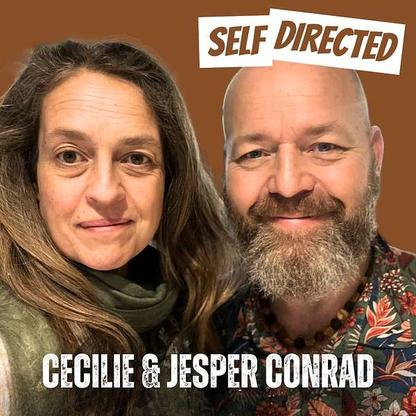




Comments