
🎙️Watch the video episode above or listen below



☕ We do not run ads, so if you like what you hear, please support our podcast: Buy Us a Coffee
✏️ Shownotes
Have you ever wondered what it would be like to leave the hustle and bustle of city life and embrace the wild?
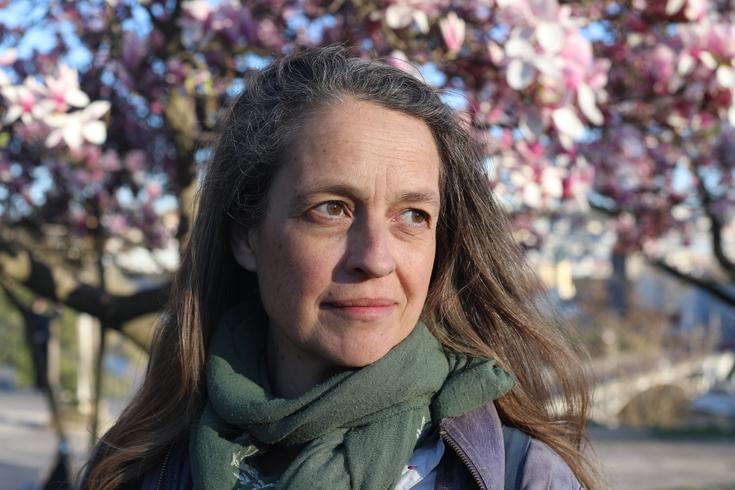
This episode features an incredible conversation with Lucy AitkenRead, a nomadic adventurer who shares her family's journey from London to off-grid living in New Zealand.
Lucy AitkenRead is a mother, activist, bestselling author, and an unschooling advocate and runs Disco Learning.
After living in London for years, Lucy and her husband felt the desire to break away from societal expectations and fulfill a deeper calling. They drove off in a van and explored Europe before settling down in New Zealand, where her husband is from. Lucy shares her story in her book: '30 Days of Rewilding’, which is a collection of daily readings that will inspire families to fall in love with nature.'
We dive into their experience on the road, the balance between work and family, and the lessons they've learned along the way.
We also tackle the topic of unschooling, discussing the need to dismantle the traditional school system and empower children to thrive outside of those institutions. Lucy offers her insights on the social implications of unschooling, the healing potential of this journey, and the systemic injustice it seeks to address. This conversation will challenge your perspectives on education, relationships, and what it truly means to live a fulfilling life.
We hope you will enjoy this episode and be inspired to follow your own calling, even if it means breaking away from societal norms and expectations, stepping outside your comfort zone, and creating a life that aligns with your values.
- Unschooling course: https://discolearning.com
- Blog: https://lulastic.co.uk
- Facebook: https://www.facebook.com/LulasticAndTheHippyshake
- Instagram: https://www.instagram.com/lucy_aitkenread
🗓️ Recorded February 15th, 2023. 📍 Palermo, Sicily, Italy.
Click to open/close Transcript(Autogenerated)
Jesper Conrad: 00:00
Okay, Lucy, welcome. Can you start out by uh letting us know where you are right now? In your van somewhere.
Lucy AitkenRead: 00:11
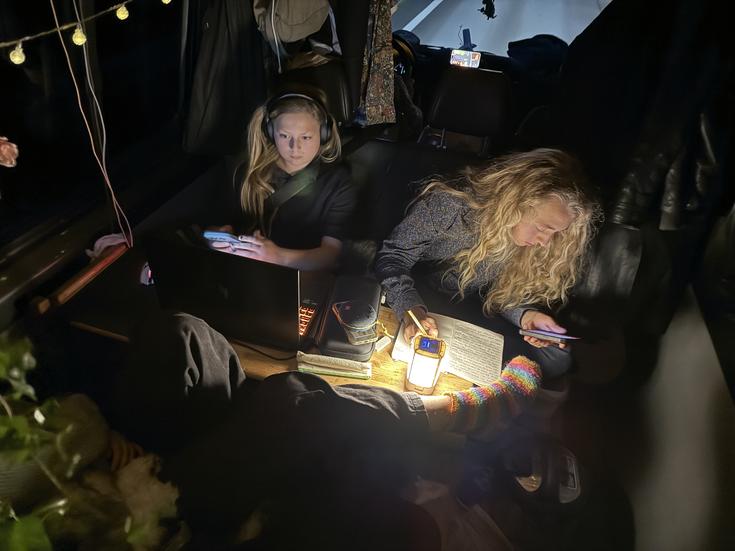
Okay, right now in this moment, I'm sitting in my van, our Adventure Wagon, which is an EV that we converted into a camper van. And we're parked on the side of the road on top of a hill outside a little valley where we have our land. So I've left my family finishing off their sweet corn and potatoes for dinner. And I've just driven up the hill because we don't have any internet on our land.
Jesper Conrad: 00:41
And and uh how I knew that's just like I I feel your fear. Yeah, I I would uh have placed you at on top of the mountain, but you can't do it. No, no, I'm not good without Wi-Fi.
Lucy AitkenRead: 00:54
But but it it for the people who don't know it is a little bit discombobulating at the beginning. I think it probably took a week to get used to you know not having it because we've actually been living in a town. We're in a quite a nomadic phase of life at the moment. So um we we've been on our land for eight years, but then we spent the last year living in a little town, and we got very, very used to very fast internet, and all of us enjoyed it so much and that then when we came back to the land this summer, it took us a full week to sort of mentally adjust. Um, but it's actually been so amazing, it's been like a a vacation for your brain. Um, yeah, so I don't know. I it it's been a really interesting um two months without having the the internet really. I know I've been incredibly annoying, like trying for you guys, trying to get hold of me for a podcast.
Cecilie Conrad: 02:00
Well, I haven't felt that you must no no no no, it's fine.
Jesper Conrad: 02:04
It's me doing the scheduling. No, no, no. Um no, I when we started this nomadic life uh ourselves, uh, part of me was like thinking, okay, then uh I don't work all the time, and then I I just decide when I want to work, but I felt actually that I ended up being online most of the time, uh, and which was kind of stressful. So part of me can understand um maybe a future I can see myself in where we have no Wi-Fi at from time to time. Now we are in a van and we have limited uh Wi-Fi. Right now we are in a rented Airbnb, but um, I actually like that the dedicated time now. I work, now I don't work, it's actually nice.
Lucy AitkenRead: 02:51
Yeah, that's what I love about it. So I obviously still have to work, but I'm reliant on the library hours. So I have to do my work in a public space. So then if I need to run a course or a workshop, it is a little bit hectic. I have to ring around friends and try and find um office spaces where there's not going to be other people around. And um, you know, it there is a component of stress about it if your livelihood is based online. So um, yeah, it's a real interesting balancing act, I think, where, you know, if you want to have a really fulfilling livelihood as you travel and adventure, um, you know, you it does come with a certain need to be really flexible and and quite resilient with how you're gonna do things.
Jesper Conrad: 03:47
Yeah, and and uh I would love to go in to for people who don't uh know you uh and your story to hear that. But first of all, I need to give a greeting from our fellow friend Martin, Martin Cook, uh and Charlie, uh whom we met through the uh World School Summit in Granada three years ago, and I just met him and I just love his wife. I've only been together with him for a week, but I was like, that guy, I want to talk more with him.
Lucy AitkenRead: 04:19
Yeah, those two are amazing, aren't they? You can imagine what we're like when we get together. We just do not take a breath of air. Yeah, so we have known them for a really long time, since before um even our second children were born. Um, their eldest daughter and my eldest daughter um were firm friends when we lived next door to each other when we were in London. Yes.
Jesper Conrad: 04:48
And that's kind of lubing us into the story. You came from London, now you live in a yurt in uh New Zealand.
Lucy AitkenRead: 04:57
Yeah, so um it's not totally as bizarre, or maybe it is, when you realize that my husband Tim is a New Zealander. So I feel like that takes off a little bit of the bizarress of it. Um the yurt thing is still, you know, a little bit of a cliche, I think, moving from the big city of London to Yurts. But um, yeah, we just really felt a call to back to nature, you know. It is really, whenever I talk about it, I do make myself cringe. I'm like, oh, it's so cringy. How stereotypical it is, you know. But I think maybe not stereotypical, maybe it's archetypal. You know, there is an archetypal theme to what we've done, which is humans, you know, getting really caught up in what you're supposed to do and fulfilling all the things that you do, you know, school, university, great job, uh, mortgage in the city, um, big commute, and then having a kind of bit of a shake up for us, it was just having children and considering what life we wanted to create with our kids. And then, you know, when you have that shake up, really considering do we want to stay here? Do we want to keep picking all these boxes and being normal? Or are we willing to throw all out the window and see what can develop? And for us, the pull was a was totally wild. It was a it was a call back to nature to like rewild ourselves. And um, we didn't know what it was at the beginning. We just sold our house. We had gone halves with my parents on a VW Westphalia. So we traveled around Europe for uh six months with our family, just being totally open, like wondering what is this we're feeling? What is this call? What shape is it gonna take? We had no idea. We just traveled around, bummed around, and eventually after about a year, bumming around. That's the best phrase. Having no idea what we're doing.
Jesper Conrad: 07:17
Yeah. We have been doing that for five years.
Lucy AitkenRead: 07:21
So good. I mean, we're we're actually heading back into that state right now where we're like, you know, we've had these eight years of pretty firm stability building this off-grid farm and yurt life in the wild in New Zealand, but I don't know, we're feeling a similar kind of call at the moment to maybe something a bit different. And so, yeah, at the moment I'm like, is it just a state of being? You know, and you're saying you've been in it for five years, right? Obviously.
Jesper Conrad: 07:56
We we started out with buying a big red, a big red bus, uh, and with the idea to roam Europe in it, but a bus is really big, so we ended up driving it to Spain, and then it ended being kind of a tiny house there, and we bought an extra car to uh at VW to roam the lands, um, and now we have a bigger car.
Cecilie Conrad: 08:19
Um, yeah, it's been a process. It's been a process. First the bus was too big, and then we got a van and it it worked, but the children grew really fast, and yeah, it became too small, and now we have vans big enough. And I think we we just have to reinvent ourselves all the time. And yeah, we considered this should we just get some land and figure it out and buy a small place somewhere and just change location. We had like similarities in Copenhagen, great life there, and it was just not enough. But I think we could just never decide. It was like not and at the moment at least, it's really fulfilling for us to keep change to sometimes feed right now. We're in a big city, we're in Palermo, Sicily, and and enjoying art museums and cafes and and concerts and archaeology, whatever. Very, very over stimulating because it's only five days, but we have all the big city experience, and and then we'll go to the countryside and look at the horizon for a while. It's just with no Wi-Fi. No, oh no, my husband can't do without Wi-Fi.
Jesper Conrad: 09:43
I'm not I'm not there yet, I'm not there yet. Maybe one thing.
Lucy AitkenRead: 09:47
So, do you think um you a big part of being okay, so being five years into it? Do you think um a big part of it is um as long as you're finding fulfillment with what you're doing, and as long as it maybe feels like a choice, you know, we're choosing this state of um nomadic. Would it be nomadic? Nomadity, you know. Um I don't know what you want to do. We're choosing a nomadic state for this season in our time. Do you think that's the point where you can take a big breath and feel okay with it all? Or do you still have moments of what are we doing?
Cecilie Conrad: 10:31
I think I've had moments of what am I doing probably my entire life, but it got really worse when we started unschooling. Uh, because it's a big responsibility to have children, and it's a big responsibility to call back um, well, yeah, the responsibility and say, okay, I'll make the decisions. So when we stopped using other people to help us take care of our children and educate our children, we started really feel the weight of this responsibility. So sometimes we have dark moments and feel like shit, we fucked everything up. I used a lot of swear words in one sentence there.
Jesper Conrad: 11:12
Yeah.
Cecilie Conrad: 11:13
Uh hey yo, Americans. I'm sorry. Um, okay, but we really do feel that with the swear words sometimes. But it it gets more and more rare, and we get over it and and we realize it's just part of doing something radical that they're not so many people out there doing the same thing. You have no mirrors basically, and and sometimes obviously the doubt will eat you up in the darkest moments of the night, and and then we have some great conversations, and you know, we made it a habit to talk to the children, as you know, that's actually asked that just talk to them. What do you want? Is this the life you want? Are you happy? And then they always come back saying, We're happy if we get a little more cake, and that's it. Yeah, yeah, yeah. So I don't feel frustrated with our life. It was just the way you describe this, you know, traveling around, thinking about what life is and what to do with it, what do you want? That's kind of what we do, but I'm happy doing it, yeah.
Jesper Conrad: 12:16
But and also, but we have had we have been together for ages, uh, Cecilia and I, but we have lived kind of uh not separate lives, but with Cecilia being the stay-at-home mom, uh then you need to live a life where you put value into your everyday on a not on a much bigger scale than when you just go to a day job where you just get uh the the official society stamp, you are something. Um and comes with the paycheck, comes with the paycheck, you are something, uh, and being a mom is not so much of a job in people's minds. So so I think Cecilia have had a lot more experience in figuring out who she is and her her own internal value than I, who first last year uh cut the ties to um more or less full-time jobs. I've had uh I've collected together different stuff and had it the next two, and now we're in another economic situation, so I can work less, but it came to not a depression, but a frustration and an identity crisis, yeah, and an identity crisis. 20 years of my life, I've been this uh guy going to work, having fancy titles here and there, and working in the media business, yada yada, you know, uh, and then to figure out who am I, and uh first okay, then I can I can actually do nothing most of the time, but that's not function.
Cecilie Conrad: 13:48
But it's also your you know, the way you use the language and call it to do nothing.
Jesper Conrad: 13:55
Yeah, yeah, yeah.
Cecilie Conrad: 13:55
You would say it's to do nothing if you have a conversation with your child, or it's a conversation, or you know, if you plan the meal, or you evaluate the photos you did in Rome last year, or you call that do nothing.
Jesper Conrad: 14:10
Yeah, yeah, yeah.
Cecilie Conrad: 14:10
Which I think is you know the most valuable thing she can do is take care of whatever is.
Lucy AitkenRead: 14:17
Yeah, we it feels like we can all agree that um Jesper that was a very capitalist mindset that you have there.
Jesper Conrad: 14:25
Absolutely, absolutely.
Lucy AitkenRead: 14:29
I'm just kidding, but I know what you're saying. It's like um, you know, you can acknowledge that it feels like doing nothing, whilst also acknowledging that we and we all know that that is life, that is living itself, but you can you're still, and that's the de-schooling process, isn't it? Um, or to go wider, the de-institutionalizing, de-institutionalizing. That's it, you know, so um to go wider, like as we're doing the de-schooling, I don't want to have to keep saying that word, as we're doing the de-institutionalizing of ourselves, we're sitting with that discomfort of going, I know that in these moments this is the living, but also I want to do something, you know, and and I guess that's why it's you know, sometimes I I think of unschooling as being like the sacred path of unschooling because it is such deep work that we're doing as we're like sitting with that discomfort and like actually in real time like unpacking the institutionalization of ourselves and um our our worth and our productivity and what we should be doing, all of the shoulds are basically the institutionalization in our bodies and our in our minds, yeah. Yeah, farming around it.
Jesper Conrad: 16:10
Absolutely, but just and it's been it's been a wild ride this year because I mean we have lived so differently for many people for so many years. We have been unschooling for more than 10 years, we lived in a nice neighborhood, and we were the the weirdos there with Cecilia staying home, a lot of kids, and we never locked our door, and all the others have break-ins, but we didn't, and it was just we were we were the the weird ones off, and um and and but at the same time, I've had this identity inside work for so many, many years. And I actually talked with a friend about it, and he said to me when I was like, Wow, why does it take me so long to go through this? He said, Hey man, chill, you have been in this identity for more than 25 years. Give yourself some time to figure it out. Uh but it actually leads me to to want to talk with you about changing uh being a Londoner to living in this Europe. How was that for you? I know it's now many years ago and life has changed, but yeah.
Lucy AitkenRead: 17:18
Um so I'm a city girl born and bred. I was born in a mining city of Newcastle, um, moved to London when I was seven, uh, lived in cities all the time until I was 18. And then when I was 18, I moved to New Zealand. Um so I think my rewilding began back then when I was um 18 and came to New Zealand. And suddenly, you know, I was with other teenagers who would go to the beach and light a fire on the beach and just leap out around a fire on the beach. You know, it was something that would never have occurred to any of my friends, you know, growing up. So I think the seeds were planted way back then. Then we moved, then I met Tim and we got married and we moved to London. And so we had seven years in London where we had the girls. And that whole seven years we were trying to be wild, trying to honour our like wild selves. So, you know, when we were hanging out with Martin and Charlie, we were we'd get on a train with our bikes and a trailer with all our camping gear, and we'd train into the country and then we'd bike with our trailer and set up a camp in the in the downs, you know, with no internet and no infrastructure, you know. But it just felt like we were having to work so hard to bring the wild into the central place that we wanted it to be while we were in London. So when we gave everything up and and went roaming, it was really about wanting to spend more energy actually enjoying the wild rather than planning to be in the wild. Yeah. So I think it's been it's been a really long journey that began when I was 18 for sure. Um but I think of our time in the yurt as being a total rewilding. Um, you know, it was really on the land here and in the yurt that I reckon I totally got so much of the institutionalization out of my body and you know, learnt things that I just felt I should have learned as a kid about like the moon and the moon cycles and just knowing at any one time where the moon was. I, you know, when we live in the years, I just have that information readily available to me, not because I'm tracking the moon, but because I I see it every night. It's like a really simple relationship that um just forms really naturally without effort when you're actually living that way. And I've noticed that in the town over this last year, I'm still the same person with these wild instincts and this love of this beautiful planet, but I have to work so much harder. You know, I have to go, oh, it's night time. Let me go and look at the night sky and see the stars. And I have to book a camping trip with the girls, and then I have to look around and go, oh God, we've all been online for like four days straight. Let's go and build a fire in the woods. You know, I have to like put so much effort in, whereas when you're really living smack bang in the middle of a forest, it all just is a lot easier and a lot more kind of natural. So that was the bit that I loved about it. I didn't have a choice about whether I was gonna rewild it happened to me. I put myself in there and then it all occurred, you know.
Jesper Conrad: 21:02
Yeah. What you told reminded me of our um our change from a 220-something square meter house in Copenhagen to a bus of 24 square meters, and now we are down to uh seven-meter van seven-meter van with a living space of max 10 square meters, and we are five adults now, five adults inside, and what I love about it is um the less space I have, the more I'm forced outside. Uh I actually love the days in the van because I get it's you cannot be inside five people all the time in this one. Um, and but then we we kind of have a this breathe in, breathe out rhythm in our life, it seems like. On and as we are here limited time, we are out every day seeing stuff, machine bam bam, bam, and then out in nature again and and breathe into them. Um, it works for us right now. What works next year, we don't know yet.
Lucy AitkenRead: 22:14
Um, yeah, that feels beautiful. It feels really like um, you know, the best of both worlds, I think. And um, you know, I I wasn't saying by any means that um, you know, our year our time in the yurts was like the way to do it, because obviously that's so inaccessible for you know the majority of people. It was just inter it's interesting to observe how much effort you have to put in if you don't design your life to be that way, as you know, you guys have. I think tiny spaces are amazing for that. Um, we um in New Zealand it's it's or maybe it's just in our circles. Hang on. Yeah, maybe it's just in our circles. Um, because you know, we have a lot of unschoolism in our circles. And I think one of the amazing things about unschooling is that you know, you question everything because it's such a paradigm shift. Um, you put yourself into such a place of curiosity about everything. You're like, hey, how we do that? Does that make sense? Hey, this doesn't make sense, you know, and you start to like untangle all of the things that don't make sense. And I think one of the things that so often doesn't make sense is putting ourselves in gigantic houses with gigantic mortgages, or actually tiny houses with gigantic mortgages.
Cecilie Conrad: 23:38
So tiny nursing apartments with gigantic mortgages, yeah.
Lucy AitkenRead: 23:43
So a lot of people we know are, you know, they have built themselves little tiny houses, or they're living in buses or caravans and they're perched on their in-laws, you know, lawn, and you know, they're really doing life totally differently. And um, so it is really common around us to um, you know, when we go around to our friends in their tiny house, none of us are in their house. We're all in the garden because that's the only place that we fit, you know, and it just feels um, it feels pretty healthy, that kind of um interaction, I think, with your your natural world.
Cecilie Conrad: 24:22
Well, I think one more thing that really is healthy is the change. That's what I've been observing over these five years of traveling in different styles and different vehicles and different paces and different places and different plans. And is that whenever we change, it's kind of waking up from some habits or habitual ideas, or just something you think have to be a constant, like internet. Um, you know, could I do without this? Or could I do double this? Or what would a day look like if I did that instead? Uh, can I carry all my stuff? And you know, what if we're hungry and there's no food around, or all these things that we just have to handle our physical and emotional needs in in so many different locations and situations and contexts? It really pushes that question everything thing even further than the unschooling, and I think it's very healthy. It it really teaches us as well what is constant, what do we really do have to have? Like massive. Never ever leave the van without two liters of water, for example. Yeah. And something this is a very simple one. Maybe I knew that before, but but I think it it's it's like you said, living in a yurt is not accessible, at least not like within the next two weeks of everyone. Same you could say about being nomadic, but but changing the habits,
Cecilie Conrad: 26:02
that is something everyone can do. Go sleep in the garden or yeah under your dining table and just see what happens because it will change your all of these habits, all these things we do all the time, just because we're used to it. It's like a sleep.
Lucy AitkenRead: 26:20
Oh, I love this. You are talking my language big time. You can probably tell. I was just like, yeah, oh my god, yeah, that's so true. Um, I'm just a huge fan of that exact thing, like change, especially the mornings, I think, like changing your morning and doing something brand new, doing something totally different, shifting your view, um, you know, changing the order in which you do something. And I reckon that is really the real powerful bit about travel. I mean, there's so much about travel. Um, but I reckon one of them is, and I think it's really deep because I think it's related to the question, it's not just like curiosity about everything out there and the way everything is done. It's a curiosity about you. And it's like, who am I? And I think when you have a change and you change your habits, then you are going, Am I this person that does this, that thinks these thoughts, that does this thing this way, and therefore has this attached emotion. And so when you have a new landscape to look at, or you change your morning, you are questioning all the time like, Who am I? What is my identity? What am I clinging to? Why am I acting this way? Could I change it in a totally different way? And that has been something enormous that has happened for me in this last year living in town, has been um a whole yeah, kind of shift in identity, really, um, given an opportunity to um just change things up and change my habits and and allow who I thought I was to kind of float away. Did any of that make sense? Or was I just did it?
Cecilie Conrad: 28:24
Yeah. Just uh, you know, we're doing the same thing, so it's it's a little hard to put in some questions. No, no, I I actually haven't questioned distracted by it was really fast, the end of the daylight in your end of the world. Yeah, has it just gone? It's just gone. And it's just I just finished my morning coffee and you just had sunset, which is I know how it works, but it still amazes me.
Lucy AitkenRead: 28:50
It's weird, isn't it? Soon it's just gonna be my teeth and my eyeball shining.
Jesper Conrad: 28:55
The visual is good, it's not that it's but uh I I have question one question. You've written some books. Um, are they part of like for you to dive into the changes going on inside of you? Um why have you written them?
Lucy AitkenRead: 29:18
Um the books I've written.
Jesper Conrad: 29:22
Yeah.
Lucy AitkenRead: 29:23
Or read. Or read.
Cecilie Conrad: 29:26
Written.
Jesper Conrad: 29:26
Written.
Lucy AitkenRead: 29:27
Yeah, I haven't written a book for ages. There were there was four years there, and I wrote a book a year. And I thought I was gonna keep doing that. Um, but I decided that I want the next one to be like a really big project. And so guess what? I haven't started it. But yeah, I have in mind that maybe my next book would be about unschooling. Um but yeah, I think uh I just love to, you know, I'm just one of those really incorrigible people who when they've done something a bit like helpful, they're just like, I've got to tell the whole world about this. You know, so hence me writing books. And yeah, and in fact, all of the books that I've written, I still do do them. So my first book was about living without shampoo.
Jesper Conrad: 30:26
Which I'm the same, I'm
Jesper Conrad: 30:29
the same.
Lucy AitkenRead: 30:30
You probably don't, yeah. You're great, you're already on that.
Jesper Conrad: 30:33
Joke aside, we we're we're down that road ourselves.
Lucy AitkenRead: 30:37
Oh, yeah, cool, cool, cool. And me too, although I do bleach my hair now, but it's been um 12 years now without shampoo. Um and then I think the last book I wrote was about moon circles, so about gathering in sacred space with women and you know, sharing what's on your heart, which is still really important in my life. And then I wrote a book about the rewilding process. And that for me was a really important book because I was going through this rewilding process, but I was trying really hard to write a book that showed how you could do it in tons of different circumstances, so it's like looks at different families who are doing it, you know, in the middle of the city and that kind of thing. Yeah, but it's about time that I start my big project.
Cecilie Conrad: 31:33
So, how will you go about doing that?
Lucy AitkenRead: 31:37
Um well, the thing is, I guess I I have hundreds and thousands of words all about unschooling because I run these courses and I do um you know an hour and a half, two-hour long workshop once a month in my unschooling membership. And it's like, you know, quite deeply thought out. So every month I'm producing like quite volumes of work. So I think now the problem is you know what to do with it all.
Cecilie Conrad: 32:14
Okay, how to replace it with it, and yeah, exactly.
Lucy AitkenRead: 32:17
And like what are the like the big themes here? Are uh is there any way that these hundreds of thousands of words can make sense in a book, you know? Um, I've also written um I have a a draft of um the memoirs of moving to the yurts and what that was like setting up, you know, our off-grid farm. I've got like 50,000 words in a draft there. But I mean, I feel like you guys probably know what it's like, just having so many passions and so many things to that you want to do.
Cecilie Conrad: 32:52
And so many children. To me, that's the thing that stops all the projects all the time. It's like yeah, but it's the more like acute things to just spend some time with the children. I said we're five adults, we are in physical size, more or less five adults, but they're not adults yet. Yeah, kids. Yeah, so can I choose between writing a book or just having one more good conversation with my son? Then I'll choose the conversation and then uh real life just take over. Um and it stops me from doing these things, and I I keep thinking, well, what's closest to the heart is more important, and and my books keep keep being drafts. Yeah, and I one day, one day it's really dark in your end now.
Jesper Conrad: 33:41
Yeah, we can see the bangs. Can we turn on some uh conduction lights?
Lucy AitkenRead: 33:46
You can just see my shining face. That's brighter than my teeth. Oh dear.
Jesper Conrad: 33:55
Is there some light in the van you can put on?
Lucy AitkenRead: 33:59
Yeah, do you want me to? Are you recording it?
Jesper Conrad: 34:01
Yeah, yeah, we're recording it.
Lucy AitkenRead: 34:04
Oh, like uh, oh right. I didn't know you are. Hello, how's that? Better.
Jesper Conrad: 34:11
Better.
Lucy AitkenRead: 34:11
That's better. Okay, cool.
Jesper Conrad: 34:15
Good enough.
Lucy AitkenRead: 34:16
Okay, you can now you can now see this part of my hand.
Jesper Conrad: 34:20
It's fine.
Lucy AitkenRead: 34:21
It works as well.
Jesper Conrad: 34:22
As we say, it's a it's very chill podcast, so all is good. Uh what was your road into stumbling upon uh unschooling uh and choosing that as a live okay?
Lucy AitkenRead: 34:36
So one of the things that happened for us when we chucked in our London lives and went traveling in the campervan around Europe was that we didn't mean to do that.
Jesper Conrad: 34:47
Back then, sorry, just to set How old? Yeah, yeah.
Lucy AitkenRead: 34:50
So um Ramona was two and a half. Ramona turned three while we were in the bottom of Spain in the desert, and Juno had really just been born. She was three months old. Okay, so um, yeah, that was very interesting because we were also doing nappy-free um elimination communication, which you know was interesting in a van. But um my beautiful Nana had passed away and she had left all of her tenor pads, you know what um elderly people use, they're like gigantic sanitary pads, but um my mum was gonna give them all because they were still in boxes, she was gonna give them to um the charity shop, but I was like, no, they'll be perfect. So whenever we traveled in the van, I'd just put like an old like um tenor pad in Juno's car seat. And so if she did need to go while we were like traveling around, we just kind of went through. So we didn't travel, we were very disorganized. We had so many random things in our van, but one of the things we had was like a massive box of tenopads.
Jesper Conrad: 35:58
Of tenor pads, okay. So that was good. Yeah.
Lucy AitkenRead: 36:03
Yeah, and it worked, it worked really beautifully because um, you know, like you say, when you're living in a van, you're outdoors most of the time, which is obviously perfect if you're nappy free. Um but what happened was that we ended up traveling around Europe and getting all of the ingredients that we were gonna use in the cake of the next phase of our life without knowing it. That wasn't the plan. I just wrote on my blog, um, guys, we're just gonna go and you know, blah around Europe. Does anybody have any cool suggestions of things to do? And then, you know, this was 2010, right? So um, oh no, 2012. So it was the days when you wrote a blog and people wrote comments. Don't think it's super normal now. Um, but and then you would act if you're a blogger, you'd act on the comments. So basically, our entire Europe trip was like designed by the readers of my blog back then. And um, one of the suggestions was to go and visit someone's friend in the Black Forest of Germany, where he was running a Wald Kindergarten, a forest kindergarten. And so we drove in, we parked naughtily for free in the Black Forest, and we woke up at dawn to a rap-wrap rap on the window, thinking it's a ranger because they're quite serious in the Black Forest. You actually can't park there. And um, we opened the door, and it was the Wald Kindergarten uh leader, and he was bringing us pastries for our breakfast, and so that began like a three-week um kind of friendship romance with this leader and his beautiful family and all of the kids in that bold kindergarten. And so we just would go there and just hang out, and our kids would play and enjoy it. Um, but at the same time, I had just picked up in a charity shop John Holt's How Children Learn. So a really iconic book about unschooling, basically. Um, this teacher, John Holt, um, just sharing everything he could see happening in a child's natural learning process. And so while I was reading this book and then watching these 30 children just live their lives of like total autonomy, agency, sovereignty, and seeing the adults just in support role, it was just like an alchemy that just um biased something. Yeah. Yeah, it was the combo, I think. I think um just seeing it in practice might have taken me a few more years of just, you know, thinking about it. And then maybe just reading the theory might have taken a few more books for it to land, but it was the combination of reading the theory and seeing it in front of me that just went like in my brain. And then I just knew immediately that that was what we were gonna do with our lives, and um, it was just an absolute moment of faith, like a Damascus Road experience of being totally pro-school, totally pro-school, to being totally anti-school and pro-unschooling. It was like the difference between night and day in just that one month of my life. Yeah, so we haven't looked back since. Wow, no doubts, no regrets.
Jesper Conrad: 39:47
We uh our story is uh that we lived in this big suburban house, or not suburban, uh big house in Copenhagen, and for some reason, I when we got our first uh baby uh together, then I remember back to my mom's stories about me going to uh like sing play fake in the church uh as baby, so we wanted to do that, and that would I wanted to do that. And and I I went uh once uh twice, and it was terrible. And I succeeded to check it out also, and it was also terrible. But what happened was we met um a woman living down the road was into uh homeschooling and it was uh that's weird. I was on the normal dad mode of that's weird that she was in uh in a private school and I was also that is weird. Down the whole road to now be totally, totally pro uh unschooling and and self-directed.
Cecilie Conrad: 40:57
Um you can be more it's possible to be more radical than you, yeah, yeah. As I am more radical than I'm not very radical. Well, you just still think that you know schools can be good and we should keep the schools, and it's good for some people, but that's more like let's not provoke anyone. Yes, I'm just more into the let's burn it all. I don't I think it makes more damage and then it heals, and it would be a better place if everybody woke up and and all the school buildings were just gone. Yeah, and we had okay.
Lucy AitkenRead: 41:37
This is very fascinating. I used to be like you. I was super stridently like, nah, seriously, the end of school. Like, I am genuinely sad when I'm walking through a town and there's no children. Oh, I'm like, what kind of fucked up place is this? Where we've taken all the kids and put them in some kind of ghetto behind fucking gates, and then the rest of the world continues, and there's no children here. I honestly, it makes me genuinely sad. And when it's school holidays and there's kids everywhere, I love it. I'm a little bit mad that the skate ramp isn't free and you know the museums are busy, etc. But you know, I feel like it's just so natural and normal to have the streets teeming with children having fun and their laughter. So um, you know, I'd be like, the school's down. Okay, and then it might have been some kind of lockdown in our town. But what happened was the schools weren't, the schools were all shut down, and then all the kids were in town, and I think it was maybe like the teenagers, and they didn't really know what to do with themselves. And none of the adults knew what the kids needed either. And so what happened was a kind of vicious circle where the kids suddenly had all this free time and didn't really know what to do with themselves because they'd spent their whole lives being told what to do. And the adults didn't know what they needed, and then noticed the kids, you know, maybe doing stuff that they shouldn't do. And so then was like, ah, you know, they'd be on the Facebook notice board. Oh, I saw the kids doing da-da-da. And then everybody would pile in talking smack about the teenagers. And so then the teenagers were then put in a different kind of ghetto. And it just was like a little moment where I was like, oh, my kind of utopic black and white dream of just like getting rid of schools is out of reach because we haven't done the internal work required as a society. To support our children en masse to live um well without school. So I feel like life outside of school for lots of these teenagers, if we were to just do it right now, today, boom, would be really bad because of the adultism that is so rife in our society that we cannot treat kids well. And it's possible that even in school they're getting treated better than they would if they were like roaming in the streets because of adultism. So I feel like we need to dismantle adultism whilst dismantling schools. Does that make sense?
Cecilie Conrad: 44:45
It makes total sense. And obviously, I agree with you. I'm not, you know, naive enough to think that everyone would have done their inner work in case all the schools burned down overnight. It's just that I'm not I
Cecilie Conrad: 45:01
I don't agree that we need it. I agree, I really think it would be better to little by little dismantle it and put the trust back in life and put the trust back in the children and and allow everybody to unfold themselves and and put the responsibility back into the families, uh, forget about the curriculum, forget about this whole childhood of grades and and uh whole childhood being about preparing you for adulthood in a way that, well, first of all, I don't think it's about preparing for something else. Being a child is about being a child and should be unfold while happening. Uh and secondly, I think this this, you know, you you have to get ready for something. That's what you're doing as a child. I think it's very stressful actually for the children. It would be much better to change this perspective. And and I think it would solve a lot of problems if we could get out of the general idea of schooling, and and that's how I'm radical. I think maybe some children would have had a better life inside a school than they would get in the fictional world where schools don't exist. But in general, I think it would be a better development, and and um things would happen. That's the other thing. If all the children were available, then you know things would happen. There would be this uh artist who would give classes and everybody would go there, and communities would arise, and and ideas would would arise, and and it would be beautiful, I think. And it would think about this this question we get all the time, and I suppose you know it uh by heart. This what about the social life of your unschooled children? Do they have any friends, and how will they manage socially? We get that question all the time, and obviously their so their skills socially um develop beautifully as they they live their life through many, many different social settings, uh, but it is a real problem to find friends. Um well, it is a real problem to find friends who are under 25 years old because they are all locked up in the schools, and it's not because there's something wrong with the unschooling idea, there's something wrong with everybody else being locked up in the schools.
Lucy AitkenRead: 47:32
Exactly. I know that's one of those um paradoxes, isn't it? It's like um it's not hard socializing in that you know they've got hundreds of people to socialize with, but it's like um so many of their peers are not available for playing with because we live in a school fixated society. But everything you say um makes me just feel like um this is why unschooling is so important. And why when people go, oh, it just takes so much privilege to unschool and you know, you're just abandoning the school system, da-da-da. Um to me, I'm like, we gotta zoom out because it does feel like that. I can hear you, it does feel like that for sure. But what unschoolers are doing here is they're creating space for what is possible. And unschooling families and other people following self-directed learning and consent-based learning methodologies are revealing to the rest of society what is possible, what it can look like when kids are trusted, what it can look like when kids aren't forced to do things. And if we didn't have people living this kind of quite privileged life of unschooling, we would never fucking know what it can look like. There would be absolutely no possibility of change occurring ever, because there would be nobody showing what is possible. And so that is why I think we do just have to like suck up the criticism of the privilege because it's and just be like, I'm taking a zoomed-out view here. This is overall really, really critical for society that we have families showing what life can look like outside of an institution. It's critical and it is a huge, huge service to marginalized communities and future generations of children.
Cecilie Conrad: 49:42
Exactly. And that's why I think when I sometimes get the criticism I have a very nice education, and why don't I give back to society by you know for doing a job and paying some more tax and putting my kids in the school and all these things. And I think that it's it's a beautiful combination that I really want to spend time with my children and my husband and live a life based on my heart. Whoever is close to me is what is important and will suck up most of my time. But at the same time, I feel I'm really giving back to our culture by walking a different path. Yeah, I don't believe everyone has to walk this path, but I think it's very important that at least everyone stop to think about it. It's like this automated thing that kids have to go to school, and and there's no question. We decide we can question what school and what is the curriculum and how do we do it, but not do we do it at all. And I think that living this life, sometimes we say everybody else are inside a box, and what we do is poke holes in that box just to let some light in, and and we just keep poking that holes, those little tiny. I mean, we can't change the whole thing, and you can't either, but maybe together we can at least you know open. When we started, at least in our country, it was a really, really rare and radical thing to do. It was like, I don't know, maybe 10 families homeschooling, at least that I know of. It was really radical, and it would have been nice if there was you know someone to follow, someone to look at.
Jesper Conrad: 51:31
But I it it leads me to um a question I often give myself in my life. Um, also in another area I work with. I work with uh an organization called Gaia Education, who makes uh curriculums and education inside sustainability. And when I was there, I was like, this is good, but the amount of people who take these courses and go out and do something, they are like it was three or four hundred years, and that is not changing the world. Uh so I was uh talking with the team who made the programs about what we could do to make programs that could make an actual change if you get an inner city dweller to to to look at life differently. Um and I can ask myself sometimes the same question about unschooling. So, what is I don't believe that uh I'm I would love if everybody went down the road of living freely and living together with their children and wanting to spend time with their children and actually live together with them while they are there and they need them to have a childhood together with your parents for most kids would be wonderful, but I do not believe yet that everybody will go down that road. So, what is it from unschooling and this mindset we have that we can give to and inspire and give to the people who are stuck in the nine to five uh or won't leave it because the comfort is actually super nice, let's be honest.
Jesper Conrad: 53:08
Yeah, yeah.
Jesper Conrad: 53:10
And I don't know is it the trust? Maybe it's the trust, trusting the children, the not the removing the ageism uh or adultism, as you call it.
Lucy AitkenRead: 53:22
Um yeah, I I think I wonder about that. To me, it feels like um the really relevant bit of unschooling that seems to intersect across so many parts is the hierarchy and the kind of the general rule that seems to pervade quite a lot of spaces. Um, is that if you're bigger or more powerful, then you are on top, you know, and I think that one of the basic things about unschooling is that you just don't live that way. You try and live um with everybody in your family counting and everybody getting a say, and you know, and and I feel like that's something that is an internal thing that you can take with you into, you know, whatever sphere you're in, like your work, your business, um your like client relationships, your um community relationships, this idea that every person is um worthy of dignity. Um, you know, so I wonder if that that feels to me like a a really powerful part of an unschooling mindset that is relevant to everyone. Um and it is related to trust. It's like if you can honor every person that you come into relationship with or communication with um as being like really worthy of dignity, then they can also be trusted, you know. And yeah, it's I think there's so much of old schooling that is relevant.
Cecilie Conrad: 55:13
It's a beautiful and very, yeah, I'll say it again, beautiful perspective. I have a more brutal one, kind of. I think that wherever you are, wherever stuck you are in career and mortgage and whatever, at least reach a point where you realize this is something you chose. Like it was a voluntary choice to buy that apartment and to put the children in that school. You had those children, you know, that was not an accident. And the life that we have designed, we actually did design it ourselves, and and we can make a choice. I remember when I had cancer, I thought I'd rather live in my car than ever go to work again. That was one of my epiphanies. It was like, I'm not doing it, simply not doing it. And and most people could do it, it's unschool their kids and quit their jobs, and the price might be like really, really complicated, and and uh maybe they don't want to, but I think this at least realizing that it's a choice, and there is some voluntary, I can't find how to trivilih whatever I can't find the right word in English, but um and and give that freedom back to all members of the family and and taking the responsibility. Tell your 10-year-old, I decided that you go to school because I want to live this life. I want to look at I want to have my job, and I'm not taking the responsibility of your education, so you go to that school. This is what I chose instead of this everybody have to do it, or it's the law, or otherwise you will never get a job, or all these excuses circling around. Take back the responsibility for what you did and how you chose to do it, and maybe you put yourself in a corner that's really hard to get out of and you don't want to do that work, but then decide it and be happy. It's this excuse thing, I think it would be very nice to get rid of. Yeah, yeah.
Lucy AitkenRead: 57:33
I think there is um,
Lucy AitkenRead: 57:34
yeah, it's really interesting. I think that uh an enormous amount of the people uh who engage with me and are like, but not everybody can do this. Um I think yeah, an enormous amount of those are probably people who could do it and who, you know, would just need to make some different life choices and sacrifices to make it happen. I do think that there are a lot of people who are choiceless, you know, because that is one of the they are the spoils of capitalism or or one of the legacies of this society that we live in is that there are actually people in society who and that's the worst bit, I think, is like a lot of the kids that will struggle the most in school are in families who actually are completely choiceless in this, you know, like the families are working every, you know, three or four jobs just to, you know, I'm thinking of, you know, inner city families um who have been marginalized by system. And yeah, I think it's I think it's fair to say, yeah, there's actually loads of like middle class people who like sort of accuse other schoolers for doing something in inaccessible when they actually probably could make it work, um, but also acknowledging that because of the system we live in, there are those who are systemically marginalized who are gonna be the feel the brunt of this. Like that's what is so maddening about it is that um yeah, it's those kids who are not even gonna get a single benefit, you know, from the school system, quite probably, you know. They're gonna be the ones who are leaving age 15 and um you know, with without literacy, uh statistics are showing vast numbers of kids are doing, you know. So school's not even doing the thing that it is like meant to do.
Jesper Conrad: 59:48
It's wild.
Cecilie Conrad: 59:52
When the argument is school is saving the children of the poorest and the most trapped people in society. My take is I don't think it works.
Lucy AitkenRead: 01:00:03
No, I don't think so. I don't think so. Some some of the and an unacknowledgement of like how if you're perpetuating a hierarchical kind of um those who are in authority are the boss and not to be questioned, not recognizing how perpetuating that all the way through the school system perpetuates injustice and poverty across the whole of society as well.
Cecilie Conrad: 01:00:31
Yeah, it's like it's it's just keeping the system running.
Lucy AitkenRead: 01:00:35
Yeah, totally is.
Cecilie Conrad: 01:00:37
Yeah.
Lucy AitkenRead: 01:00:38
Oh boy, we went some places today.
Cecilie Conrad: 01:00:41
Yeah, I think uh you sit there in complete darkness. Can you find your way back?
Lucy AitkenRead: 01:00:48
Like, oh, I wonder what would happen if I put my headlights on. Maybe I'd get more light in here. No, that makes sense.
Jesper Conrad: 01:00:54
No, it's okay, it's okay.
Lucy AitkenRead: 01:00:55
But should we learn?
Jesper Conrad: 01:00:56
Uh no, I'd have with yeah, we a little more if you have time.
Lucy AitkenRead: 01:01:01
Yep.
Jesper Conrad: 01:01:02
Perfect. No, it's just some of the subjects we touch about about what unschooling does for you as a person. So uh in one of our earlier episodes, we talked with uh Erica Davies Petra, uh, a wonderful, wonderful woman. And one thing she said, uh, we asked her about what have unschooling done for you, and she said, It has given me my humanity. Um, and I was blown away by that. It's a beautiful way to put it.
Lucy AitkenRead: 01:01:29
Yeah, that's so beautiful. I love that. Yeah, and um it's so hard to know who you'd be without unschooling when you've done it for so long, you know. Um the last 12 years for me has been just like the most gigantic healing journey ever. And you know, I can't say that wouldn't have happened without unschooling. Um, but definitely the the questions that unschooling has raised for me has led me down the most, you know, tremendous healing journey of of so many wounds and scars.
Cecilie Conrad: 01:02:13
I wish I could say the same. The field is still there, most of the wounds and scars. To be honest.
Jesper Conrad: 01:02:23
I know where they are, but healed not yet, not yet.
Lucy AitkenRead: 01:02:27
Healing, hence I hence me saying healing journey. It's ongoing.
Cecilie Conrad: 01:02:35
At least I know the roadmap for the journey. Yeah, right.
Lucy AitkenRead: 01:02:40
I think um, you know, things like um I began painting again last year and and ended the year with a little um art exhibition in my town. And you know, I was massively motivated to do that, having been on a journey of healing the wounds of creativity that I think school graciously imparted, you know, and and also being really motivated to live out loud the stuff that I'm trying to sort of raise the kids with, you know, around following their heart, even though it doesn't make sense and you're it just feels like you're just randomly splashing paint on a canvas and you don't know what the end result is, being detached and not worrying about failing. You know, I was like really motivated to go on that art exploration over the last couple of years, I think really primarily because of unschooling. Yeah.
Jesper Conrad: 01:03:48
And it it it uh led me to a very small epiphany I got uh last year, which is I really enjoy art. I love going to museums, I love listening to music, I love going to cultural events, and then one day I was like, hey, uh, but somebody needs to make it, somebody needs to do it, otherwise, there is no stuff to go and enjoy. Uh so that's also one of the reasons we have started our podcast. I love to listen to podcasts, and I'm like, but you need to give back then, you need to be uh culture creator for there to be culture. So wonderful that starting uh doing art again.
Lucy AitkenRead: 01:04:30
Yeah, I love that. I um that was the the whole reason I got started with um blogging was um in the the breastfeeding months, and I was spending, you know, what it would be like uh every single minute of the day breastfeeding. And I was reading um just you know the internet, just I had my phone in my hand and I just read blogs and forums and blogs and forums, you know, about breastfeeding. And and I after like a um couple of months of this, I was like, oh, I don't want to be a consumer in this space. I want to be a creator, and so yeah, when Ramona was like three months old, I started my parenting blog, which you know brings me to where I am today. That exact thing, that desire to not just consume but to create.
Jesper Conrad: 01:05:28
And for people, we should we have taken a lot of time now, and we try to keep our podcast around an hour, so we should kind of close up. And one way of doing that is um to let people know if they're like, I want more of Lucy. Uh, where should they go? How do they find you? And uh what can they expect?
Lucy AitkenRead: 01:05:49
Um so I am all over the internet, as you can imagine. Um, I'm mostly on Instagram, but I also just started a TikTok. Which is very fun. I don't know if you've explored that, but mostly Instagram. And then my website is discollearning.com. And if you head there, then you can sign up to my newsletter, which is called Jukebox. And every two weeks I send out a really fun, helpful email that also includes music that I'm loving. Yeah. So I reckon that would be a really that would be the best thing if people want to stay in touch with me is to jump on to the Dukebox mailing list. And eventually I might see some folks in a workshop or a course.
Jesper Conrad: 01:06:40
Hopefully. Hopefully. We want to thank you for your time. It has been a really good and uh lovely talk. And um like always, we yeah, and we hope to one day roam uh New Zealand, and if you're still there, we will drop by.
Lucy AitkenRead: 01:06:56
Yeah, that would be amazing. I I've actually totally forgotten that we're recording a podcast because it just felt like I've been chatting with a friend and I didn't know it was recording, so I I feel like I've just been fidgeting.
Cecilie Conrad: 01:07:10
No, no, no, no, no picking or any other embarrassing.
Lucy AitkenRead: 01:07:18
So it'll be really interesting to see how it turned out, but I've enjoyed every minute of it, so thank you.





Comments