

🇩🇰 Originally published in Danish — automatically translated to English
Vancouver showed a different and less charming side when we did the tourist round. Here is the story of a day we spent as tourists in Vancouver: historic districts that became tourist meccas, the brutality of the fentanyl epidemic, and the liberating beauty of Laughter.
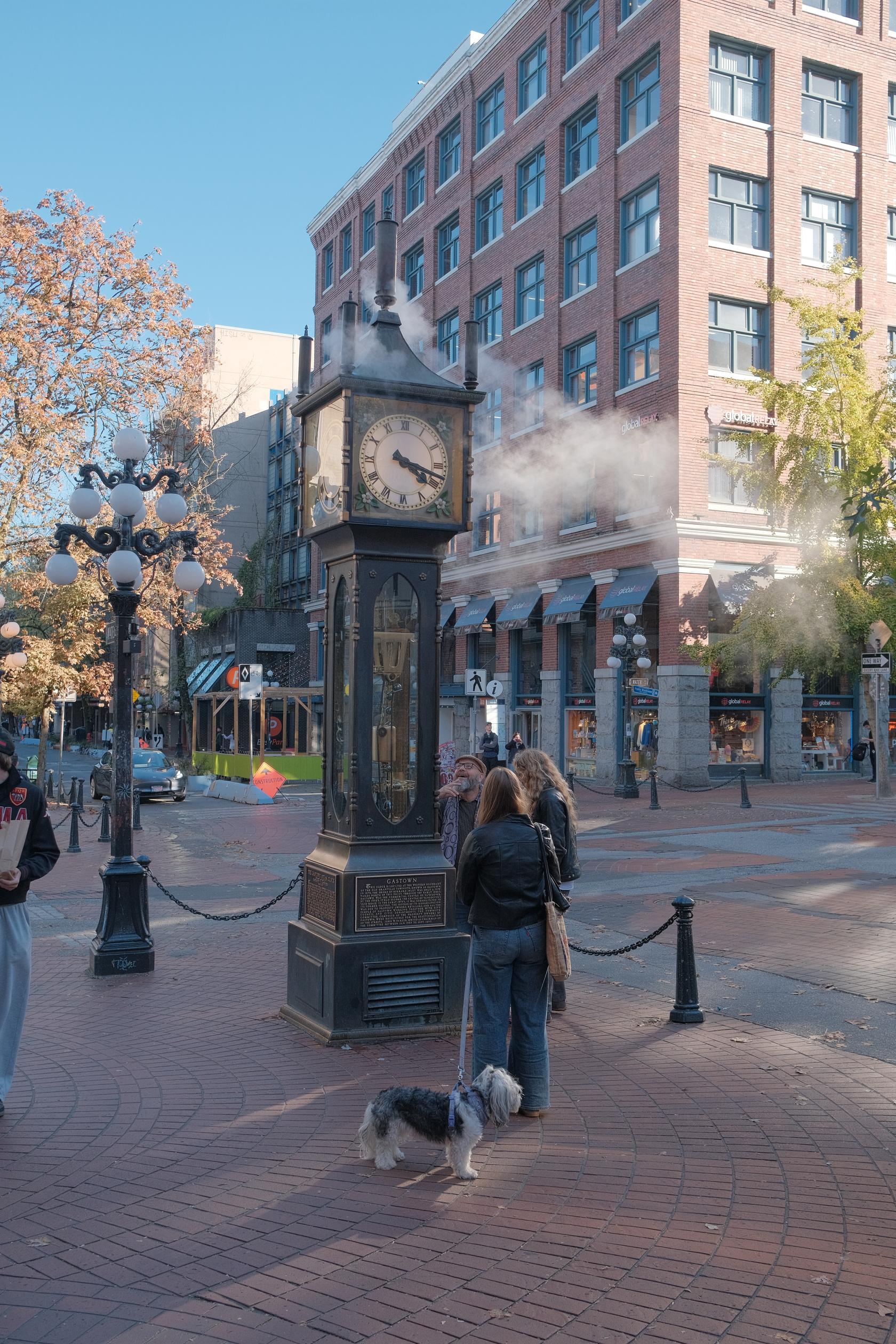
Gastown
We drove to Gastown — the area that grew up at the end of the railway and looked after the many people who built the working bridge between the railway and the harbor in Vancouver's early years. Back then, an innovative trust built a small town on the bay for everyone who would help create Vancouver. And the man who ran the bar, legend says, talked so much he was called Gassy Jack. Hence Gastown.
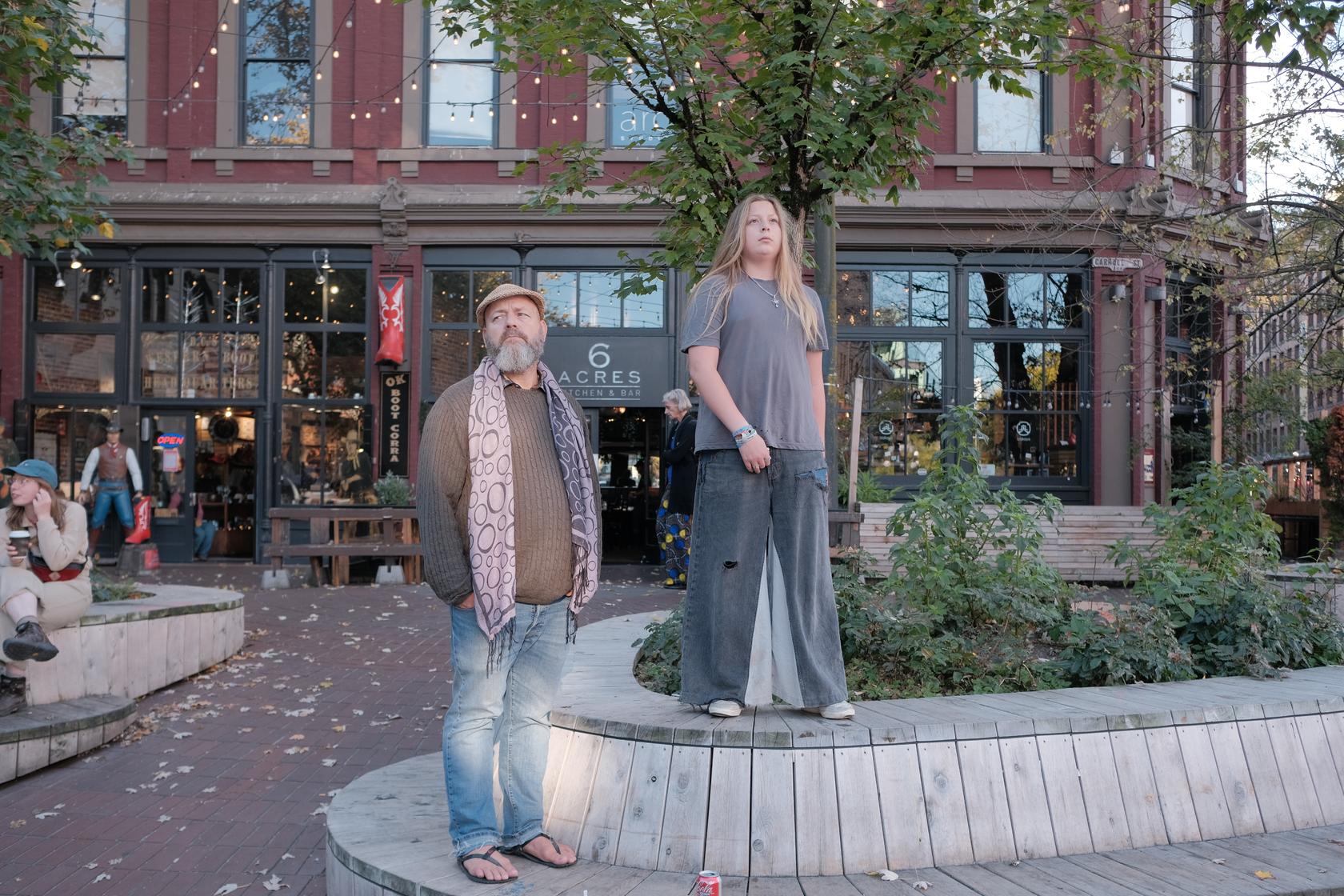
Today, a steam clock stands in the street as one of the tourist checkboxes. Small chimneys on top release steam while the time is counted, and that's nice enough. Behind the mechanics, an electric motor drives the system, so the steam is decoration that suggests a clock driven by a steam engine, and perhaps also—more importantly—points back to the time when the steam locomotive drove enormous change.
Back when there were still enormous cedar forests around the harbor, back when there was no such thing as First Nations people, but rather "Indians," back when the Wild West was truly wild, in Canada too.
Well.
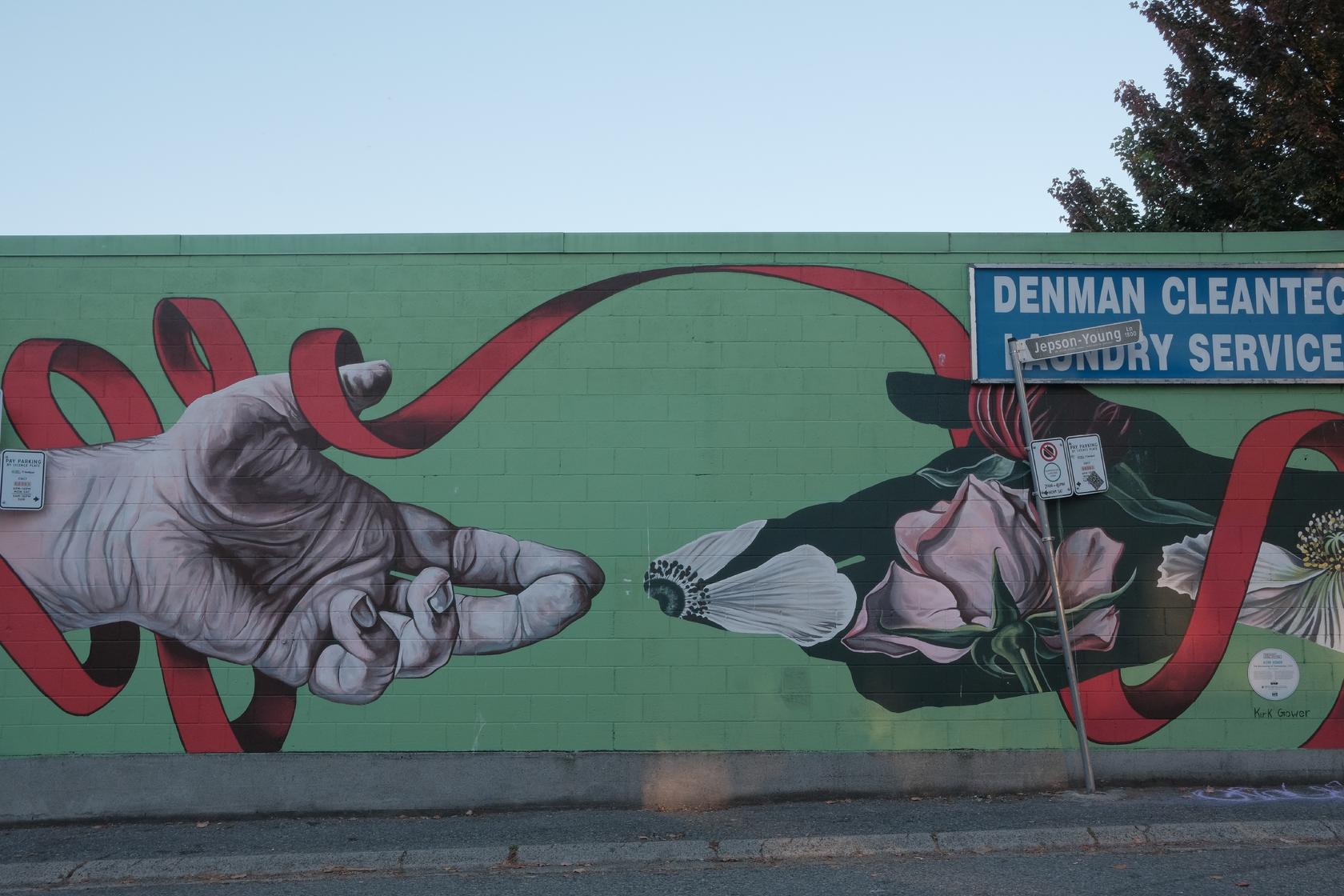
We thought we should see it. Some of what the tourists see. Our road to Vancouver goes by way of people we care about, and as always, seeing the landmarks and quirky little things becomes a side effect of the big picture, the real adventure: the people.
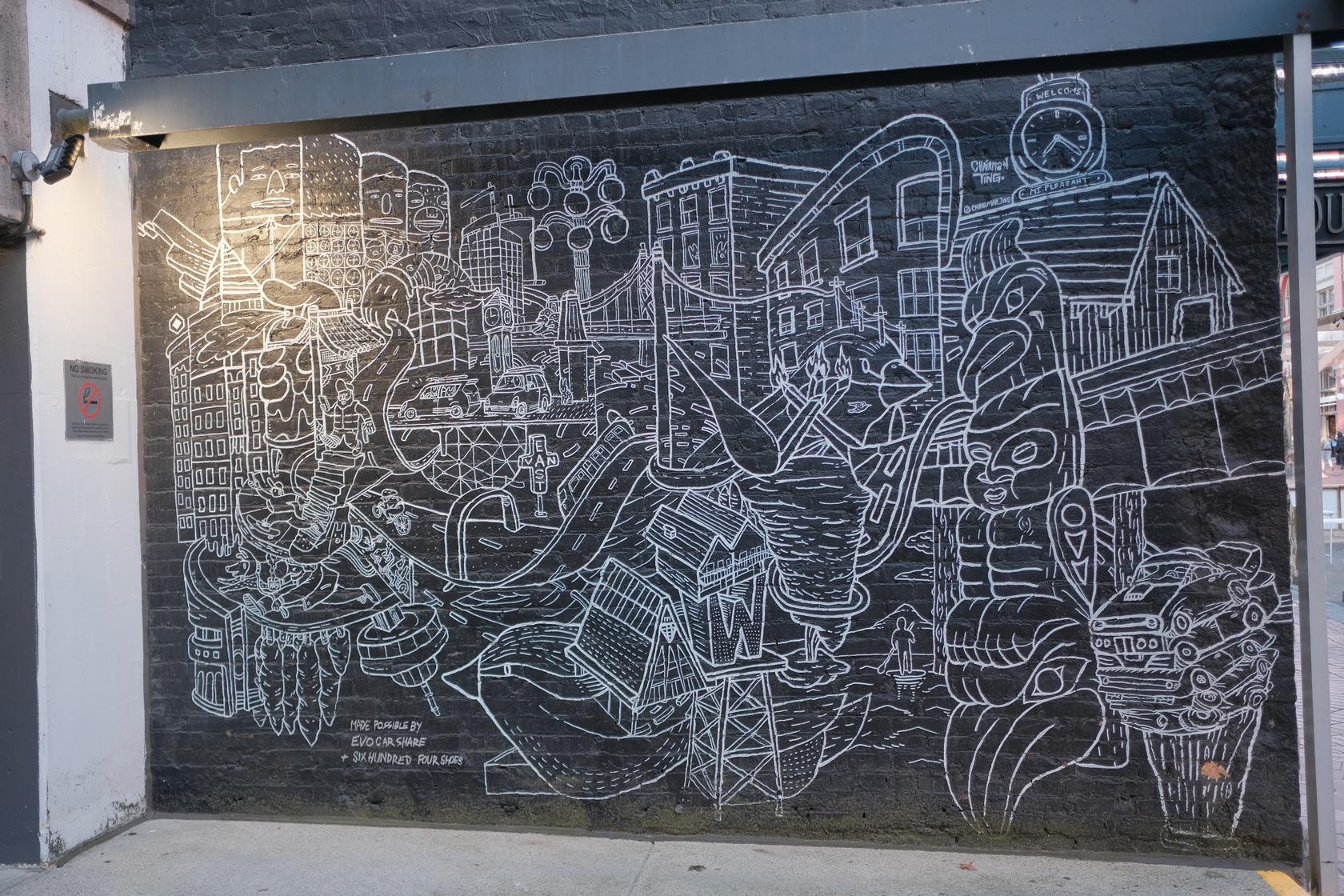
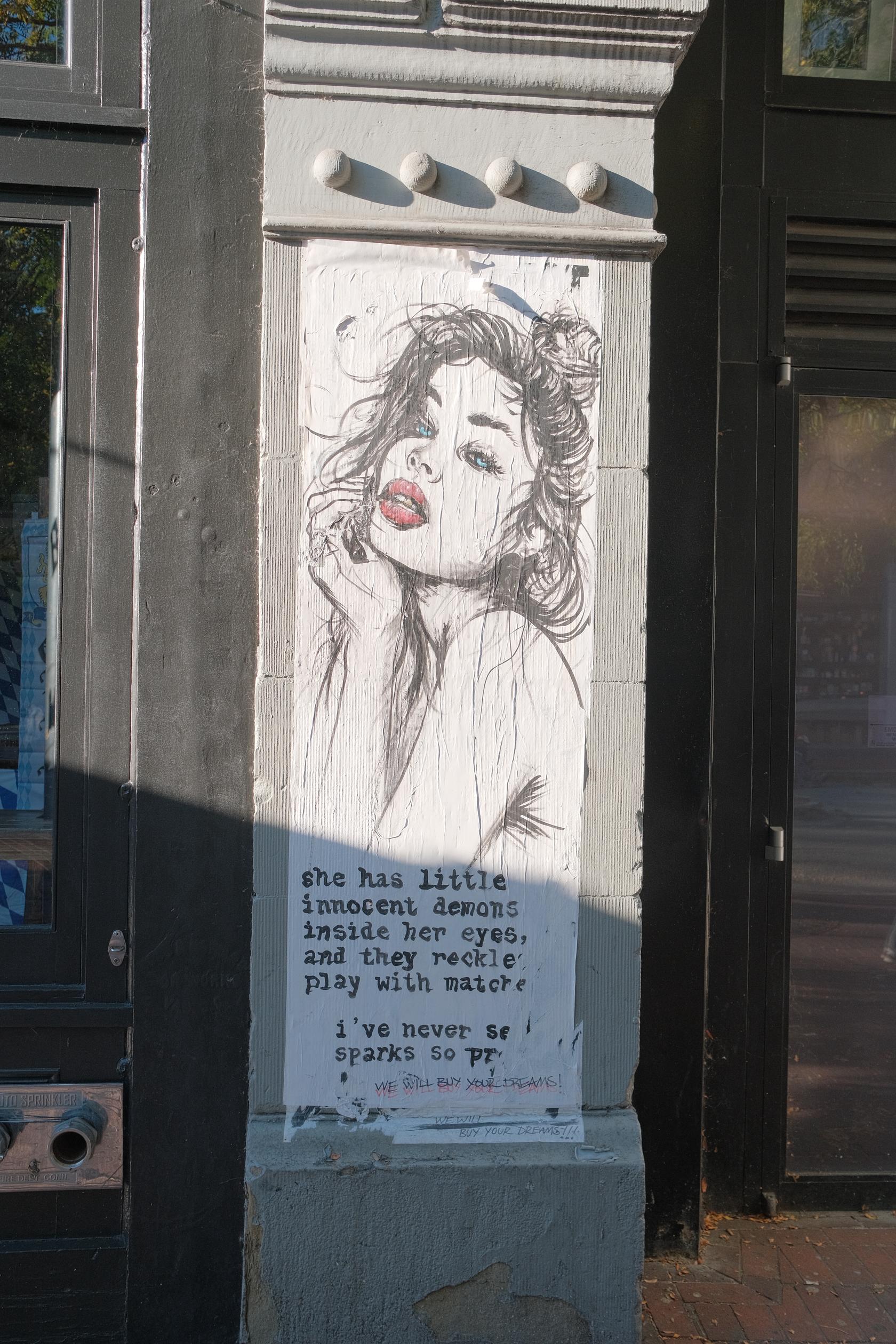
Gastown is cute and touristy. A triangular building juts out at a corner; you can take that picture, like everyone else. There are high-end vintage thrift shops where you can walk in and make a find, vegan gluten-free waffles for people like us, jewelry shops, cafés, souvenir shops. Along the streets there are information boards about the people who were here before — those now called First Nations people — about the fact that the land Vancouver is built on once belonged to people who didn't relate to the world as something you own, and that this land was never given to the people who came. That there were once lush forests and rich resources in the water, and that the whole environment has been changed and removed. But also about cooperation, about the fight to reclaim language and culture, to save the nature around what is now a city of millions, and how that can be done. For people like us, it is really lovely to be served so much information just by going for a walk.
Fentanyl
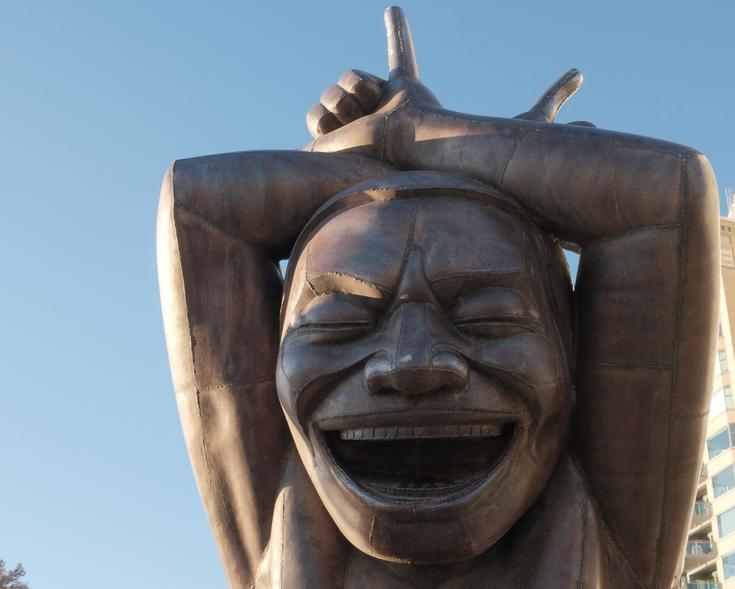
Anyway, the less charming part, the brutal part, is the fentanyl victims. When we drove to Gastown, and later when we drove over to see the laughing statues by the water, we drove past the hardest-hit street, and since we had never before seen fentanyl victims in such large groups, it was a shocking experience. We learned later that the problem is severe in Vancouver because Vancouver is the only big city in Canada where you don't freeze to death in winter, so that's why all the addicts are here.
But good grief, it is dramatic.
In the city we had so far seen as perfect, as beautiful and integrated, aware and kind, we suddenly drove through a street where many of those who have fallen through the cracks of life were gathered in their powerlessness and addiction. I don't know what to say. We have talked a lot about it since, about addiction, about human suffering, about how people who fall through the cracks and can't be caught are a symptom of what isn't working in a society, about how we should try to understand what it is about all of us that we see in these streets.
It is easy to judge, but hard to understand. Since then, we have driven through the US back toward Las Vegas, and similar streets have presented themselves to us, harsh and confronting—but none like the street we saw in Vancouver.
The second time we drove past, they were all gone. Almost just as frightening. Apart from a very few, every single one was gone — even though two hours earlier they hadn't looked like they could move at all. An ambulance was parked with the police at a square, and it looked serious. Maybe everyone else had to flee so they wouldn't be picked up.
Being out in the big, wide world isn't always beautiful views, art, and culture. Sometimes it is insanely brutal.
Stanley Park South
We are by no means indifferent; we took it in and are still processing it, yet we drove on to Stanley Park and the laughing statues to enjoy the sunset, the birds, and the people.
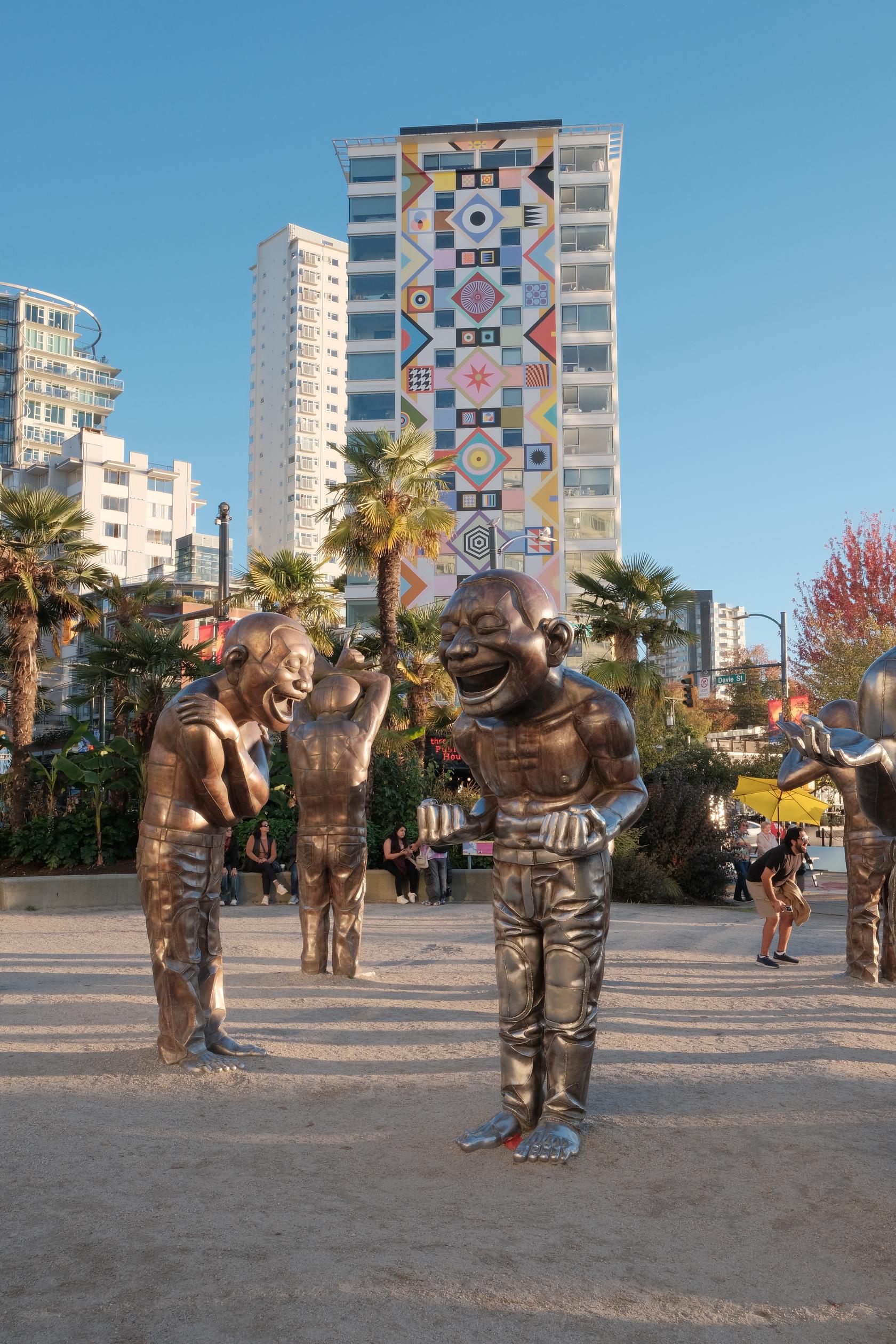
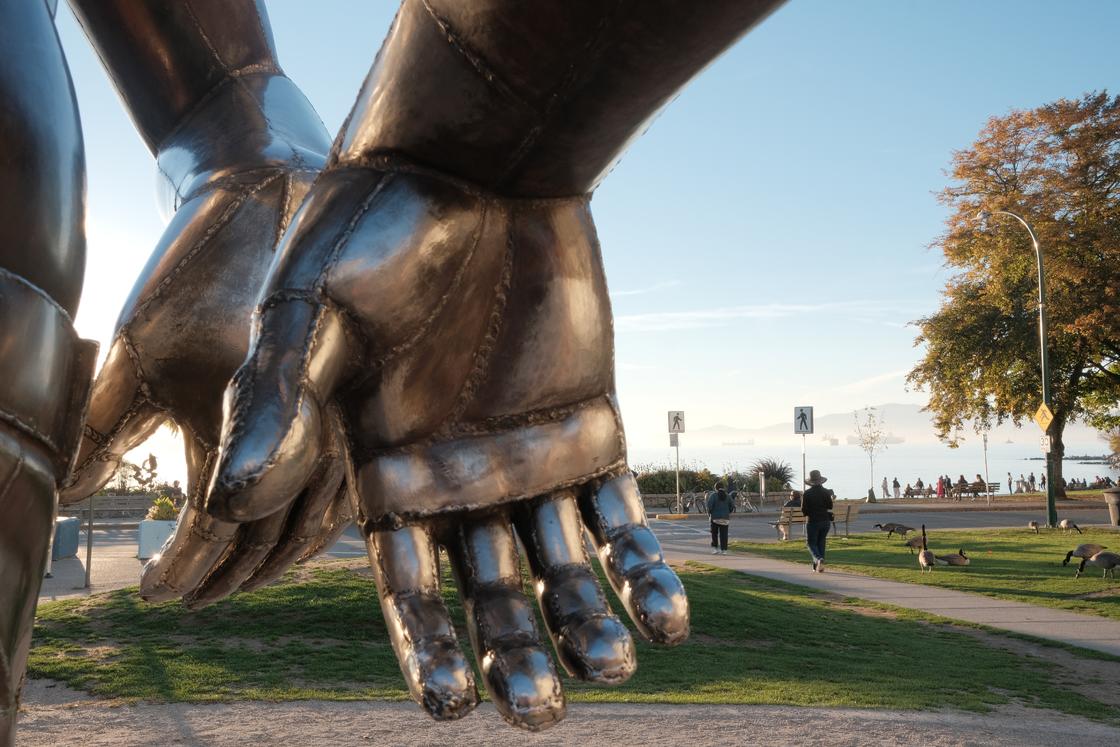
Stanley Park is a huge area that was set aside as a park early in Vancouver's history, and today it is beautiful to see that the city has this enormous recreational area right in the middle of everything, by the water and with everything you could dream of: park benches, big trees, rollerblade-friendly paths — the lot. A Chinese artist made the statues, and they stand enormous in the sand right on the edge between Stanley Park and the city. At sunset, it is beautiful, and it stops us with the thought of how important laughter is.
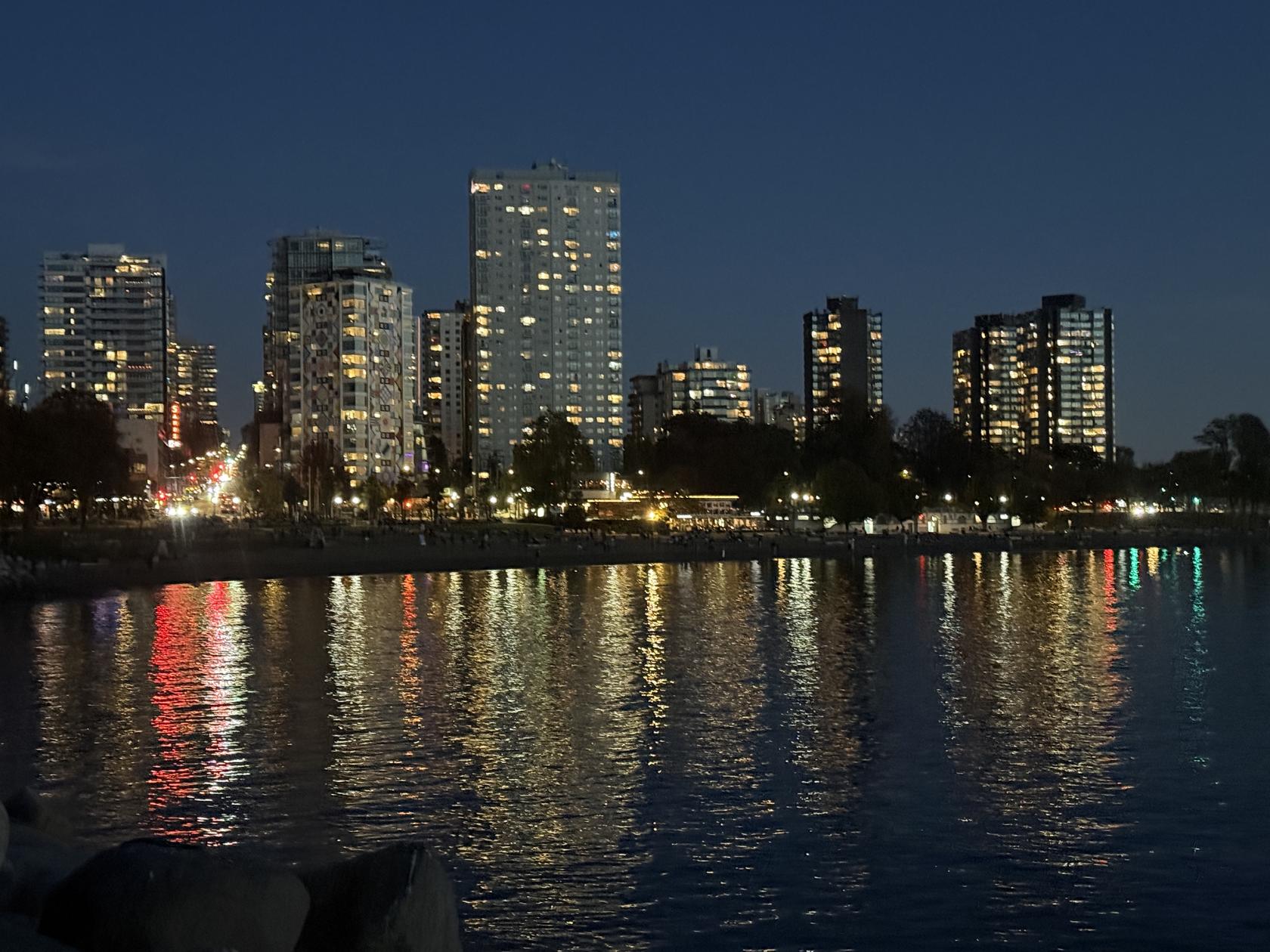
Just what we needed in that context. We sat on a bench and enjoyed the sunset and the people, then took a short walk in the park and watched the light shift into decorative reflections on the water.
A beautiful day as tourists in Vancouver, where we learned history, had to face human suffering, and experienced art in the streets. Back with our friends, we ate vegan keto pizza for the first time and sipped wine and sparkling water while we talked about life, people, and art, and processed it all.




Comments