

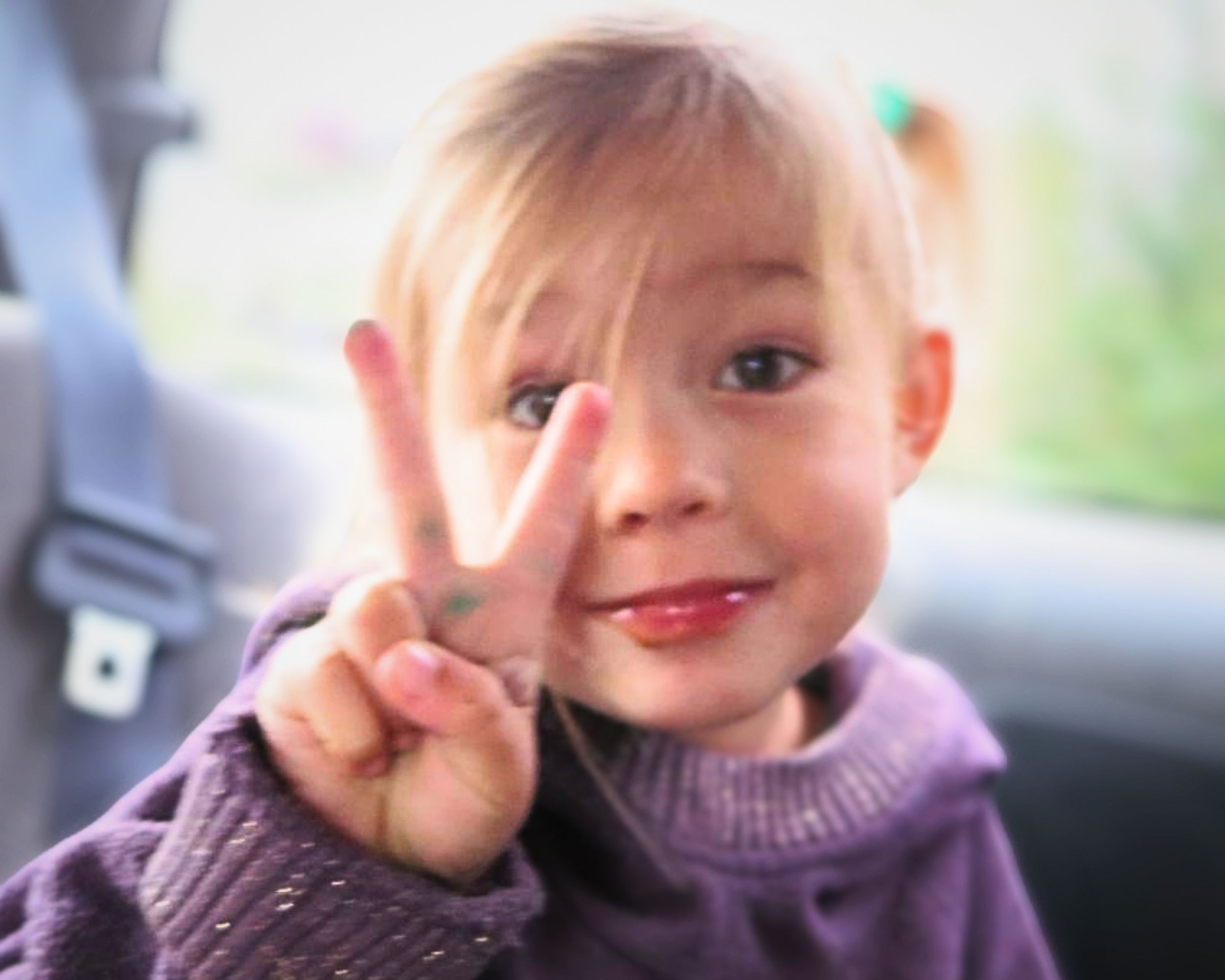
The children don't go to school? But do they have anyone to play with, then, and what about socialization? That is one of the questions we meet most often as parents of children who are at home.
What about socialization?
It is a controversial topic. Controversial because people, with their questions, reveal an assumption that we don't help our children develop social skills, or give them the chance to play and have fun. And controversial because our views in this field shake some basic assumptions – like the idea that you need to go to kindergarten to develop social consideration, or the ability to take part in different social settings, or to learn that you are not always the centre of attention.
The topic also becomes difficult because the questions are often asked as if the person asking believes we haven't considered at all what it means for our children's upbringing and development that they don't go to school and kindergarten. To that I have to say: I am a trained psychologist; I have read thousands of pages on development, socialization, philosophy and parenting, and spent hundreds of hours thinking about these subjects and discussing them with other academics. Since I got onto the track of a childhood at home, I have dived even deeper into these subjects, read more, thought more. Now I'm sticking my neck out and saying something about it all in one place: read on if the field interests you – I have said a whole lot, and still far from everything.
Why our children are at home
As most of you will know, my three youngest children are at home. My big daughter has gone to nursery, kindergarten and school in the completely usual way (although she goes to an unusual school, the Freinet School), and the two middle ones went to nursery and kindergarten until I survived leukemia. Then things changed, and we took them out.
We had always expected our children to go to school when they reached kindergarten-class age, but when our second child, Storm, who is now almost seven, got there, we met a fierce protest. We tried for two months and ended up taking him out again, because going to school simply wasn't right for him.
So now I'm writing an article about the two questions we meet most often because of this:
- Do they have anyone to play with?
- What about 'socialization'?
Before I do, I want to stress that this is NOT the reason we have our children at home. We have the children at home because it is a lifestyle we all thrive in. Having made this radical choice, we are met with wonder by the world around us, and so we have thought a lot about these two questions. We have also done our homework, so we have quite a bit on our hearts.
Question number 1: "Do they have anyone to play with?"

The short and simple answer is: Yes, of course. We are talking about THREE children.
The slightly more elaborate one is: Yes, of course. My children don't play all day in each their own big flock of children (nursery, kindergarten and school respectively), but they play all day in a smaller flock (the siblings). They also see the children in our circle of friends. Some of these children are at home, others go to daycare or school. My children thrive in their friendships, and they also thrive with the amount of social time outside the family. In some periods it is something we cultivate and seek out several times a week; in other periods we gather around each other and enjoy that.
My children are also used to the idea that you can play with all sorts of people, since their everyday life isn't full of playmates their own age. They play with their great-grandmother, with uncles and aunts, with the grown-ups' friends AND with other children. The three oldest children also really value being alone, being left in peace in their own thoughts, processes, games.
Question number 2: "What about socialization?"

Funnily enough, this exact wording is one we meet often. It isn't clear what is actually meant, but I assume that, deep down, people are worried about the processes of socialization. It is surprising, at first, that very few of those who ask this question actually want to hear what we think about it. It is, after all, a rather long explanation, a very broad field, and there are many different elements to talk about. There IS no short answer to such a broad question. So I usually just say something soothing, because most often – as I said – there isn't a real interest in the question anyway; it is just an expression of surprised wonder at a different way of life.
Primary and secondary socialization

Anyway: in traditional social psychology you talk about primary and secondary socialization, meaning socialization inside and outside the family. Since we live in a reality where most children over 12 months have an everyday life outside the home, in daycare, secondary socialization easily gets mixed up with socialization in institutions.
But children who grow up at home, without being separated from mom and dad (to any notable extent), certainly experience secondary socialization too. My children do, of course, leave the house.
The way I see it, secondary socialization is (in short) learning to find your way in, take part in, contribute to and benefit from the 'big' social community that a society is. You can think many things about how these skills are acquired, and institutions and schools do a big job in this area. But I believe that we parents do it just as well. It isn't the same, it's something else, and I won't get into debating whether it is better or not. Here I just want to tell you WHAT it is when it happens with home life as the starting point.
How are social skills acquired?

My main statement in this article is this: children learn social skills from adults. The fact that children in school and kindergarten are with other children all day is not what they learn social skills from.
Children learn social skills from the adult's guidance and support, from attention, from explanations and care that show them how and why you enter into social relationships with respect, care, empathy, self-worth, consideration, ethics (yes: you choose your own values, of course).
As a starting point, I would therefore actually claim that children at home, with parents who are engaged in their upbringing and development, have better opportunities to learn social skills, simply because the 'ratio' of adults to children is so much better.
Children at home have a better adult-to-child ratio
A really big challenge that all childcare institutions struggle with all the time is exactly the ratio. There simply aren't enough adult hands; ask any kindergarten teacher, teacher, assistant. So it easily happens that children in nursery/kindergarten/school spend many hours with other children without adult support, and without adult time later to talk about what they have experienced. Children who spend an extreme amount of time away from home end up trying to build their development on their contact with other children, which actually causes great difficulties, because children can't take enough responsibility in relationships to form a foundation for developing social skills.
But let's leave that. There are lots of other, really good options; that home life is right for us doesn't mean it is right for everyone. Certainly not.
Primary and secondary socialization: old-fashioned concepts applied to our reality.
That whole thing about primary and secondary is actually a bit of nonsense when it comes to children under 10. Basically it is about learning to master a number of social skills, both at home and away from home. Children who are securely attached usually master them much faster away from home, so whether the children are at home or not, the challenge lies in the time at home; the task belongs to the parents. Mainly to the parents, anyway.
The other, more cognitive and practical elements of secondary socialization (taking part in democracy, contributing and showing consideration in larger groups and so on), children at home basically learn in the same way as school children.
It is about a cognitive development of knowledge about what the community is, which rules and systems it contains – corresponding to social studies. And some practical experience with it, which shows up by itself in the course of life. The tax office, renewing a passport, a general election. In those situations we talk with our children about what is happening. Whether they go to school makes no difference.
It is also about learning that there are many different social settings, with different rules of the game. You learn that by taking part. Taking part in the scouts, visiting museums, churches, going to birthday parties, walking in parks, playing in playgrounds, visiting specialist shops and supermarkets, visiting nature areas and neighbourhoods, going to the theatre and to concerts, to the zoo and to cafés. And not least: going on holidays and experiencing different cultures.
Social skills for beginners
Many long and nuanced books have been written on this subject, so I'll just skate over the surface and share my thoughts:
Children need to develop a theory of mind. That means they need to learn to understand that the other person has a consciousness, a mind, a history – a 'mind' – and relate to it. They need to learn to think about what others might be thinking and feeling, and to understand that there is a connection between their motives (strategic, historical, emotional and so on) and their actions. And so also a connection between their motives and their reactions.
This is a huge task; it takes a whole lifetime. Psychologists have various markers for judging whether children are developing age-appropriately in this area. As far as I can read and as far as I can see, the primary method for this is contact with adults. Children learn to understand other people's states of mind, thoughts, feelings and motives by talking with adults who understand these things. It doesn't have to be the parents, of course, but it typically is. Conversations like these can be simple, small remarks and questions.
- When reading aloud: Why do you think Rasmus Klump is in such a hurry?
- In ordinary family life: Can you see that mom is tired? We'd better turn the sound down.
- With a film you're watching: Can you understand that Shrek misses being a 'real ogre', even though he loves his children?
- Between siblings: Your little sister is developing some independence; we'd better let her decide a bit, then it goes better.
- On a museum visit: Remember, we need to be a bit quiet here; there are lots of people in this room, and most of them want to concentrate on reading the signs and seeing the exhibition.
- With a board game: Yes, it's very frustrating for your brother; he has rolled a one four times in a row now.
Conversations like this can also be long and complicated, developing conversations about experiences, feelings, nuances, people, personalities, ethics and consideration. Or sharing emotional experiences, like fits of laughter, relief (at a good prognosis in an illness, for example), a funeral, a wedding.
Maybe read this article, it's really good: Mind Minded Parenting: How mental state talk helps kids learn about beliefs, feelings, and the perspectives of other people
Children need to learn to manage their own feelings for the sake of the community; they need to learn to wait, to take turns, to negotiate shared decisions, to share – yes, they need to learn all sorts of specific things. I could look it up in a book and find a nice list, but I think the most important point is that children who have a secure attachment to their parents develop the strongest social skills. All research shows this very clearly. There are many reasons for this, many perspectives on it, but the heart of the matter is this: a secure attachment, a childhood with a loving and respectful relationship between parents and child, is what it takes. Not school, not kindergarten, not the scouts, not reading aloud or social skills training (God help me).
Maybe read this article, it is packed with references if you want more documentation: Preschool social skills: Evidence-based tips for helping children succeed
Emotional intelligence develops in close relationships – with adults
Another spotlight you can use in the jumble of 'socialization' is the concept of emotional competence. Being emotionally competent means being wise about feelings. Children (and adults) need to be able to identify their own and other people's feelings, to talk about feelings – yes, states of mind in general – to process their own and take other people's feelings into account. To read other people's feelings, and even to predict emotional reactions. It is a terribly difficult space to move around in, but again everything suggests that developing competence in this area isn't about going to kindergarten and school, but about developing a language, an attention and a pile of experience in the area. The areas.
All of this is something children learn from adults. Other children aren't skilled enough themselves, not considerate enough, and certainly not attentive enough to individual others and to the group as a whole. It is great fun to play in big groups of children you know – if it works well. And you can have experiences that can later be processed and talked about and built on. But the development of emotional competence doesn't mainly lie in those hours of play. It lies in the secure attachment to primary adults, and in hours of time and conversation with them.
Cognitive filters create prejudice, and too small a normality
Phew. I can actually understand that it might be long-winded to hear the answer to the question about 'socialization'. I don't even feel quite finished; I have two more things on my heart: a meta layer and a very important point. Here comes the meta layer:
I think this question is asked on autopilot, not after reflection. Against the background of an almost general shared reality that 'dictates' that children develop and cultivate their social life, and with it their social development, by going to daycare (which isn't 100% wrong, but just isn't the only option either).
Let me quote Charlotte Mandrup from her book 'Mindfulness i hverdagen' (Mindfulness in everyday life):
"We create our own reality. And we do it in several ways; among others:
- We form ideas about how things are, and should be, and then we judge our experiences in that light.
- We experience the present through the filter of the past and therefore interpret new experiences based on old ones.
- We sort the data our senses pick up in a way that confirms what we already know.
- But we rarely know it"
I think the question is born of an idea of how reality is, an idea that – until it has been considered a little – ends up excluding the many possibilities that home life offers. I think the question is born of surprise, and of a filter of experience where children go to daycare, and of the misinterpretation that it is this time with a big group of peers (and not the adult guidance that comes with it) that creates the development of social skills.
So I want to appeal for a slightly broader horizon: a reality with room for a few more possibilities. I'm sorry if I've been a bit defensive along the way in this article; it is because I have often felt attacked and condemned in connection with these two questions. I hope I have also managed to answer them a little – and made it clear that I certainly don't think everyone should live the way we do.
At the same time, I hope I have contributed a little to a more nuanced view of what goes into the fluid concept of 'the social side of things', and that other huge concept, 'socialization'. And maybe shed a little light on the responsibility all adults around children have when it comes to exactly this field.

To finish, I would like to say something I think is really important. Really, really important:
"Education should work by pull, not push"
- Charles Leadbeater in his TED talk 'Education Innovation in the slums'
Exactly the same can be said about development more broadly than academic education, and so also about children's development and unfolding in the social field. The important thing I want to say is:
I have great faith in children's strong desire to develop exactly the skills and talents they need. Children who are securely attached, who get food every day, who live in a loving family where there is respect and (relative) calm, seek out what they need by themselves; they are drawn to relevant challenges.
I believe in attraction, awakening, motivation. So I believe that children will seek out the social challenges they need, and so develop the social skills they are ready for and interested in, at their own pace and with their own interest. That goes for 'socialization' just as it goes for everything else, I would say. So whether my children develop enough socially worries me neither more nor less than whether they learn to read and write. I feel completely sure that if the opportunity is there around them, they will take it when they are ready.
Development and learning are something that just happens while we live our lives in a way full of meaning and love.
Comments
Here are the comments this article received on my old site – I have moved them over because there are many good points and thoughts in them :) (Translated from Danish.)
J.A. Bjørn: thank you for a lovely read ... a stay-at-home mom/kindergarten teacher myself, I have no doubt; my time in a nursery has put things in perspective for me, and I certainly don't believe an institution is a guarantee for developing healthy social skills.
Malene Lindberg: Yes, yes, yes – grist to my intuition's mill ;) even though I'm neither a kindergarten teacher nor a psychologist, my intuition has told me this all along... At times I've felt a bit lonely in my intuition and have never been able to understand the argument about institutions and socialization, so that's why I have a different approach to my own children??? Both my cousin and my partner were looked after at home and have far better social skills than me – thought-provoking
Sonja Malev: Spot on! ☺️
Majbrit Buettel: A really good article / post you've written.
You have put words to so many of my own thoughts and conclusions. You are super good at explaining yourself and putting into simple words, for ordinary stay-at-home moms like me, the sense and the blessing of spending good hours with your precious children.
Thank you for a meaningful read.
Written by Cecilie Conrad. Translated from Danish. The original article is available at CecilieConrad.dk.









Comments