

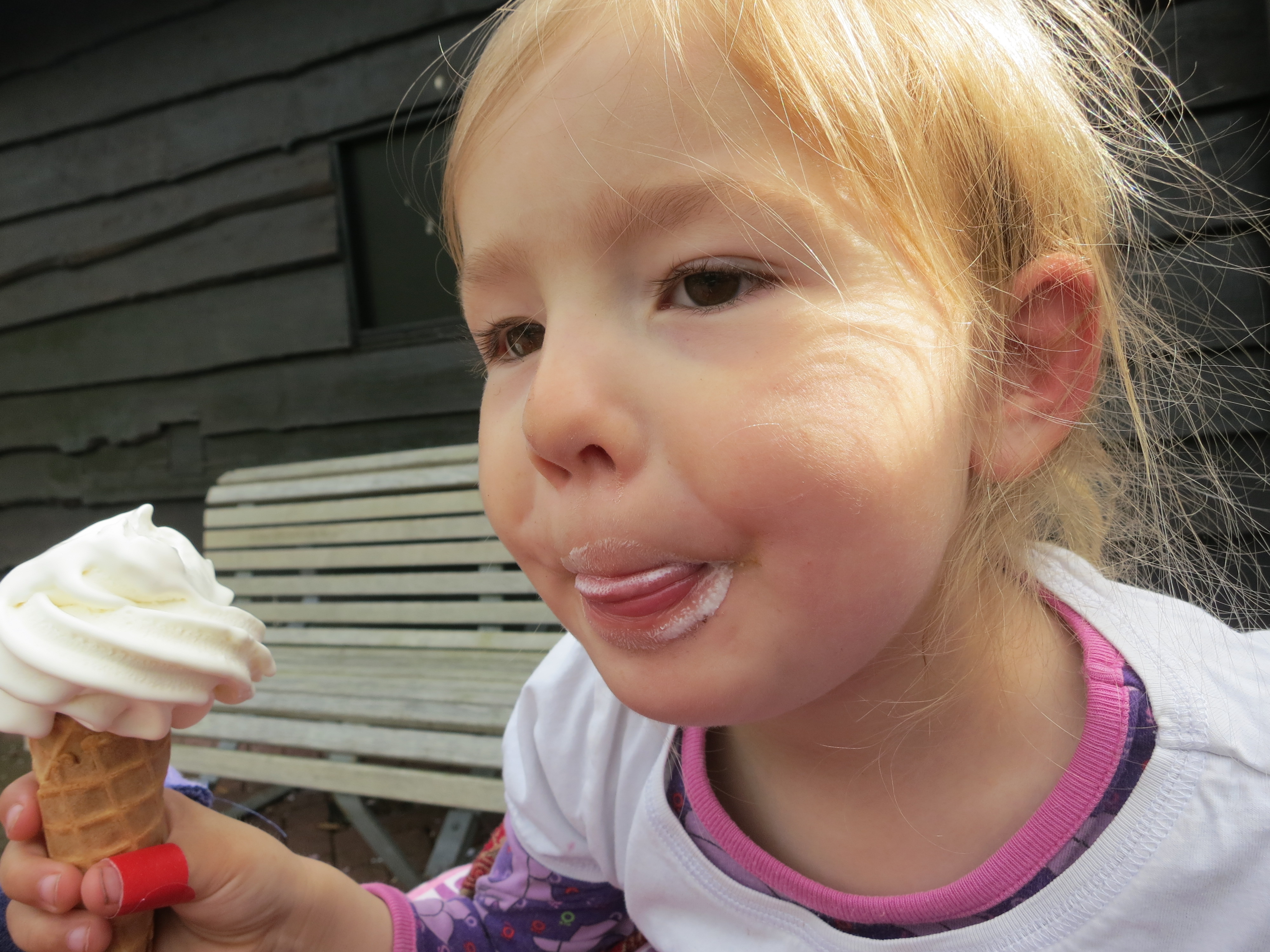
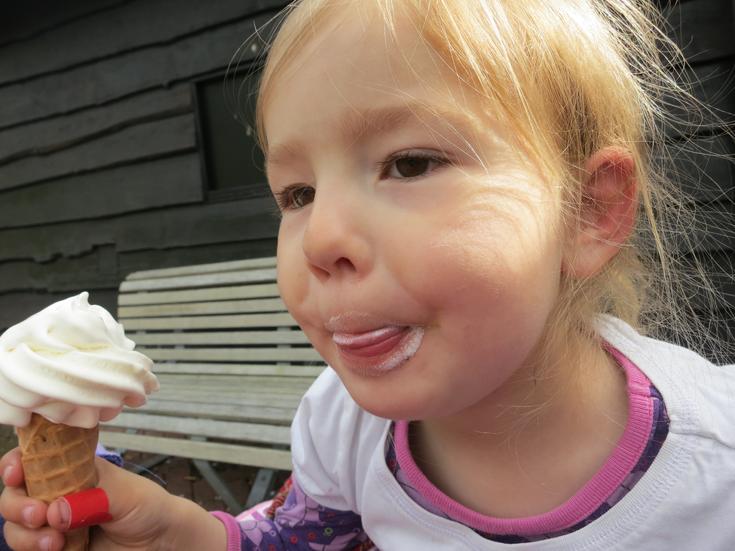
"It's not very spelt-like to say yes to all that sugar. It's much more spelt to ban sugar completely." A friend said this to me recently, as we sat in the garden saying yes to ice cream on a summer afternoon.
This is article number two in the series about what happens, and what lies behind it, when we let go of sugar control in our family. This one is from the middle of August; two months 'in'.
What is a healthy sugar balance for children?

Storm and Silke playing "Bite the marshmallow"
Yes, well. I meet it often; I even meet it inside myself. This restrictive need for control, this attitude to sugar as if it were Satan himself we were dealing with. The ban-and-panic relationship with sugar. The fear, basically. Fear of malnutrition, stunted growth, obesity, sluggishness, illness. Or is it really just the fear of not being good enough, let out as control over the children's sugar intake? Sometimes I am a little afraid that it is. At least that there is a strong tendency in that direction, a fairly big element at play here.
I certainly don't take my children's diet lightly; I give it a lot of thought and a lot of effort. But I have decided to let go of sugar control to a very large degree, of bans and rules when it comes to food. My control lies in the fact that we grown-ups decide what we buy.
It is a core value for me to let go of grown-up control to a fairly large extent. And it is hard. It is hard for many reasons. I have been part of a network of women where attachment parenting was a guiding star, and so I have had 'optimal health' as a project. But I have ended up in a place where I actually believe that optimal mental health, great personal freedom (also for small people), deep presence, close connection and nuanced, openly declared, attentive love matter far more than how many grams of sugar are eaten in a day.
Letting go of the sugar ban: the benefits for the family

That is why I have let go of the organic-health-sugar ban as much as I authentically can. My children get a yes when they ask. Almost always. Today my three-year-old daughter has eaten two pancakes, two ice creams, two cakes, two pieces of chocolate.
And I really AM zen about it. Almost.
Because my children have also eaten porridge, plum compote, wholegrain pasta, pork, carrots, apples, nuts, freshly baked bread, organic sausages, grilled prawns. Oh, and yes – some grilled marshmallows. We have had a long and eventful Sunday, where no fewer than fourteen people dropped by on short and long visits, announced and unannounced. The floors have been washed, three loads of laundry sorted, one child's hair cut, another's combed free of tangles and knots, the baby has learned to crawl, we have listened to loud music and given away a sofa, slept a lot in all sorts of shifts, made Hama bead plates, talked about well-known signs like the toilet sign with the man and the woman, and yin and yang, and the peace sign, read books, played computer games and watched a film. There. Oh, and yes. Practised the alphabet, walked the dog, played with dolls, built with Lego.
I would say my kids have had a healthy, complete day. A day that simply hasn't been about fights over the number of ice creams.
And that little 'almost'.
There is a lot of thinking behind our sugar policy.
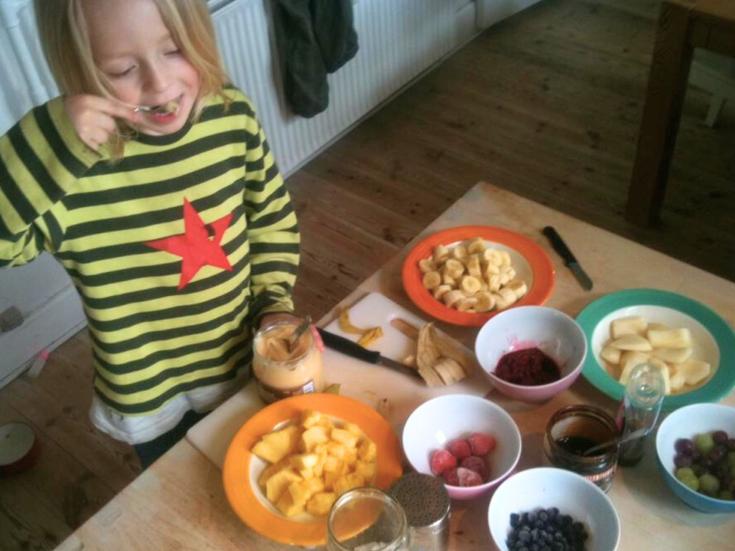
1. We want our children to have a healthy, loving, sensual relationship with food, both the savoury and the sweet kitchen.
2. We want to share the experience of substance with them, teach them what quality is – also in the sweet kitchen.
3. We want to use our leadership, our parenting power, on other and more important things. Note that none of our children weigh too much; this is not a health problem, not in an obesity context anyway.
4. We say yes, but we are the ones who decided what is in the cupboards. In other words, we set the limits when we shop.
5. We believe that the more we say no, the more interesting it gets.
6. Our experience is that the biggest sugar cravings show up around age three, and that age three is pretty complicated in general. The children need a lot of support here to hold themselves together, and maybe there is a connection.
7. You have to choose your battles carefully. I don't know how our life would have unfolded if it hadn't been for the cancer, but now that it IS that way, we are wholeheartedly busy healing after everything that happened, and our main focus is on finding the balances, all of us, together.
8. Our experience is that the children get enough pretty quickly. They actually can't be bothered to eat all that ice cream, all those cakes. It is an autopilot that asks, because they are so used to it being a privilege, a rarity, a stroke of luck, almost, to be allowed. An autopilot that is clearly being unlearned in my kids. Which is just lovely. Then we can sort of get going with some of all the other stuff, some of all the things this life is about.
Choose your battles: what to prioritize for your family's health

Letting go of the sugar ban is a process, and a balance. This article is number two in the series, and I will gladly share how it develops. I wrote the first article while we were travelling on our big road trip, 90 days in Europe (read the travel blog ud-i-det-blå.dk if you like); this one was written after two weeks back in good old Denmark, where the sugar culture is very different from south of Paris, I must say.
There is a lot of pressure here to keep a strict sugar policy. Which gets the rebel in me going. I think it is hysteria when small boxes of raisins are demonized by the health authorities, and that it is a kind of collective eating disorder that has women explaining to toddlers in nursery what short and long carbohydrates do to the insulin balance in their blood.
And I want to get off. And I do get off. And write about it. I feel extremely exposed on the social scene here in Denmark when I open up and 'confess' it. Allow it. Maybe I'm paranoid, but I see sceptical looks at the playground when my children have three biscuits in a row. Orange juice is about to become a problem too. I know all the numbers, and of course, we drink water when we are thirsty. Yes, look at that. Now I'm defending myself again.

I think all this torment, this guilt in the grown-ups, all these conflicts between parents and children, and between grown children and grandparents (about what grandparents may give their grandchildren), is so unnecessary and so destructive to the good life, to the precious hours we have together on this Green Planet. I think it's sad. And I honestly, truly believe that self-confidence, joy, faith in the future, love, presence, play and growth and attention from the people you care about and trust and admire are the most health-giving things there are. If you have all of that, you can easily let your own sweet tooth be satisfied (and your children's) without horrible consequences for your health. As long as you manage to eat food made from ingredients fit for human consumption. And sugar is. Sugar is just sugar.

So I will end where I began: let go of the sugar ban and see what happens – if you dare.
I dare. I still dare. And I think it is deeply valuable to be on this journey, in this process of realizing why, and how much, I can and should control what my children eat.
And then you really do have to remember all the things that are more important than sugar :)

Update 2023: Plant-based and gluten-free
Life is long, and we are constantly developing as people – for many years now we have lived mainly plant-based and gluten-free, but we have chosen to leave all my old recipes online, so they can bring joy to others – I don't think you should edit your past :)
Written by Cecilie Conrad. Translated from Danish. The original article is available at CecilieConrad.dk.






Comments