

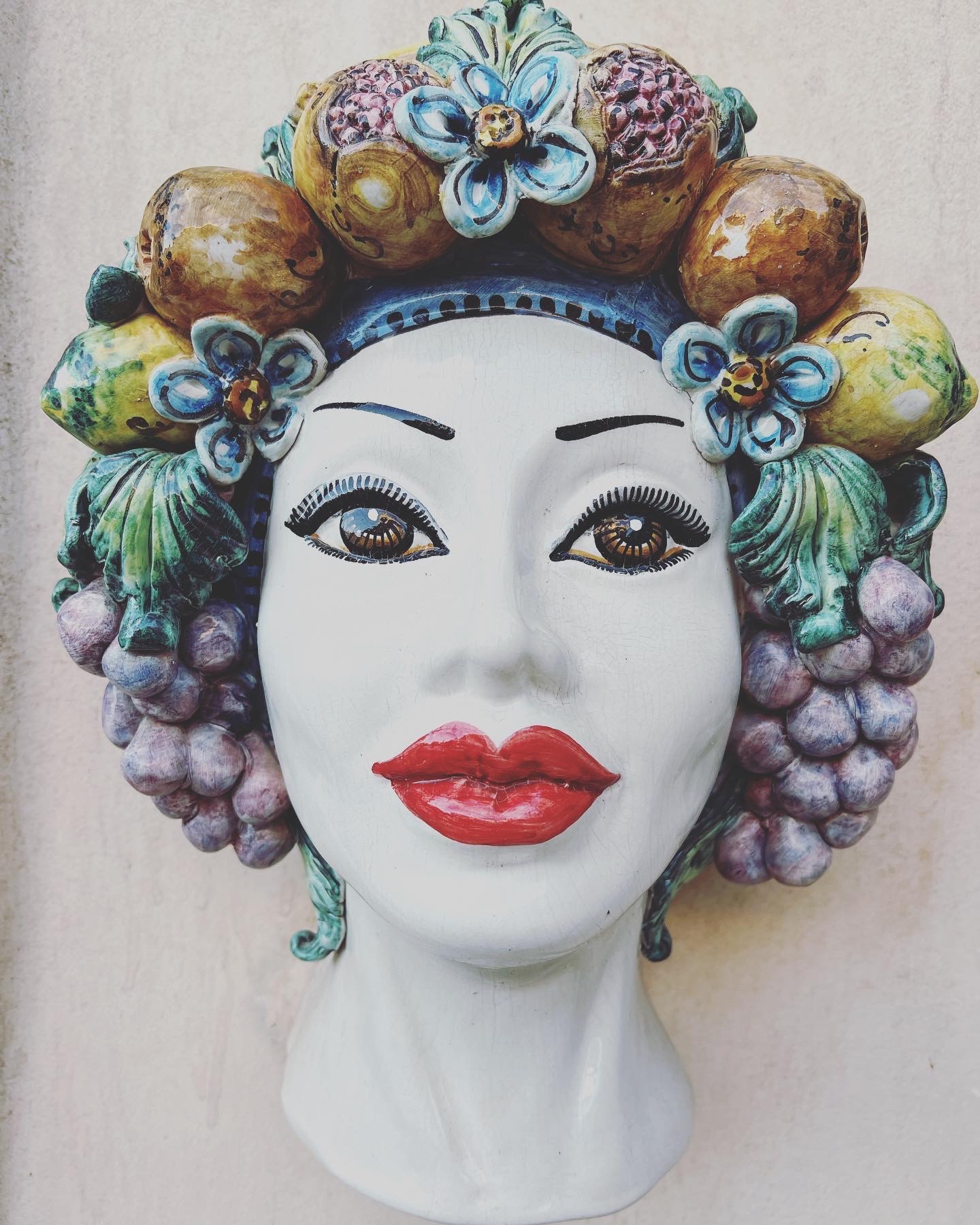
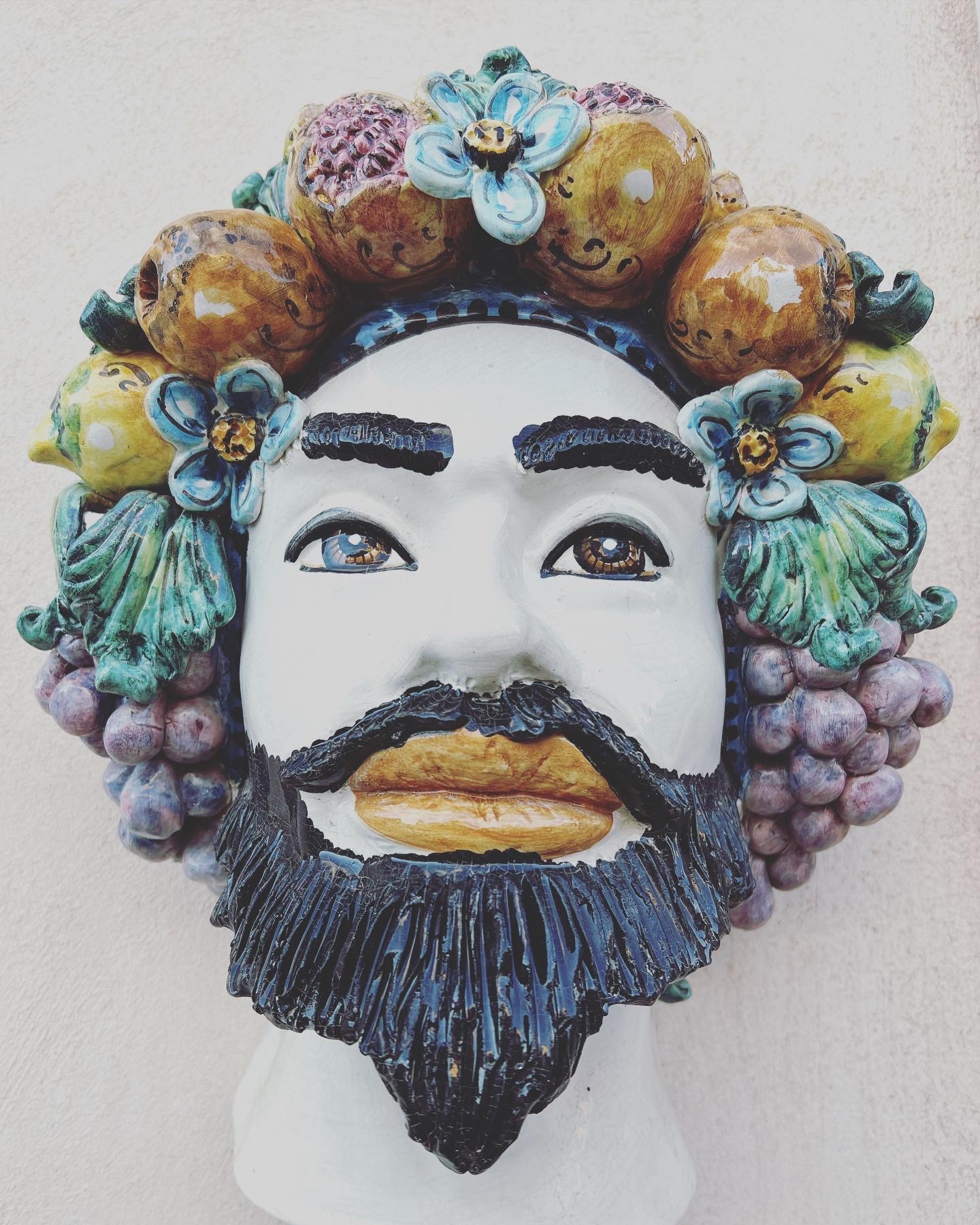
Iconic of Sicily are the ceramic vases in pairs, a man's and a woman's head. Decorated with citrus fruits and flowers, plants growing where the brain would have been.
The legend is this: A young Sicilian woman, who likes to grow flowers and herbs on her balcony, sees a beautiful man from the balcony. Their love is instant and passionate. It is a Romeo and Juliet story of impossible love, as the romance falls apart when it is revealed that the beautiful man has a wife and children in his home country.
Absorbed in love, the young woman's jealousy leads her to behead the man in his sleep. She does not want to let go of her love and uses his head on her balcony as a vase for basil. This plant is watered with tears and grows strong and extremely tasty. Everyone in the neighborhood wants a bud from this particular basil plant.
What is so tasty about impossible love, about jealousy and despair, about holding on to something seemingly impossible? Is it daring to go all in? To decide: I want this no matter what, no matter the price, even if I ruin it by getting it. We all know the story of Romeo and Juliet, the same extreme love and tragedy fascinating thousands of people over hundreds of years. What is it? We read Romeo and Juliet last year, and my children commented:
This is not a love story. This is a story about someone insane.
Are we so fascinated by stories about love driving people insane because we have all felt this too-powerful thing pulling and have had to work hard to find the right balance? The balance between passion and insanity?
This is crucial. The overwhelming and important emotional and spiritual elements of life need to be balanced with what we could call reality. How do we find our way in life, not drowning in practical bureaucratic stuff, yet not driving ourselves insane?
These stories are appealing because they whisper about the importance of this balance, which is why the beheaded vases with basil are so important and widespread in Sicily. In my humble opinion.
Written by Cecilie Conrad. Read the article in Danish at CecilieConrad.dk.










Comments