

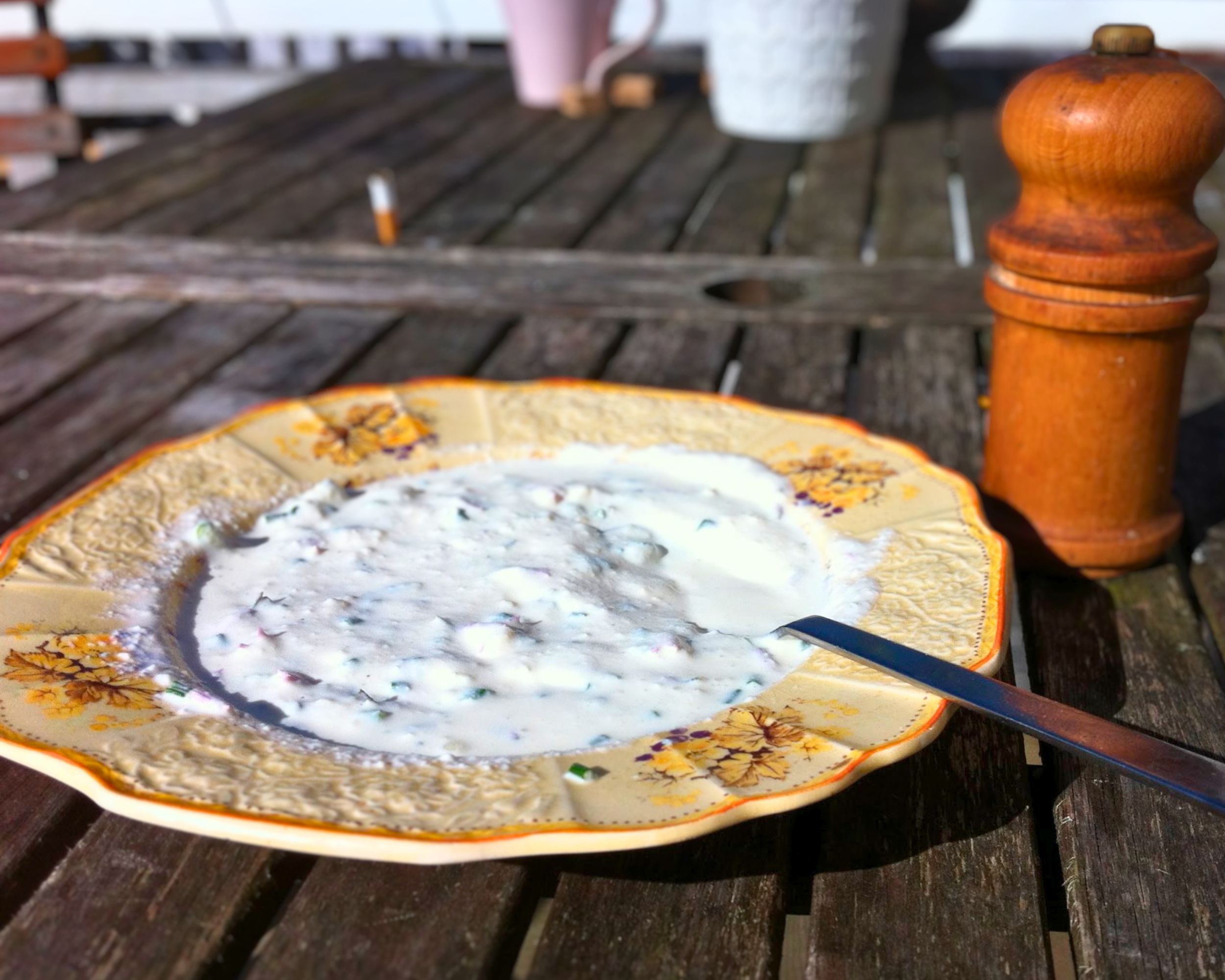
Fresh garlic cheese, made by hand – what a celebration it is to be human.
Well, ladies and gentlemen! Let's talk about milk.
I acknowledge that milk can be problematic; that many people are allergic to casein and even more are intolerant to lactose. That is reality. There is one study after another showing a connection (but not causation) between milk and all sorts of ailments. That is also reality.
The many faces of milk: From raw to processed
It is reality in a reality where most of the milk sold in the world is produced on enormous farms, by cows that have hardly ever seen a real meadow, living on soy products, stressed and a little sick. Then the milk is ultra-pasteurized and UHT-treated, so it is as dead as freshly boiled plastic. There may well be some proteins and some minerals left, maybe even a single vitamin, of the God-given, immune-boosting cow protein juice milk was back when humans first figured out how to use it as everyday food.

Choose the right milk for your cheese
Milk – the organic, clean, raw milk from grass-fed cows, preferably so-called old breeds – is fan.tas.tic food. For those who aren't allergic to casein, of course. That goes without saying. And you can't buy raw milk in Denmark, because it is illegal. Unless you call a small local farm or dairy and make yourself a farm-gate arrangement. If you can't, can't be bothered or don't want to, the best milk is Naturmælk's or Osted's, or Irma's Jersey (the first two are best). They are as grass-fed as you can get them and as raw as they come when they come from a factory.
I have a farm-gate arrangement and get raw milk a couple of times a week. Gangster milk, we call it. I am grateful for it; like water kefir, this food is like medicine for my tired body (which, within the last seven years or so, has given birth to three children and survived cancer). It all works together, and it is fantastic.
What is even more fantastic is that the milk – when it can no longer be drunk raw – can be transformed into the most wonderful fresh cheese. Still full of all the good stuff, because it hasn't been spun, irradiated, heated, filtered, who knows what.
Step by step: How to make fresh cheese
You simply leave the milk in a bowl on the table (with a cloth over it, so the bacteria don't get contaminated) for somewhere between 12 and 24 hours. Then it collapses and looks unappetizing. Like soured milk, but without being sour. It smells fresh and lovely.

You strain this collapsed milk through an old cloth (one that, of course, hasn't been washed with fabric softener or perfume or anything else strange). The whey is as healthy as the day is long, and good in bread too. It tastes a little mysterious, but it is a blessing for the digestion.
Adding flavour: Garlic, chives and spices
I stir the cheese with salt and pepper, chopped chives (these days even with the lovely flowers of the same plant) and garlic. It turns out won-derful. Even more wonderful with a splash of whipping cream. I use it as a dressing, as a spread, as a dip. And I am happy on many levels.

If you don't have access to raw milk, you can do something similar with a lovely milk (with fat) that you warm to about 32 degrees and add organic buttermilk to. If it doesn't separate (it should, right away), add a little lemon juice. Let it cool down slowly, and continue as described above.
The raw version keeps almost forever (without the whipping cream, that is, since the cream is heat-treated). I don't know about the other one. But that isn't a problem, because we eat it all within a day or two. Good for body and soul, and for the experience of being able to make it yourself.
Go ahead, happily. Bacteria aren't dangerous. Not all of them. Many of them are on the good team; and many of these good ones occur naturally in cow's milk. So just get going.
Update 2023: Plant-based and gluten-free
Life is long, and as humans we are constantly evolving – for many years now we have lived plant-based and gluten-free, but we have chosen to leave all our old recipes online so they can bring joy to others – you can't edit your past :)
Written by Cecilie Conrad. Translated from Danish. The original article is available at CecilieConrad.dk.





Comments