

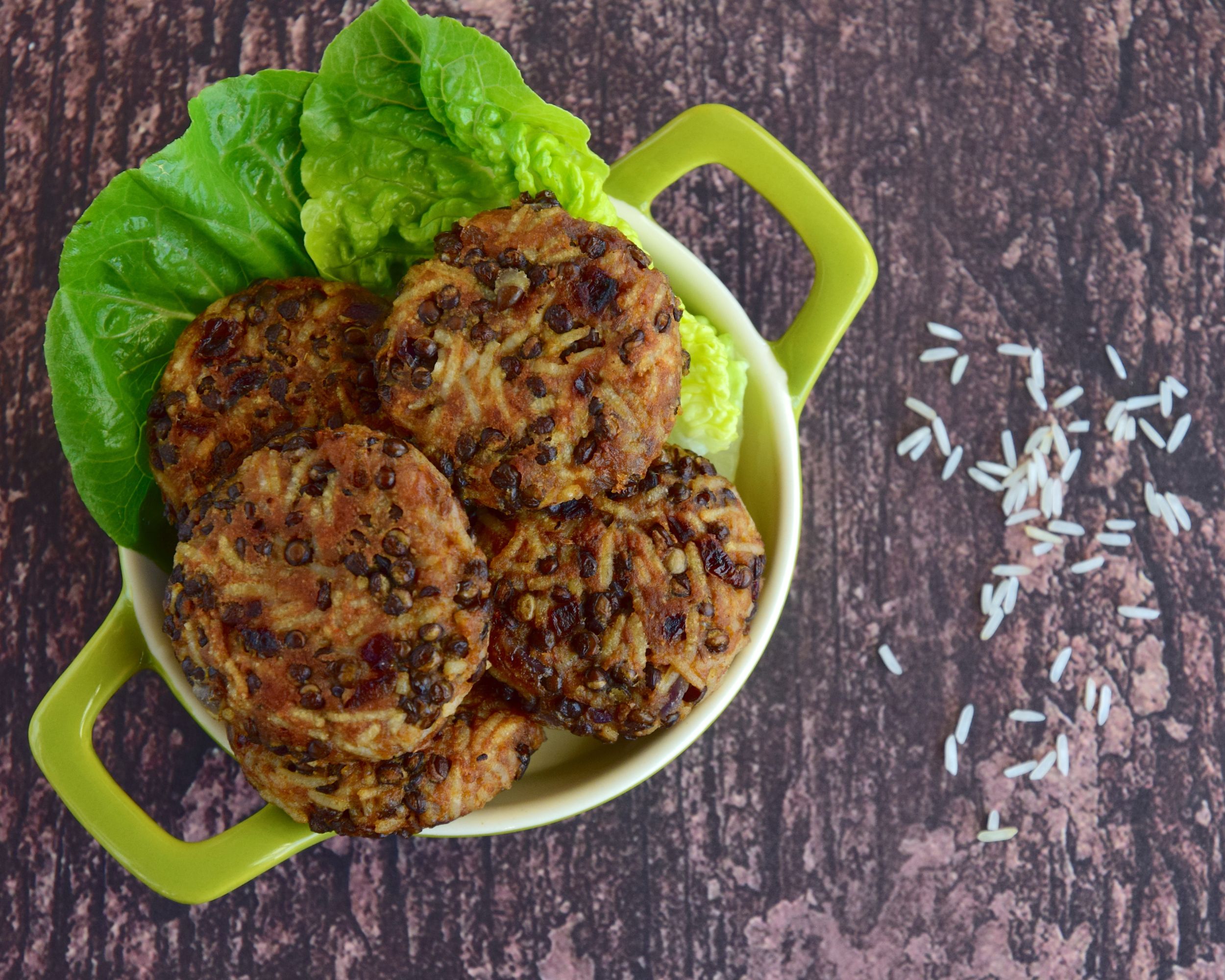
Lentil patties
Lentil patties and celeriac steaks: vegetarian tips from a hard-core hippie for any beginner or hangaround.
Beans and lentils are a mystery to many people, and they are often the very first topic that comes up when I tell people I am a vegetarian. So, do I eat a lot of beans and lentils? Hmmm. Not in my world, but well, yes – I suppose I do, for a Dane.
Here you can read a little, in a completely down-to-earth way, about the beans and lentils that regularly end up in my pots: what we use them for and why they are good.
One of the reasons we Danes don't eat beans and lentils is that we know nothing about them. We didn't learn to cook them from our parents or at school, they are not part of the traditional Danish family kitchen, so we don't buy them, and we don't know what to use them for. And then there is that thing about seventies lentil patties and celeriac steaks, which has become a bit of a joke.
Anyway. Here, in a completely down-to-earth way, is the little I know, and the short list of legumes that get eaten regularly in my kitchen.
Why legumes are more than just food for me
Beans and lentils need to be fresh. There is no point in having them sit around for years. They turn dry, boring and very bland. They overcook far too easily and go mealy and unpleasant. At the same time, the taste turns a little bitter in a really annoying way. So buy small amounts of fresh beans and lentils. Urtekram has some good small bags of 400–500 g, which is just right for getting them eaten. Beans and lentils are such cheap food anyway that there is no reason to compromise on quality. Just buy the really good ones and eat them with joy. Cooking times are fairly unpredictable; you have to keep an eye on them and make sure they don't overcook, since they are much nicer when they still have a little bite.
I mostly use beans and lentils that can be cooked without soaking, and that can be cooked right in the dish. I actually love both white beans and kidney beans too, but I never really get around to cooking them.
Red split lentils: My quick fix for everyday food
These cook tender quickly, and they break down in a lovely way that thickens a soup or turns into a porridge-like thing, which is wonderful. They taste nice, rounded, warm, a little sweet. Fine and 'invisible' in tomato soup. Actually best of all in the really simple version with an onion, plenty of turmeric and salt, lentils, water. Served with parsley, crème fraîche, freshly ground pepper. Or else the good lentil soup from one of my Friday menus (no. 2).
You can also buy whole red lentils, which I am looking forward to trying. I wonder what they can do. They must taste almost the same.
Green lentils: The cheap protein source I can't do without
The big green lentils are probably the cheapest of all. They actually taste okay if they get a kick from a dressing with some punch. Otherwise they are a bit bland. But I like the coarse texture, and all the resistance they put up.
The dressing for green lentils has to go on just after the water has been drained off. As with pasta and potatoes, they soak up loads of flavour at exactly that moment, so do make the dressing while they are cooking. For green lentils I use: soy sauce, balsamic, salt, black pepper, lemon, honey (very little), chili.
The small green Puy lentils, which are French and nicely round, are much more delicate, both to look at and to chew. They are delicious in a salad with fried root vegetables and rosemary, with a lemon dressing on at the end.
Black-eyed beans: The unknown treasure I discovered on Istedgade
Technically they are a kind of pea. I have never found them organic, and I buy them at the Thai supermarket on Istedgade. You can probably get them in lots of places. They are very, very lovely. Since they give off a bit of grey colour when you cook them, I always cook them separately. These too benefit from a marinade while they are warm. Lemon, oil, soy sauce, garlic is wonderful. Leave out the garlic if they won't be eaten the same day. Stick to garlic on what is for here and now. Old raw garlic honestly tastes of garlic breath.
Chickpeas: More than just hummus
We love hummus! Hummus with raw and steamed vegetables, extra-runny tahini and good bread. And feta cheese. You can easily buy chickpeas ready-cooked in a can, and that is fine when you are in a hurry. Then you just have one more tin can on your conscience, and the taste and texture could certainly be better than that somewhat watery experience. Chickpeas can be tossed into salads and soups and mashed into hummus; they can be blitzed raw in a food processor (after soaking) and made into falafel – the only health-food patty that really holds up. You might as well buy 25 kilos of chickpeas right away, because chickpeas are the thing. Also super-fantastic in a batch of slow-simmered onions with ginger and fenugreek seeds, and maybe a little orange or lemon. Yum.
Beluga lentils: The black jewel of my kitchen
Beluga lentils just taste good. End of story. Not all lentils taste equally good, beans taste very different – but beluga lentils are my favourite. They are black, very beautiful, cook tender quickly, and come in a practical, easy-to-find Urtekram quality. Cook them, and give them a little kick with a marinade of sour, sweet, hot and salty – typically, in this house, that is lemon & balsamic, honey (if needed), chili and soy sauce or salt. A little olive oil is nice too. It has to go on while they are warm, so they can soak it up a bit.
White beans and butter beans: When I have time to treat myself
They taste incredibly good, but we rarely use them, because we can't be bothered with the soaking. Which is silly, really. No different from slow-rise bread. They need to cook in fresh water without salt, and you have to keep an eye on them so they are exactly tender and not overcooked. Like all the other kinds, they have to be marinated warm if it is going to kick a... White beans are really nice in a tomato salsa with parsley, I think. Also really nice mashed a bit and mixed with grated celeriac and egg for the classic celeriac patty. But honestly – I never make it. I don't think it's worth the hassle; I would rather have falafel.
My husband loves butter beans; I think they are a hassle to make. But it is worth it, when you pull yourself together. They need to soak overnight, and cook for quite a long time.
Written by Cecilie Conrad. Translated from Danish. The original article is available at CecilieConrad.dk.










Comments