

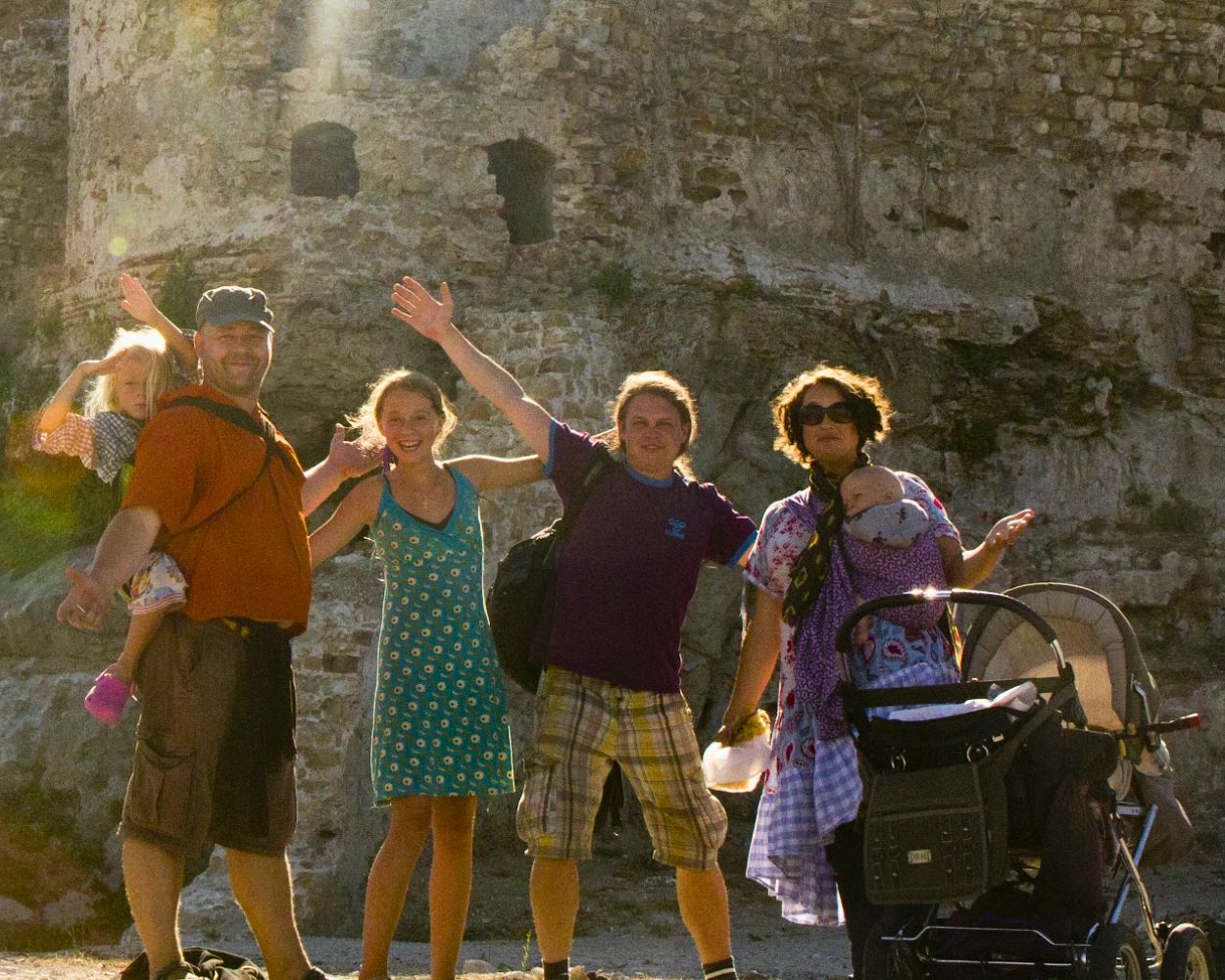
Visiting Tangier was a bit like going back to Turkey, where I travelled around for a few weeks as a teenager with two of my parents and three of my siblings. It was overwhelming, almost paralysing. I have this thing where I can find it hard to sleep, and that night I had only slept three or four hours (first two when I went to bed, and then two more towards morning, after lying awake for many hours in the night).
It took forever to get through the queues, and that was fine. There was air conditioning. And the ferry was a big experience of light and waves and people: I saw a lovely Japanese couple, somewhat on in years, with beautiful wrinkles around their eyes and a lot of love. And a bunch of young Spanish men who looked incredibly oafish, sitting in a group with their bellies bare, trying to be cool so the young Spanish women would notice them. But the women were busy with their mobile phones and their hair, which the wind sent completely off course. It's impressive what Spanish women can pull off in high-heeled espadrilles. I could barely keep my balance sitting down!
In Tangier there were taxi drivers and guides all over us the second we got off the ferry. Liv was very overwhelmed and a little scared by it, because they really are quite insistent. We walked a little way up into the old town, but quickly came back down again – it was too much.
And then we took Tangier in 7 steps

Step 1: A kiosk delivered
Currency, cola, water, diapers, cookies, chocolate, freshly baked bread (really good bread).
Step 2: Café
Very sweet mint tea made from a whole bush of mint, so much sugar that the glass stuck to the saucer, and hot water. Two cups of strong coffee with hot, sour milk. A view of passers-by in an area that turned out to be a bit like Maria Kirkeplads back in Copenhagen. A group of men sat there, clearly very stoned and with a serious case of the giggles, drinking tea and smoking joint after joint, and when a woman they apparently knew came over and said another man was bothering her, a knife was quickly flashed. That was more or less when we left.

Before that, we had managed to see a very cool man with a well-kept beard, army pants and a relaxed style walk past five or six times; a little stall being set up between this café and the next, selling nothing but 9 packs of pocket tissues; a very old cola sign with cola bottles and vegetables in a wicker basket; and some very sweet but very thin cats with kittens, wandering around and actually being hand-fed by local passers-by. And a very well-dressed lady talking on the phone in an old-fashioned phone booth – which for us Europeans is an ancient relic, but here in Tangier they were everywhere.
Step 3: Up through the market street
Tiny, specialized stalls with vegetables, beans, dried fruit, plastic goods, rhassoul, henna, nuts, beads, scarves, shoes. And women sitting in the street selling humble farm produce: 7 peppers, 5 onions and 10 eggs, for example. Garbage in large quantities, a really gross gutter.

Here we learned that the women don't want to be photographed, and that many actually felt provoked by our presence. But others found a way to meet us: a smarmy man sold Jesper dates at a price like back home in Nørrebro, and a woman got chatting with yours truly about having lots of children (in French).
Step 4: Africa in your mouth.

We let ourselves be reeled in at an open square when Storm needed to pee. They had a toilet, they said. In reality it was a really gross squat toilet up in a loft, where you couldn't even stand up straight. Such a bummer that we didn't have hand sanitizer with us, since there was no way to wash our hands. But we got the peeing done, and okay. We survived, after all. Luckily we have plenty of good white blood cells.
And the food was fantastic. A chicken and some kebab, bread, salad and a dish for the baby – free, from the woman hiding in the kitchen; beans and boiled vegetables that tasted like the angels were singing. That's what I ate; that, and the homemade ketchup and the bread.
Meanwhile we watched stalls being pushed around on converted old baby carriages and simple carts, we saw a rich Moroccan dwarf hop into a taxi, and we saw a palm tree being trimmed. When the dust from it landed in our food, the waiter got the man up in the palm tree to pause his work until we had eaten.

Step 5: More market street.
We carried on, now with money in our pockets. We had paid for the food in euros and got our change in Moroccan coins. But it soon turned out that the only thing really worth buying was street food – everything else was such poor quality, and the hawking so intense, that we just couldn't be bothered.
So we didn't shop. But we photographed and experienced, sensed and saw. And it was big.

Step 6: Local streets, find the way to the harbour.
We walked up a looooong hill, past a man sewing mattresses. The camera wasn't welcome here either. Jesper had Storm on his back in a mei-tai. Why else have big muscles, if not to use them now and then. On the way down the streets got smaller and smaller, and in the end very steep, with stairs. We were extremely tired and had to find the harbour. Found an incredible view when we suddenly got through the wall and could look out over the city, all the way to Tarifa, and could see the harbour.
Step 7: Find the boat.

The queue for the boat was mega long; the time difference saved us. Others had been there since five o'clock, and we came at eight – and still made the ferry. Standing in that queue was a big experience too. But the queue-culture experience, and the experience of the time difference, of waiting and of being lucky – plus the whole story of having a beetroot-coloured passport and four fair-haired children and stepping through the gate into Fortress Europe – simply has to have its own blog post (when the time comes).
Written by Cecilie Conrad. Translated from Danish. The original article is available at CecilieConrad.dk.





Comments