

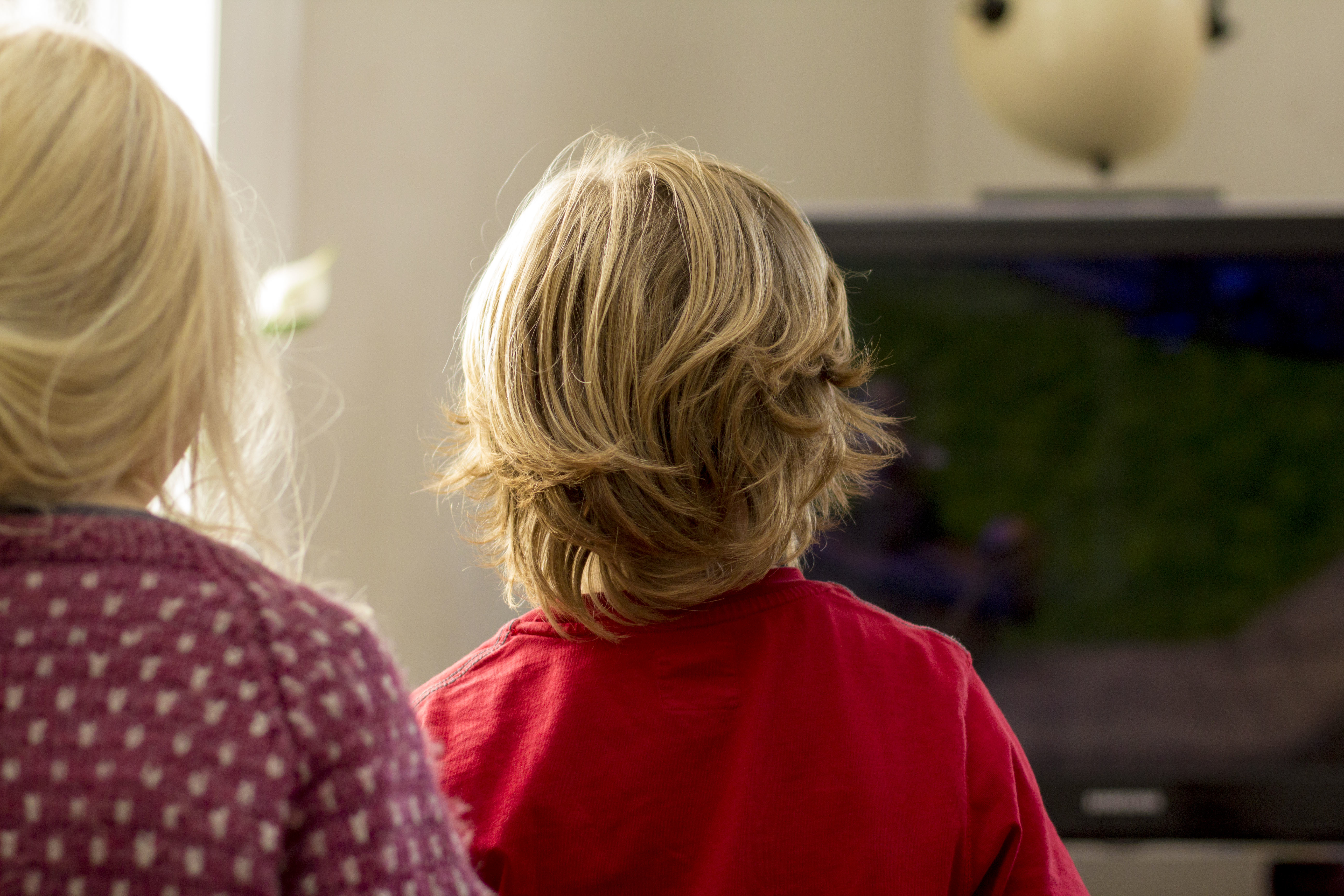
An example of an element of life I have an ambivalent relationship with, and one we keep working hard at balancing for everyone in the family.
Films first. Pros and cons, basic thoughts, a link to a top list, and our decisions.
Pros
On the one hand, a good film is a really good way to experience a good story, and good stories, I believe, are among the most essential building blocks of a good life (read, for example, The Stories We Live By by Dan P. McAdams). Stories, moods, metaphors, characters and narrative structures are a central building block in the shaping of a personality, and they are – and remain – a handrail for our thoughts. And so also for how we can understand our own life, our history and our present, and our view of the possibilities of the future.
Cons
On the other hand, it can just so easily become far too many hours in front of a screen if we adults don't stop it and set some frames for it. And if you have regular broadcast TV, it's completely out of control what kind of miserable content your children risk getting stuffed into their heads. By the way, I find it deeply problematic that bad films for children are not only bad (that is, a bit of a waste of time), but also tell stories as long chains of peaks, without the more nuanced narration, and that they are often built up like TV series for adults. I believe that this type of film for children, in too large amounts, can be downright harmful. Because they simply give some very poor and completely useless building blocks for the children's development.
Our conscious decisions: a guide for parents

We have chosen not to have a TV signal; we haven't had one for a good seven years. It has just become a bit harder to shut off the connection over time, because you can stream TV on the internet, and the kids can easily figure out how to start, say, Ramasjang, the Danish kids' channel, by themselves. Still, it matters a great deal that it isn't a single press of the remote, and that the adults don't watch TV. Not having a TV signal means that we adults also have a very critical media consumption. A good example is powerful. Children learn from the reality around them. Always, and in every way.
Instead, we have put all our children's films, which we buy fairly critically, on a hard drive. This means they have several hundred films to choose from, but we adults have decided which ones. When it sometimes goes wrong, and we a bit too uncritically start something miserable (especially the stuff for boys – the hero-ish things can be incredibly bad), I regret it bitterly, and for a long time I am plagued by a bad conscience. Why didn't I just check it on IMDb?
At the moment, our limit is that you can watch TV after 2 p.m. Sometimes you get to binge lots of films, sometimes it's just one. It depends on the day. And on whether the adults watch too, so it becomes a shared experience and a shared story and a shared language, or whether it's something one or two children do without adult contact.
Computer games: adventure or time thief?
This one is even worse. Computer games can be some of the most miserable, time-stealing, addictive, brainwashing, negative CRAP. And they can be the most incredible adventures, stories you can be part of yourself, universes of experience to share with others: friends, siblings and parents. In our house, playing computer games isn't necessarily passive; Storm (six and a half, the one who plays the most) jumps and leaps around on the floor and on the sofa when he plays on the Wii. Even with the kind of games where you might just as well sit still. Thanks to handheld controllers.
Here, too, we make quite an effort to choose good games with proper narrative content and a reasonably wholesome theme. It can't all be Bible stories (in fact, there are no Bible stories in this area at all), but you can at least sort out the most miserable stuff. We are also against games where you depend on others online, because they take up too much time, and other parents' decisions about when and how long you can play end up putting pressure on our reality.
Edutainment computer games are, like educational TV (Hr. Skæg, for example), something in between, which I can easily be tempted to think is okay, but which I still feel ambivalent about if they sit in front of the screen for hours without adult contact. It's always a question of balance. You can also get too much edutainment, but it's no demon. The demon is somewhere else; it lies in the feeling of emptiness when you have experienced a lot at the screen, alone.
Good and bad: what we recommend and avoid
Click here to find a list of films and computer games we are especially fond of – not real reviews, but still with a few comments attached. Just for inspiration. You can think all sorts of things, and it isn't about making a top ten or excluding anything – just about inspiring and sharing experiences.
Our reality, for inspiration: a summary

Right now, the decisions and balances in this area are: no screens before 2 p.m., except audiobooks on the iPad and actual school games played with adults on the iPad. Reading aloud every day (so stories certainly also come from the written language); computer games and films are chosen together with adults, and time-limited when we think it's getting a bit much. Or if it becomes the child's solution whenever they feel tired or uninspired.
The devil in the detail – the trap, the heart of the problem
In this area, you really need to be aware that both computer games and films are the easiest child pacifiers in the whole world. They keep the kids busy for a long time, you can count on them staying on the sofa, it's super easy, and you have a sense of control. If you have chosen the film or the computer game yourself, it's an easy trap to fall into, thinking it's good enough, even if it becomes many hours without adult contact. You can make a conscious decision that this is okay, and then it is.
But the problem isn't WHETHER they sit there behind the screen; the question is WHO is sitting there behind the screen. Because there is a colossal difference between doing it with or without adults – whether it's shared time with contact and presence and adult help (to understand, put words to things, read, share later, put things in perspective and so on) or something the children experience alone. Maybe this is really the most interesting problem with the screen: that it becomes a child pacifier?
And what do you get out of all that trouble?
It is, undeniably, far more cumbersome to organize everything on a hard drive, check the quality of films and computer games, steer clear of broadcast TV and all that. It's especially bad in periods when the children feel inspired to watch something on regular TV because someone they know watches it and talks about it. Then we have to start streaming and catch the right times, and explain that you can't watch it again and that you can't pause and go to the toilet or build LEGO halfway through. We have watched some of those Friday entertainment shows for short periods, because there was a lot of talk about them at school; we have watched the Danish Melodi Grand Prix two, maybe three times; and for periods we have watched the Disney show on Friday evenings. I'll gladly admit it would be easier if we could just switch on the box and let it run. But I think our cumbersome and deliberate way of doing it is worth it.
The children's perspective: quality awareness from a young age

We have a teenage daughter who can't be bothered to watch TV. It's a waste of time, she thinks. She can get caught up in watching a children's film with her siblings, but that's more for the sake of being together than for the film. If she got to choose herself, she would choose a book, a board game or a Facebook chat with her friends. Already at ten, our daughter had no interest in entertainment shows, the Grand Prix, the Disney show or any of the things the others watched. She was shocked when she came home from new friends who switched on the TV automatically in the afternoon and watched tween TV series, which she thought were dead boring (to put it in good Copenhagen terms). She isn't particularly into clothes and music, at least not the new and hip; she likes a few bands, some of the old ones too, which she has on LP (that's retro for young people, you know!), and she thinks second-hand clothes are a treat, preferably handed down from aunts and other lovely slim ladies we know.
Now we also have a six-year-old son who has had enough of the Disney show. The Disney show was introduced in March or so, and has been a fixed ritual more or less every week since, apart from the three months we were travelling. And now that's enough. He says himself that the films are too bad, that they put him in a bad mood. How lovely is that?
Our four-year-old daughter isn't especially taken with films, but she really appreciates being able to pause, repeat, watch the same thing again and again – so she can understand it and talk about it with her big brother and her parents. At the moment she is very affected by films if she watches them; she gets very unhappy when things are hard for the hero, and she needs help to get emotionally through anything more dramatic than Kaj og Andrea.
All in all, then, we have some children who became quality-aware early, who can say yes and no, and who know a wealth of good stories, many of them from films and computer games.
Update 2023. About a year after this article was written, we took a four-year break from gaming – you can read about that choice here (in Danish). And since life is changeable, we now happily game again – now with VR headsets and everything.
Written by Cecilie Conrad. Translated from Danish. The original article is available at CecilieConrad.dk.










Comments