🎙️Watch the video episode above or listen below



Also available on all other podcast platforms - find the links here.
✏️ Shownotes
Reading dominates how most people think about learning. Schools treat it as the first skill and the primary method. But children learn language, movement, culture, and complex ideas long before they read a word — and many things can never be learned from a book at all.
Sandra Dodd, Cecilie Conrad, and Sue Elvis talk about what children and adults learn without reading: music by ear, cooking by doing, sports by playing, trades by apprenticeship. They discuss how Holly, who didn't read until 11, outperformed her peers in a speech because she had no script to fall back on. They look at how YouTube, audiobooks, and conversation have expanded what's possible without reading — and why pushing children to read before they're ready can limit rather than expand their learning. The conversation also touches on Shakespeare as something better heard than read, the difference between memorizing words and real reading, and why book worship deserves the same questioning unschoolers bring to everything else.
🗓️ Recorded November 11, 2025. 📍 Tarragona, Spain
🔗 Sandra, Sue and Cecilie's websites
https://sandradodd.com
https://storiesofanunschoolingfamily.com
https://cecilieconrad.com
See Episode Transcript (Autogenerated)
Cecilie Conrad: 00:00
So here we are, the ladies fixing the world. I was about to say trying to fix the world, but we will fix the world somehow. Uh by beginning with what we see in the mirror and who we have around us and the ones we produce being mothers, mothers of unschooling kids. We're trying to fix the world with this lifestyle, right? So little by little, we will now air episode 10 of season three, where we will talk about learning without reading. As reading is such a cornerstone in the school system. The thing they have to learn on day one, and if they don't do it, all kinds of trouble arise. So we've talked a lot about how we learn to read and how we can learn to read at different paces and different times and for different reasons and in different ways. Today we are what? Are we deconstructing even that idea? Just talking about whoever you are, whether you can read or not. There are lots of things we learn without reading. I'm doing this introduction a little because uh we were actually chatting without recording, and uh I just thought, hey, wait a minute, you ladies are saying all the all the good stuff. Uh so I cut Sue off and brutally did an introduction, and here we are. So do you want to pick it up again, Sue?
Sue Elvis: 01:38
Um well this is Sandra's topic. Uh, she suggested this one, but when I was thinking about it, I remember how I felt years and years ago when we first set out that I had to teach my kids to read because learning will explode once my children know how to read. And then when Sandra suggested this topic, and I started thinking more. Well, I already have thought about this before, but I was thinking logically through what we could talk about. It there is there are so many ways that we can learn without reading. And there's no reason to worry about whether our kids can read or not. And also the other thing I was thinking about was I've heard a lot of parents say, well, my kids were reading, but now they're teenagers or young adults, they're not reading anymore. And I really want them to read, but that doesn't mean they're not learning. So I think that I should uh pass that back to Sandra because it was her topic and she might have totally different ideas about where she would like this conversation to go.
Sandra Dodd: 02:50
Well, what inspired me was someone came to the Facebook discussion. Facebook discussions of unschooling are not as good as a very dedicated area
Sandra Dodd: 03:00
where there's nothing else happening and people just haven't just read a bunch of irritating junk. So it's it's not it's not the best group I've ever been in. Once in a while, people just wander by, they have no idea what's going on, and they ask a question and then they get angry because the answers are from unschoolers. And that can't be helped because that's the way it is in the wild world of Facebook. But someone came in and uh into a discussion about a younger child learning to read, and she came in a while later and said, Did he ever learn to read? Because I have this child who's about the same age, and she starts telling how she's teaching him sight words and stuff, and she said, if he couldn't read when he was nine, it would be horrible, with exclamation points. I thought, uh, that's not a really good thing to jump into an unschooling group with. I was just trying to persuade her that it wouldn't be horrible. She got really angry and said I was horrible. So that's fine, it happens. But I had a child who didn't learn to read until she was 11, which surprised me at the time. As it was unfolding, I was surprised because she was very verbal, and I thought, why wouldn't she read? And then I started seeing all the things that she was doing without reading. She gave, we've probably said this in other topics, but nobody's gonna take notes through all those topics, I guess, or even listen to all those other ones. So one time she was in a Girl Scout presentation, Juliet Lowe's birthday celebration, and so all the girls are getting in a church, they're standing up one by one and giving a presentation. And Holly couldn't read. She was 10, I guess. And so she had, we had looked up the things she wanted to look up, and she was speaking about um girl guides in China. That was what she had been assigned, girl guides in China. When she first came home with it, I said, There aren't any girl guides in China. And she said, but the teacher said, I said, okay, well, Hong Kong, look up Hong Kong. There might be, and there were, because Hong Kong is gradually, or was at the time gradually changing from British to Chinese. They didn't just chop everybody off in one day and go, okay, no more English, no more of this girl guide stuff, no more of this, you know, Commonwealth nonsense, gradually. So they still had girl guides in Hong Kong. She actually had asked these questions and looked these things up and looked at pictures. We went to a store and got food from Hong Kong, snack food from Hong Kong, because they were doing a you know snack deal after with different countries. And when she stood up, the other girls were standing up with a piece of paper and reading in their nine-year-old, ten-year-old ability, whatever they wrote with difficulty, their reading with difficulty, muttering, you know, looking at the paper face down. Holly stood up there, looked at the group, looked around in them in the room, and spoke like a human, like an adult. And she told what she knew and what she had discovered. And I was so surprised. I mean, even then, even before we got there, I wasn't going to be surprised. Like, oh, I she might be afraid to stand up in front of people and speak. But that's all she could do. She couldn't stand up and read because she couldn't read. So everybody in the room sort of perked up, like, how is this girl doing this? It was, it was impress it was notable, it was obvious that it was different. And she wasn't looking at her notes because she didn't have notes. So then I thought, this is different. And she was in a play, and she not only knew all her lines, she couldn't be dependent on the script because she couldn't read it, but we had read it through it at home. You know, I'd read it to her, you know, my one of her brothers and I had done some lines and stuff because she was learning her own lines. We would read the other lines. And by the time the play came, she knew every part, everybody's part, she knew the whole thing. And the other kids didn't even know their own parts because they were dependent on reading it when they were practiced. So that's how I learned in the real world that there are things that reading is a little bit of a hindrance to learning. And even at the time, Holly had pointed out that Shirley Temple was really little when she was in movies' mom and she couldn't read. And she those movies were long. And I said, That's true. There are still people in movies who can't read. There are some grown actors who just are very not, you know, not good at reading, who are however, you know, flipped out about reading, not really good with it, and they learn their lines by somebody else saying them or whatever, reading them. And especially if they're doing other languages, they listen to it and then act it. Um, and so so yeah, well, because Holly asked me about how does Shirley Temple do this, I started looking around and reading how do other young actors do it, and how do some adult actors do it. And I thought, oh, okay, that's a thing that is better without reading. If you hear a person say a thing and then now you're supposed to say it in that way, but with your own, you know, interpretation, feeling, character, excuse me, it's very different than reading off a paper. And there's a reading voice that people have, like, I am reading this thing now. I shall pronounce every letter that I see. And that's I don't think that that should be considered reading. I mean, I could read German and Italian if that's all it is, sounding out the noises. And I would make some mistakes, but so do people, you know, so do kids. So I just think that unless you can turn what's on the paper back into living language, fluent, living, sensible language, it's not what reading, it's not what writing was intended for. Writing was intended to preserve some speech, to bring it back into the world. And not only just plays and scripts. So textbooks aren't. No one expects anybody to read you know the history of Russia aloud for fun. And so history maybe you can read from from you can learn from reading because a lot of it is is just stories and factoid, and it helps to go there and see the places that they're talking about, but you can't go to historical places. I mean, you can't you can't go there in those days. You can't time travel. So all you're gonna see is some museums and old buildings, but it helps. It's it helps. So then I started thinking there are many things that children learn before they can read. So I this was all in reaction to this one person being so adamant that she she was so proud that her child that her little boy at six could read 200 words. Oh man, reading 200 words isn't reading, that's memorizing some pictures and speaking them. That's like going cow, horse, dog to pictures.
Cecilie Conrad: 09:36
And is it slightly obsessive to know exactly how many words your child can read?
Sandra Dodd: 09:41
Yes, and so and so I suggested what I thought was politely that that time would have been better spent with them doing something that he wanted to do, something more fun. And she got defensive, and and I said, if she if she kept being very schoolish like that, she he would never know that he could learn things on his own. And she would not. If she thought she taught him to read, she wouldn't know that he could have read without it and he wouldn't know. And so that then I not only reading in mine was horrible, but I was horrible. So that's why that's why I brought that up, thinking that you guys could probably have lots of stories of not only little children learning to read, learning things naturally without reading first, but of adults, things that you things that don't come out of books. Auto mechanics. There are auto mechanic books that tell you how to set the spark plugs on a particular car, but you can't learn it without the car. You can't just read the book and do it. You have to have hands-on the automobiles and try it and see what that feels like. What do they mean? This gap. What do they mean? This torque. And so even knowing the vocabulary isn't any good.
Sue Elvis: 10:54
If you go to YouTube for that, if you'd get your car and you'd put your phone with a YouTube video next to you, and you would watch somebody else do it if you didn't have a mentor in real life. And that
Sue Elvis: 11:08
that's what a lot of people do, isn't it? They go to YouTube and watch a video. That's what I'm whenever my washing machine uh there's a problem with it. I know there's a YouTube channel that has the same washing machine as I have. And instead of looking for the manual and working my way through the manual, I go straight to the YouTube video and I watch, and then I run to my washing machine and and it's fixed in 30 seconds a minute to clean out the filters and things like that. But the other thing I was thinking about, Sandra, about Holly's story, which I love, is that speakers who don't use notes are so much more interesting and engaging than speakers who stand there and keep referring to their notes and sticking exactly to what the word for word what they're going to say. And those speakers who don't read know their stuff. It's really coming from their heart, and it um they're passionate about what they want to say, so they don't need notes. So I was thinking about that, and also the history you were saying about maybe we would read a history textbook, but what about history podcasts where we're listening to stories, and the speaker is bringing that alive for us by telling us stories of days gone by and their emotion in their voices? That is, I love listening to history like that rather than reading a dry account in a textbook. I mean, not all textbooks are dry or books about history are dry, but podcasts give you that more intimate uh connection with someone's story that they've researched and they are excited to share with you. So we didn't need to uh read to let's go and have a look at a podcast. That's true. Good point. And we were thinking, we were talking earlier, uh, just before, when Cecilia cut us off and said, Oh, let's get started. Let's start recording this podcast about how fortunate we are these days to have more than one way of learning that's available to everybody of all abilities, all ages, whatever, all learning styles that we can listen, we can read, we can watch. Um, we can't feel though, can we, on the internet? But we smell. It was this that was my dream as uh a younger person. I thought, when are we going to have something that would allow us to smell? Or we're so I could smell the beautiful scent that you're wearing today, Cecilia, without actually being there. That's gonna take a lot more technology. But I think this it probably happened, I don't know if it happens for all sites, but some months back I was thinking about wouldn't it be good if I could change, turn my blog into audio, all of it, uh, so that people could come along and listen to all my stories. Perhaps I should just record them all, put them all on the podcast. And then I realized that if I use my phone and I scroll down to the bottom of the page, uh there's some additional features at the bottom of the web page, and one of them is listen to this web page. And somebody will, well, somebody technology, some technology will read me the article and they read it to me really quite nicely. It's not robotic. And I thought, well, I don't really need to uh transform my blog into audio because we have the technology that's already doing that for us as long as we know about it. And then we can listen to anything that's on the internet instead of reading it. We can just find the article that we and think, well, I wanted to listen to that one, and just by pressing a couple of buttons at the bottom, we can do that, and kids could do that, it's really easy. Uh so that was something I discovered recently. Uh, I didn't know why it took me so long to discover that. But what we were saying, Sandra, at the beginning was that um we have all these uh opportunities these days with technology, so kids can do a lot more than maybe they could when I'm thinking of my kids when they were younger and we didn't have computers and we'd have to buy things like audio cassettes and videos, but it's still there at the end of our fingertips. We just have to access it.
Sandra Dodd: 15:56
I think I don't know, I I I want an outline, but I don't have one. I think if we look at very young children, no one expects a baby to read. No one's expecting a three-year-old to read. And yet they're learning like crazy. They've learned their native language,
Sandra Dodd: 16:10
at least one language, when they're that little, and they're good at it because they have a native speaker's intuition. They know when someone says something and it's wrong, and they'll laugh if the grammar's funny or you used a wrong plural. That it'll make your little kid laugh. So they must know it's wrong. And that's how you know how efficient that language acquisition is in infants and toddlers, and they learn all kinds of things like putting their clothes on and and putting their shoes on, and you know, all those sorts of things that they don't the moms don't go look in a book to see how to teach the kids, and the kids you know it has nothing to do with books at all. They learn how to eat the way the locals eat, however, it is chopsticks, forks, knives, whatever it is. Americans don't use knives much. When I was in Europe, people were saying, How, how you're Joyce and I were visiting another family, Thresh Tetterell and I. And the dad there said, When do you use a knife? And Joyce and I looked at each other. We were in our 50s or 60s, and we just looked each other big eyes, like nobody ever asked us that. And I said, Pork chops, steak, she said. You know, like we had to think about it. But if food was put in front of us, we would know. Does this need a knife or not? Yes or no? And if it doesn't, don't. You know, don't get knives dirty, don't have knives on the table, you don't need them. And then in in Portugal, when the inschooling's dad dad said they always are supposed to have their knife in their hand all the time. And he said, if he ever put his knife down during a meal, his mom would say, Did you lose your arm in the war? to pick it up, to always be holding a knife and fork. And Americans just don't. You know, it's cartoonish for us if we see a uh like a mother goose book and and somebody's holding a knife and a fork. But in England they do. In Portugal, apparently they do. And the United States, if we can eat it with the with a fork and cut it with the side of a fork, that's easier. And in England they call that cowboy style. Yeah, whatever. So pe people eat differently in different places. They have different things on the table. You notice the salt on the table, or did the cook use this is it limited to the to the cook? That's not in a book. That's something that you just learn culturally from being around people doing it. And not only did the kids learn it without the book, the parents didn't even realize they did. The parents hardly notice that the kid learned to run and jump and climb because that's what little animals do. That's what little primates do, that's what little humans do. So they've learned so much, and then they turn six, and the parents get crazy, paranoid, and nervous about having to teach them to read. I had teachers tell me when I was in school that humans could only learn from reading, that we had no instincts, that everything that humans had to learn, you know, needed to learn, needed to be come, needed to come out of books. And I wasn't smart enough at that time to say, well, what did they do 800 years ago? What did they do 2,000 years ago? Because I wasn't that kind of kid. I just probably wrote down what the teacher said. But even then I thought, eh, it doesn't sound right. People must have instincts. And so then I started thinking about the things that you need to touch to learn. And I there are three things that I have credited other people, individual other people. Imelda Martinez for teaching me guitar, and she says, No, I didn't. John Trout for teaching me recorder, and he said, What? You could already play. And Rodima Mosley for teaching me calligraphy. Here's what the thing
Sandra Dodd: 19:33
is. I every time I use those instruments or those that equipment, I think of my teacher. But it was pretty much one lesson in each case because I wanted to learn it. I had a guitar, I had a recorder, I had a pen and ink, but I didn't know what to do now. How, how, what angle my hand, um, how put how hard to hold this? How when they say half-hole, what do they mean half hole? What angle of your thumb? Um, how far into the ink do you dip the pen? How hard do you press on the paper with that pen to get the ink to come out? If you're pushing hard, you need to get more ink, or am I doing a bad angle? So I that's what I needed. I need a person to see me doing and going and tweak it to coach me, to say, turn your hand a little bit, or that's too hard, or not so not so hard, or you don't have to, you know, here's how you can hold your hand to do finger picking. And once they showed me those few things, and I said, Oh, thank you, that's great. And then I just practiced more and learned more, and I still hung out with those people and did it with them in their presence. But I wasn't waiting for them to tell me the next thing. It wasn't, now tell me something, now tell me the next note. But I did need that hands-on with another human, and a book couldn't have done it. A book could not have covered those things. I did one day coach somebody on on by email. I was in an email group and she said, I'm trying to learn recorder, but I'm having a hard time with this. And I was able to say, You might be doing this, you might be doing that. But that's not the best way. She was on some other continent, right? It was just a freakish situation. And I said, When I didn't know how, I tried to use my thumbnail, but that's not good. Just try to sort of squeeze your thumb into the hole a little bit so it squeaks. They say half hole, but it just needs to be a little squeak. Like seven-eighths of a hole, probably. And she said, Oh. So it was, but it was, you know, 150 words for what if I had been there, I could have just shown her.
Cecilie Conrad: 21:25
Yeah.
Sandra Dodd: 21:26
And so I think it's like that with knitting and crochet and embroidery and all the things that women learn from other women, you know, you have to see them do it a little bit. How are they, where are they putting their elbows? How are they, you know, how tight is that string around their hand when they're doing crochet? And if yours isn't working, they can look over and say, Oh, try this. You're holding it.
Sue Elvis: 21:44
Do you think that do you think you could learn that by experimenting, but it would just take a long time? Uh just have a go at I I'm, for example, I'm learning to draw with Procreate at the moment on my iPad, and all the tools are there. And I'm following a video course, and the presenter is telling me how to use all the brushes and how to get special effects. And I think, well, I could sit there just with the program and experiment. And I would learn, but it would take me so much longer. And her ideas, I may not come up with the exact ideas that she has, which is good because I might have my own ideas, but sharing of ideas, we get a bigger pool of ideas. But yes, I could imagine you sitting there, Sandra, and because you love your instrument, you would work it out eventually because you would just persist until you got the sound that you want. But um, can I go back a little? Because I just found something I want to share about something that you said, Sandra, about the knife and fork and how you've got to keep the knife and fork in your hand. And it just reminded me of this little poem I learned years ago as a child. Um, I eat my peas with honey. I've done it all my life. It makes the peas taste funny, but it keeps them on my knife. And I thought that was written by one of these people who have to have the knife and fork in their hands all the time. As a child, I used to think, well, why are you eating your peas with your knife? And I thought you just skip them up with a spoon. But anyway, uh, that's what that reminded me of. And that was a nice memory. I just always loved those words as a child. Is it a poem? It's anonymous. No, we don't know who wrote that one, but somebody who used knife and fork to eat their peas.
Cecilie Conrad: 23:50
There are so many interesting things that we forget we learn. I think Sandra's point of what the little kids learn before we can even expect them to read.
Cecilie Conrad: 24:04
And those kinds of things we keep learning them. And I am sure that I have in this podcast shared many times about my oldest son who only learned to read when he was 13. How I'm trying to get to the point of opportunity cost, really. All the things he did learn while he was not reading, he would probably most likely not have learned if he was reading. So there's that to think about. Instead of pushing our children to read, letting them learn what they want to learn in the way they want to learn it is to me clearly an advantage. Clearly part of this whole unschooling mindset of trusting that they know what they need to learn and whatever they throw their interest at will always be the right thing because it is the right thing if it's the right thing in their mind. One thing I've noticed with him specifically, he's this is now six years ago, so he's 19 now, is that he has a memory that is amazing because he couldn't read. He was learning things in all kinds of other ways, and he could never go back and just flip back in the book and get the list again, or get the name again, or the number, or the year, or whatever. Whatever he was learning, if he was interested, he had to pay attention, he had to remember it because otherwise he would have to go back to that museum and see that info video again, or talk to that same custodian again, or whatever, listen to that same program on the radio again, and that would not necessarily be an option for him. So he learned to really pay attention to the things that he wanted to learn when he wanted to learn them. Whereas if you know you can just go back, in a way, reading is partially invented so we can forget things, right? It's not so that we can remember, it's so that we can forget. I'm allowed to forget. I wrote it down. I don't have to keep it in my mind. I can forget, I know where to go and read it again. And I think one of the great advantages of not reading and learning in other ways is the way we remember it. I also think going back to Sue's um course in in drawing on the iPad, yes, you could probably figure it all out by yourself, but we learn from each other, don't we? We stand on each other's shoulders, we learn during all of the generations, basically, we've learned on the basis of what the generations before us have learned. And I'm just wondering now whether there's some sort of point to could there be um an advantage in learning from others? Do we pay more attention if someone's telling us about something rather than us reading a book about it? Or is that just sometimes true?
Sue Elvis: 27:24
If you've uh are listening or with somebody who's passionate about their subject, then they can make the subject their excitement is contagious. And maybe it's inspiring to be with learn with others. For example, that procreate drawing class, when I was watching the video of the woman drawing, I thought, wow, I want to draw that as well. I can see the possibilities, and she's making it sound really easy to do. Even I could do it, I'm not an artist. So inspiration, maybe content can excitement, and then you as you were you saying, uh Cecilia or Sandra, that we can save a lot of time by uh learning from others. We don't have to start right at the bottom again. We maybe we can um actually add in our own our own um thoughts and ideas into the pool so that we all uh benefit. And I think that's exactly what we're doing today, isn't it? We're sitting here, nobody's going to read this unless they read the blog post that goes with it or the transcription. But we're people are listening to our thoughts and ideas and our this conversation, and we're all throwing in our ideas into this pool so that it's more valuable than if only one of us was speaking. But as I am, I'm as you're saying things, Cecilia and uh and Sandra, I'm having thoughts of my own, and I'm we're we're working together here, we're learning together, we're um presenting together because we're better all together than we are alone. So maybe this is a good example of learning without reading and learning with other people.
Sandra Dodd: 29:23
I just realized that I have a current situation involving all these things. I have someone I've known for 30 years. He's in the same medieval studies group I used to be in, and he made shoes and boots. I had a pair of shoes that he made, but he's making
Sandra Dodd: 29:37
a book, it's gonna be it'll have color pictures, I think, because it'll be online, it'll be a PDF or something. But he wanted me to read through and see, you know, for editing and and for clarity and stuff. So it'll have photos, but it's for making shoes because people can't always hang out with another shoemaker, with a shoemaker. So it'll have photos like this. I don't know if this will show, but it's how to measure the foot, and it has a you know, a photo, and it's it's harder in black and white. But I told him I have a hard time working on a Google Doc or or Word document online, you know, to figure out how to put the corrections, and I would rather do it on paper. And he said, Okay, I would too. So he printed it out and sent it to me. And there's one of the boots that it'll make. Um but it's so hard to see it in black and white.
Cecilie Conrad: 30:27
No, no, no, I see it.
Sandra Dodd: 30:29
It can be and so uh I think that's a that's an example. He wants to pass on what he knows because we're all getting older, and he we used to be involved in a philosophy discussion pre-online. It was a paper thing that I used to publish. Um, and so this this involves paper instead of online, because that's what we're both used to because we're older, but it will end up online and probably with color images, and maybe in a place where people can ask questions. And I think that's interesting because no one will learn to make shoes from just reading that. They'll have to actually get some leather and measure a foot and cut the leather and learn how to sew leather, there are all these parts. But if assuming that someone really wanted to, the way I really wanted to learn to play guitar, they it will be better than nothing. And the same with using a drawing program, if there's something that that particular teacher, podcaster, I don't know how she has that presented in her course, if there's something that you don't understand from her, you could just go to YouTube and look up that program and see other people doing it. They might they may not be teaching people, they just maybe maybe showing off their best piece or something, how they did something. And so because of the internet, we can see people in color clearing a clog in a vacuum cleaner. That's something I've gone to YouTube for. There are three vacuums now. It's like, okay, where do I need to even look if this vacuum can be clogged? And some nice person who fixes vacuum cleaners for money has made a video for people who can't bring their vacuum cleaner to him because he doesn't live anywhere near them. And so people are preserving their knowledge in a whole different way than writing a book. And this is sort of a half and half. I don't know that Ted will want to be have a videotape of him making boots. I there may already be one, I don't know. But there will be out there somewhere people making boots. Um but you can't make boots by reading, and you can't learn to drive a car by reading. I remember when I took driver Z. There's a picture still in my head when I'm trying to parallel park of halfway the car, halfway, and then how to turn. If you turn it too soon, you're gonna hit the other car. If you turn it too late, your butt's in the road. Okay, I get that. And then you have to try it with a car. And last summer, last well, I don't know, some earlier this year I was helping my teenage granddaughter drive. And I that picture was in my head from the 1960s. And I said, uh, when you're slowing down, you know, when you're gonna when you're pulling out of a parking place or when you're making a curve, go slow at first and then speed up. When you're halfway, now speed up. And I I that I sort of learned from diagrams out of a book, sort of. But a teacher told me this is in words, and then showed me a picture with an angle, you know, a picture of two cars and another car. And that didn't hurt me to see a picture. It wasn't reading, it was reading a picture. And now I've got I've been able to pass that on, but in a car, driving a car with her trying it and me coaching. So it's another thing you just can't learn to drive without driving. You can't learn to play an instrument without playing it. And there's a lot of traditional music that's learned, not teacher to student, but hanging out with the with the musicians while they're playing. Bluegrass is one. People learn bluegrass or um Irish music, Irish instrumental music by being where it's being played and just listening, listening, listening. Getting a little instrument, maybe a drum, trying it. If you play fiddle, wait for the fiddle part to come and just do the little part you can do. You're not the main fiddler, you're just on the side playing along quietly on the side until you get better. And gradually, gradually, then you know the songs because you've heard them a hundred times and you can do things in there. It's not learned by having it written down on a piece of paper and saying, This is how this here's Irish music notation or bluegrass notation. That's not how it goes. It goes from exposure and gradual involvement. A lot of dance is that way. You know, their ballet is very, very formal. You absolutely have a teacher, you absolutely have to follow the rules. And there's a lot of dance that's not that formal where you experiment and somebody says, uh, here's a better way. Try this. And it's not intended to all be the same, it's intended to be cre creatively unfolding and individual. A lot of music and dance is that way.
Cecilie Conrad: 35:02
A lot of learning is that way. Traditionally, I think being part of something. I remember a book title from university, legitimate peripheral participation. To
Cecilie Conrad: 35:16
be part of something without being in the center of it, being uh some anthropologists writing a book about how do people learn in not reading cultures. But we don't have to be a not reading culture to learn that way. I think we all learn that way. We learn a lot of things by being part of something and by wanting to be part of something, by being around people who know things. Kind of just absorb a lot of knowledge by being around people who can do things. So that makes for that makes a lot of sense to talk about in this context, all the things we learn that way.
Sandra Dodd: 35:58
There's a book called The Book of Learning and Forgetting by Frank Smith, and he says, Whatever you want to learn, join the community of people who do that. Even reading. If you want to be a reader, go to book clubs, go to libraries, be around people who are reading, see what they're reading, why do they like it? How are they reading it? You know, how are they keeping their place? How are they who are they discussing it with? What are they reading reviews? All that sort of um, you know, literary. If you read if you're reading murder mysteries, what are the good ones? What are the ones that everybody seems to have read? What are the ones that are a little questionable, not that great? Why? Because not everybody needs to know that, but if you really want to read those, you might want to know about a certain series or some that were written about racetracks or little English villages or whatever, the mafia. You know, different, different genres of. I've been listening to murder mysteries from India. And that's interesting because the laws are different, and I'm learning things that I didn't expect to learn. But I've always known that. I learned some costuming things from cookbooks, from medieval cookbooks that had pictures of feasts, and I'm like, what is he wearing? And I would go follow that trail. And so there's a law in India. I knew when I went to visit India, I went to the US State Department website. It's like advice for travelers. But the kind of advice to keep you out of jail, kind of, you know, like not just like take your shoes off in the house. Yeah, yeah. If you're driving and you hit a cow or a pedestrian, calmly leave your car and go to the nearest police station. Before I went to India, that sounded reasonable. They said because you might be in danger of people like harming you or your vehicle. When I got to India and I saw probably a million people, I saw hundreds of thousands of people. I was there for a month. I saw two police officers, one car and one guy on foot. So I'm thinking, how far was that police station? Walk to the nearest police, I don't think so. But anyway, so then years pass, I'm reading this novel, and they there was a term, a legal term, grave and sudden provocation. That if you've hurt somebody really badly or you've killed somebody, if you were provoked suddenly and seriously, that's a defense. But it's something I learned from reading, but it's something that I that I didn't mean to learn. It came up like a random connection, a random connection that goes somewhere else. And I have a friend here who's a defense lawyer, and I said, Hey John, do you know this this law? And he said, I it's I've heard the term, but we don't use it here. And I think it's because of religion. Because Christians are expected to have um a lot of self-control and to follow the Ten Commandments. Thou shalt not kill. Well, I killed him because like just shut up, you killed him, that's it, you're going to jail. In India, it's assumed that everyone's peaceful. Everyone wants to be peaceful. Why wouldn't you be peaceful? If you're not peaceful, somebody really riled you up all of a sudden. They made you go crazy. And they shouldn't have done that. So in Hinduism, it makes more sense. Like this poor peaceful guy is minding his own business and somebody hits a cow. So I'm sorry, that was that was a tangible.
Cecilie Conrad: 39:32
That is disturbing public order to the extent that people lose their minds.
Sandra Dodd: 39:36
So what's the well it's something if you live there you'd know. And if you don't live there, it can be surprising.
Cecilie Conrad: 39:45
Do you remember the title of the book? I'm curious to read an Indian crime.
Sandra Dodd: 39:51
I don't. When it was not the series that I'm reading now, it's not the guy with the pet elephant. It was another, an older series. I would have to look it up. Sorry.
Cecilie Conrad: 40:00
But it just And you did also say something interesting though. Another interesting thing. That you're listening to it.
Sandra Dodd: 40:11
Right.
Cecilie Conrad: 40:11
So you're reading it and you're hearing it.
Cecilie Conrad: 40:14
Right.
Cecilie Conrad: 40:17
Because there's a lot of audiobook going on and a lot of reading on the Kindles and in physical books.
Sandra Dodd: 40:23
And we have to what's one of the mystery
Sandra Dodd: 40:26
series, one of the mystery series is written in Punjabi and it's translated into English. So I'm listening to an English translation of an older from the 50s, I think, Indian detective series. And because I was in India, some of the things that they tell in the stories I can picture, and that's wonderful. And one was in Bangalore, and they went to a library, they said a um a library from when the English were there, you know, from colonial days. And I I've been to that library. We were going to look for monkeys, and there's a um tamarind grove. And she said the monkeys will be in the tamarind trees. They weren't that day. But I so he talked about that library and had a rose garden, and I saw the rose garden is old and ratty, it's not good anymore. But I've been there and I thought, oh, how nice that I just accidentally, by listening to murder mysteries, got another view of a place I have photos of that I took myself. So I didn't learn that by reading. Now that you say that, you're right. I was listening and it was connecting to things I already knew or was interested in.
Cecilie Conrad: 41:27
But is it a form of reading? Um I suppose. It's just interesting because I think in if I listen to an audiobook, I'm clearly taking in information. And there, of course, a difference between listening to an audiobook. I'm not sure I know the English term. That's not fiction. Listening to a book about something. Nonfiction. And nonfiction. Oh, easy. Not fiction is called nonfiction. There you go. Um I'm not native, okay? Um listening to a nonfiction book as an audiobook. I've done a lot of that and it's great because I can take it in real quick. But I also feel it's harder for me to navigate the information because I can't flip back and I don't really have the index and I haven't seen all the visuals and the thing. So that there are pros and cons. I'd actually prefer to have the book or somehow do both. I don't really know how that would work. Um, but I've listened to a lot of novels, and it's different from reading a novel, but it's not very much different from reading a novel, actually. The experience. I enjoy reading with my eyes and in the silence and in my own tempo and with my own inner voice. But I also think been a mom for 26 years. I guess that at least half of the novels I've read, maybe two-thirds, maybe even more, since I became a mother, I've heard them because I've been able to do practical stuff meanwhile. So isn't it better to read or to take in the stories, not being religious about well, religion is the wrong word to use here, but it hasn't been that important whether I was reading the book or listening to the book. I have a list of books I'm reading. Sorry, go on.
Sue Elvis: 43:43
No, no, I interrupted you, Cecilia, but what you were saying, I keep a list of all the books I read in a year, but some of them I haven't read, I've listened to you, and I count them as equal. I don't write down this is an audiobook, I just I've read this story. Whether I've read it or I've listened to it, I have had, I know the story. I've read um some of them are nonfiction, some of them are fiction. Uh, but when I get stuck on the book, I go and listen to it because I can adjust the set uh the speed of it to suit myself, whether it's never slower, but you could make it slower. I always make it a bit quicker because I find sometimes it doesn't go fast enough. Uh and then because the person is speaking, I focus better because I don't lift my eyes from the page and look around and think of other things. I have to keep on listening. I focused on it and I get through books faster. I've got a lot of Kindle books that I have got stuck halfway through. And what I'm doing is I'm listening to them now to get them finished because I know I will get through them better if I'm actually listening. But what you were saying about um you want to flip back and have a look at something again, couldn't you do something like uh you for this podcast when you're editing it, you have a verbal marker that says um, you know, cut, and then you know where to go back and look at the bits that need cutting. But if you're listening to something, you could make some notes, uh, audio notes, and you could say uh if there was something there that you really loved, you could just make a quick note about it, stop the recording, make the the vision uh the audio note and say where you heard it and which chapter, and then keep on listening so that you have your audio notes later on. Uh I think there's um some um apps that allow you to do that. To they have recognized that when we're listening, we also want to make notes uh to come back to you later. Oh no, I can't remember the name of one.
Sandra Dodd: 46:09
There is no Audible.com is what I use, and they have bookmarks. Yeah, and you can name the bookmarks. Some I've used that some, but sometimes like there's a book by Robert Sapolski called Behave, and I bought a copy because there was so much in there that I wanted to get back to or that I wanted to share with other people, or that I just wanted to think about. It's about how human behavior works, um, you know, in brain chemistry and all that. And I didn't want to just listen to that one. I also didn't want to read it because it's a big old book. So the two together have been a good combo.
Cecilie Conrad: 46:40
Yeah. Speaking of that one, that's a book I've not read, but my son has read it, and every time he read something interesting in it, he felt the urge to tell me about it. So this is a book that like by what? By sheer being around someone who read it, I don't need to read it now.
Sandra Dodd: 47:06
Well, you're aware of it now, and if you wanted more, you know where to get it.
Cecilie Conrad: 47:10
Yeah, and we actually have the book because he read the physical copy of it, not a Kindle copy. It's just yeah. And that actually started with YouTube. If we're talking about learning journeys and reading and all these things, this is the child who learned to read late. He reads all the time. I've told the story many times about him. Um, but he found that
Cecilie Conrad: 47:32
he likes to learn by talking to people. And one of his favorite persons is a well, a friend of his and a friend of all of us who is my generation, and they like talking, especially at night. Um, and this guy, he was following Sapolski's um lectures that Sapolsky has put out on, I think it's first year of biology on Stanford's. He's put out a number of lectures, and his friend was telling him about how he follows these lectures, and Stone was like, huh, so I can go to university basically by sitting down with YouTube. Let me do that. And he did that, and he followed that whole series of lectures and took notes and was really excited and told everyone about it, and and then we gave him Sapolski's book. I think he just came out with another one, didn't he, Sapolski? Oh, I don't know.
Sandra Dodd: 48:30
Uh, there's a Robert Sapolski um quote on my website that I had from somewhere else, but I wrote to him and asked him if he minded if I put it there, and he said no. I already had a page called Gilligan's Island about all the things that I thought when I was a little kid. One of the first things, the first thing was ever published of mine in home education magazine, somebody else lifted it and sent it to them. And they published it. And it was when I was eight or nine, and I would come home from school and sit down in front of Gilligan's Island, it looked like I wasn't doing anything. It looked like I was just zoned out, but I was really thinking like crazy. And then I listed a lot of the things that I wondered and asked, and you know, thought, you know, asked myself. I didn't have anybody to ask. And he had written that he became a scientist because of watching Gilligan's Island. And so he said, talking about it as if everyone Gilligan's Island is a comedy TV show, American comedy from the 60s about some people who were shipwrecked on some island. They went on out on a boat from California and got shipwrecked. And they stay there for years. And occasionally people come by, like a Japanese guy who didn't know World War II was over, um, floats up and stuff like that. You know, weird stuff. Cosmonauts, Russian cosmonauts uh splash down near there. All kinds of weird stuff happens, and they never get rescued. But it's it's so it was it was just it was silly. And there were seven people there, I think, and one was a scientist, a movie star. There's a song, just sit right back, and you'll hear a tale, a tale of a fateful trip. About to tell you who was there. That started on this tropic aisle aboard this tiny ship. Oh man, every verse changes keys and it's gonna go high. The mate was a mighty sailing man, the skipper brave and sure. Five passengers set sail that day for a three-hour tour. The weather started getting rough. The tiny ship was tossed. If not for the courage of the fearless crew, the minnow would be lost. Um, the ship set ground on the shore of this uncharted desert isle with Gilligan, the star of the show, the skipper too, the millionaire and his wife, the movie star, the professor, and Marianne here on Gilligan's Isle. Okay. Mary Ann was this farm girl who wore gingham, like a little bit like Dorothy and the Wizard of Oz. Um, ginger was a movie star who owned the only clothes she had with her for inexplicable reasons were long ball gowns. She had a lot of makeup. And um, the professor was non-specific, but he made a washing machine that you pedaled like a bicycle. He made all kinds of things, but they never said he was a professor of what? He was more like an engineer. Um, but a lot of people just thought that was wonderful, you know, that there was this guy who could build stuff. It was just silly. And the the actor who played Gilligan had already been a famous comedy actor on TV in the United States. But it was in reruns for a long, long time. And so I thought that was that something that seems goofy could inspire someone to become a professor that we're talking about now on a podcast, that Robert Sapolski got interested in human nature and how things work from that show is is eh, I'm not surprised because that's how things happen. I have another story there of a woman who's an engineer or mathematician who got interested in it because of My Little Pony. She would braid the hair on My Little Ponies and she started seeing the patterns. And after I read that, her name's I don't remember her name. Um, and I showed my daughter, my daughter said, Oh yeah, and she grabbed up a pony and starts braiding. And it's like recursive math of some sort about patterns of odd numbers. And my daughter, who was a teen at the time, understood it when I was reading it to her. So there's a whole undercurrent of shared information or inspiration that can cause people to want to become scientists that was not intended to inspire people to become scientists. And it's not just one person, it's like I don't know how to describe that, but what I wrote about Gilligan's Island is not unlike what Robert Sapolski reported about what he thought about Gilligan's Island as a kid and this thing with My Little Pony. I know two people, I know two people who played with My Little Pony and learned a whole lot of math. Nobody sells a My Little Pony as a math uh manipulative time.
Sue Elvis: 53:13
Sandra, how long ago is it that you watched an episode of Gilligan's Island? Because you knew every single word of that song, which made me think that singing and uh poetry um songs we learn so much just by picking up a song that we love.
Sandra Dodd: 53:33
Um, in the same way that people go to learn Irish music and bluegrass by being there and repetition. I watched that show a lot and it played it every time. And it's a good song. It's a fun song, it's funny. And they changed the words. Uh the very first season it said the professor and the uh the movie star and the rest are here on Gilligan's Isle is what the rest, they're only two. You know, don't say and the rest, that's a crummy song. So they so after season one, they said the professor and Marianne, which made way more sense. There's also an outro, and it has a they quit using the outro when they do it in reruns, because when when shows go on uh are in reruns for years, um they will put advertisements or whatever, they just shorten the credits, they don't put the full credits like they used to on TV. There's a weird owl song called Amish Paradise that's a parody of Gangster Paradise, and he has a verse in that that's a four-line verse, you know, lyrical from the outro of Gilligan's Island. He doesn't say so, but everybody my age knows that he's quoting Gilligan's Island. And it's there's no the way Weird Al says it, there's no phone, no lights, no motor cars, not a single luxury. Like Robinson Caruso, it's as primitive as can be. Okay. Robinson Crusoe, not Caruso. Caruso was an opera singer. And on Gilligan's Island they said it like that, Caruso, like Robinson Caruso, it's primitive as can be, because it fit the tune, because it was funny. Robinson Crusoe is one of the oldest English novels. It's from the 1700s. And it's about a shipwreck. A guy who's uh marooned on an island. And it's just it's just so funny to me that that a thing can can go from an English novel to Gilligan's Island to Weirdell. And if you get it, you get it. You know, it's like it's like a a glorious gift to the people who knew two or three of those things to see that that trail, that connection. I have gotten us off topic of what you learn without reading, in a way. No, you haven't done it.
Sue Elvis: 55:52
No, it goes back to that idea that we um sharing knowledge, sharing ideas that you build on. Someone built on that English novel, they took something out of that novel, they used it in Gilligan's Island as a uh a song in the song, and then was it Weird Al? He took something as well. So they're not original ideas, but it's an original use of the idea, and we're always doing that, aren't we? Ideas and thoughts circulate, and what we do creatively is we put our own spin on it. We take something, take well, take two, three, four different things and put them together uh to make something unique of our own. So I I love that. Uh yeah.
Sandra Dodd: 56:46
Learning from music. That's that wasn't going to be the topic, but I could certainly talk about that a while. But that's that those came from singing.
Cecilie Conrad: 56:55
Yeah.
Cecilie Conrad: 56:56
And there's one way of learning. And I think the reason we are having a conversation about learning without reading is because reading somehow takes sense of stage in the school system, and it takes sense of stage in a lot of people's minds about what it looks like to learn. Learning is something that involves books, sitting still, put your notes down, take notes, learn by reading. And this example, this last example, it's funny because it's the book Robinson Crusoe was clearly on the um, I don't know, kind of mandatory classics list when I grew up. It was on all the bookshelves, and of course, you read it, like you read Shusviana, you read the old classics. This is an old classic, everybody you have to read it. There was an index finger when I was a kid. Um and then now you're telling me about an American silicio for afternoons, I guess, that I had never heard about because I'm not American and B, I wasn't born in the 60s. Um and then a third level of reference points that pulled things together that some of it is the index finger, you have to read it, some of it is not taken seriously, but be can become a serious inspiration for people. And the third level, I don't even know where to put it. Uh, modern music. Connections. We we we learn from all these different ways, we absorb knowledge from all these different ways, and it's very satisfying when there are connections between these different layers and these different levels of why I was about to say seriousness because why are we still thinking that it's more serious if it's a big and dusty book with no pictures in it, and less serious if it's a silly show?
Sandra Dodd: 58:55
And why is a TV program that's about silly, a silly shipwreck less important than a than a maybe a uh murder she wrote or some you know series that's not stupid, that's not so silly. Um, it just it's people have prejudices about media and about tone and about what kind of music did those lyrics come from. And that's okay. When I was teaching, I taught for six years. I taught English for six years when I was in my twenties, and every Friday I would sing a ballad because that's what I had been doing, and that was my big interest. But I knew, and I didn't tell the kids, that part of my checklist was to teach poetry and to teach vocabulary and to teach literature. So I'm like, okay, on Fridays, I'm gonna sing a ballad. That's it. I checklist it as those things done, but I don't tell the kids. So I some of the ballads were there was one about a crusader who goes to the to Turkey and is captured and falls in love with the girl, and you know, blah, blah. There are some about um battles and some about just silly sort of humor within families. Um and train train wrecks and Frankie and Johnny, which is a betrayal and murder story that has some interesting aspects, the electric chair and just stuff like that. You know, the so as to vocabulary and trock trivia and history, it was really rich to do that. So I had I was teaching 12-year-olds, and then years later I was teaching 15-year-olds, and this girl came up to me on the uh on campus at the the other school where the older kids were, and she said, I was in your class in seventh grade, and I still remember, I still know what ballads are. And I said, Yeah, like what? And she said, Just sit right back and you'll hear a tale and start singing Gilligan's Island. Sure enough. I mean, Gilligan's Island theme song is a ballad, and I hadn't thought about it before, but she was right, and that was awesome. Because it was a song I knew well. I had more excuse to know than she had. I thought that was great.
Sue Elvis: 01:00:57
Yeah. I was just thinking there about um uh Shakespeare, because we always get back to Shakespeare. But this this poem, and I I can't remember, but I think it's an Australian poem written, um, it's set
Sue Elvis: 01:01:13
in a cinema, and there's a Shakespeare or a theatre, there's either a Shakespeare play going on or a Shakespeare film being um projected. And uh something, it's at that point in the Shakespeare play where it's the heightened tension, it's uh a very tragic moment. And the popcorn seller with his tray with the popcorn on comes in and starts uh shouting something like popcorn, popcorn, and the way they've written it, it's just so funny that's everybody sitting there immersed in this uh tragedy, and real life just walks past and interrupts them. And I just can't remember what it is, but it's such a funny poem, and I thought it's a serious, it's got serious elements in it with the Shakespeare. And to understand the poem, you have to understand Shakespeare as well. It's not just a humorous poem. You wouldn't get it if you didn't understand Shakespeare's tragedies or at least have a little bit of a contact with it. But then I was also thinking about that, made me think about Shakespeare and how Shakespeare, and we've talked about this before, is actually better when you listen or you watch than if you read the book. You don't need to read to be able to appreciate Shakespeare. And I can remember all my younger children sitting on the floor while we've got a Shakespeare plague on the television, on you know, a DVD or something. And they're taking it all in, and the bits they don't understand, the older kids are shouting out, well, he's doing this, or watch out for this bit. But they didn't need to be able to read to really appreciate Shakespeare, because you you've got to hear the language, the uh the tone of their voice, the the sound of the words. They just do not um come over in the written. You have to actually read it, I think, and hear it in your head if you're going to read it, and you have to actually appreciate um Shakespeare to the full. You really need to listen.
Sandra Dodd: 01:03:31
So another thing that's gone if you if you read it in the book is exits and entrances. Because it's just like in parentheses, like blah, blah, blah, somebody came in or went out. I ignore that part. And so I'm like going along, like, did he just say that in front of his mother? Like, oh no, wait, wait, wait. But if you see people acting it, they actually aren't in there. They've left. They went to another room or whatever. They showed you some stuff. They're inside, they're outside. Everybody's listening, or nobody's listening. So that's information that you get when you see it, that you may not get when you're when you're reading it. Because and there are traditions among actors too, how how scenes should go and how many other people are in the scene listening. In Henry V, there's a part where the where the king is off talking to some guys around a campfire in the middle of the night, and he's trying to encourage them to not be afraid, and they're kind of insulting the king, and he's kind of defending himself without telling him who he is, right? He's he's incognito. And that unless you see that acted out, it's it's hard to tell because there everybody's there, like everybody's asleep or whatever, getting their armor together. And so who's the audience? How many people are hearing him? And that's something that isn't even really clear if you just read it in the book. But there's a tradition that the only people who hear him are those few around the campfire. But there are people within shouting distance without if they talked a little louder. That's interesting, that's subtle.
Cecilie Conrad: 01:05:00
Yeah, well, we're all big fans. We're all big fans of Shakespeare. And I think I've said before that we do like to read Shakespeare in in our family, but I have never read Shakespeare alone. I have never sat down with a book just reading the lines. The fun part is to distribute the roles, you be this guy, I be that guy, and then we try to read the lines and see if we can understand it, and we try to act it out, make funny voices, maybe put, I don't know, uh, a bowl on our head and pretend we're a soldier and you know, it fool around with it. That's how that works. I I could couldn't read Shakespeare for just reading the lines. Like I yeah, well, the poems, yes, but the the plays, no. No, that doesn't.
Sandra Dodd: 01:05:46
When I was in school, I used to ask, what is this good for? Why do we have to learn this all the time? And the teachers wouldn't give me good answers. So when I was teaching the 15 year olds one of those years, we were reading uh kind of a simplified Romeo and Juliet, and we had done that assigned. Parts. But one of the kids said early on, what is this good for? And I said, So you'll get more jokes. And that's that's kind of what we were talking about a little bit ago, is that part of what makes something funny is you know two different things and they've been brought together. A lot of humor is that I think the best kind of humor is that where you had to know two things. So some people will be going, I don't get it. Um, you know, it's not the slipping on a banana peel humor. Um, it's it's the juxtaposition of unexpected ideas.
Sue Elvis: 01:06:32
Yeah. I just uh found this poem, if anyone's interested, it's by CJ Dennis, and it's called The Play. And they're at the point, it's Romeo and Juliet, and Juliet wakes up, and it's all written in uh how you would some people would say it like now Juliet wakes up and sees Im there, turns on the waterworks and tears and air uh air. Dear love, she says, I cannot live alone. And with with a moan, she grabs his pocket knife and ends uh cares, and then peanuts or lollies, says a boy upstair. I you have it's on YouTube, and with the proper accent, the proper way to say it, that the what I'm saying is nothing, but it's he's selling peanuts or lollies. Yeah, just as she grabs their pocket knife and ends her life, he comes along and says, Peanuts or lollies. And um that's why it's funny, because it's of course you get to the end and you hear that and you laughed, and we know we got like an in-joke, you gotta know what's happening on this on their stage. But uh that's sort of like you know, um, there's a lot of things in that one poem. You've got the Australian culture, you've got the different dial dialogue, how people speak. It's written um how these particular people in this particular time was would speak. Then you've got uh things like how it used to be in the former days with going to the theater and having somebody go around with the lollies and the peanuts. We don't have that now. You go and um you buy your it's usually popcorn or chop tops, ice cream, before you actually go into the cinema or the theatre. Uh and then you have to you've got that uh reference to Shakespeare. So there's a lot of learning in that one little poem, and it's funny. Uh I've we've really enjoyed that one. And of course, after we read that one, C.J. Dennis, we had to go and explore other poems by C.J. Dennis to see whether we'd like more of his poetry. But it's one of those poems you can't read, you've got to go to YouTube and you've got to listen to it. And I think that's the thing.
Sandra Dodd: 01:09:07
Sorry, um, I want to because I would I had already made a note to ask you more about that, so I'm glad you told. But uh what is it? Not Tom Sawyer, the other one. Um Huckleberry Finn. Huckleberry Finn is written in dialect, it's very hard to read. So that's one to get somebody to read to you, too.
Cecilie Conrad: 01:09:28
And another one Finn. Oh, I only remember the title in Danish now for this one. There's another American classic written in dialect. I actually had to give up. It was so hard. Yeah, I can't even read that stuff because I can't do it. I mean, it's hard enough for me.
Sandra Dodd: 01:09:49
Because people don't talk that way anymore, so I don't have a model to base it on myself. It probably read well in the 19th century when people knew what they were aiming to it represent.
Cecilie Conrad: 01:09:59
Yeah.
Sandra Dodd: 01:10:00
So yeah, it's hard. So um driving. I want to talk about things that even adults can't learn without reading. Yes. And not music, I mean physical stuff that you have to touch, cooking. You can read all the stuff you
Sandra Dodd: 01:10:17
want, but until you've actually tried to do those things, um and probably mess some food up. You don't know. When they say braise carrots, you can read about brazen carrots, but then you gotta go try it with your own pan and your own butter in your own stove, your own, and then that's how you learn it. If you're lucky, you can watch somebody else or videos on YouTube. I'm I've tried to make Korean pancakes and I've watched videos on YouTube and I see them and I hear what they're saying, but I really can't tell how hot their pan is, you know, stuff like that. So if they were at my house, they could watch me doing it and going, pan's not hot, wait. Or something. Yeah. So cooking, I think, um, anything physical, anything that involves touching things and and manipulating things, plumbing, electricity. There are things to read about it, but you can't do it unless you've seen somebody do it or tried it yourself enough that you have the feeling.
Cecilie Conrad: 01:11:19
There are things that you lots of things that we can learn from YouTube of these kinds of things where you need to see how it's done. And in all of our lifetimes, YouTube has happened. It wasn't there when we were children, it's there now. It really is a game changer, it really has done something new to how and what we can learn, really. But I think there are still things where we need a person in the room to learn the thing. Like Sandra just said about learning to make pancakes. You need someone there with all the little details. You can see a video about it, but they don't know what mistakes you're going to make and when you're going to make them and how you're going to make them. And you don't know, maybe you know what mistakes you're making, but you have no clue what happened, what went wrong. And there, I'm I've been thinking about during this podcast when my sister had her babies, especially when she had the first one. How she actually moved into my house for just a few days. Would have been lovely with more for everyone involved. But she did live with me for a week-ish, with her husband and the newborn. And teaching her to breastfeed was very much a question of just sitting in the room. Sitting in the room, waiting for that moment when teaching had to happen. And that was just hours and hours. But I had to be there to pick that right moment and to understand what the problem was. And I think there is still a lot, there's a lot we can learn from YouTube, but there are still things where you just need to be there. Like maybe like the driving. You need you need someone who can drive the car in the car to show you how to drive, to at the exact right moment tell you you're doing something wrong. With car driving, it's quite dangerous if you don't have anyone to teach you for yourself and and for people around you. But there are other things, like I said, breastfeeding and and cooking and and where where it's little details, little unforeseeable details, actually, things people do wrong that you couldn't have seen them do wrong. I know you can learn to knit and crochet from YouTube, but actually, in many ways, you need to sit next to someone who can do it, who can say exactly what you're doing wrong. It can be the tension of the yarn, it can be the angle of the elbow, it can be the speed, it can be just doing it with the wrong hand because you kind of flipped it in your mind. There are so many ways it can where we still need to be physically together to really understand the teacher and the pupil, both. For me to understand what I'm doing wrong, and for my teacher to understand how to help me, it needs to be a mentor situation. We still need that.
Sue Elvis: 01:14:26
How about um on the job training? When you I think we've talked about this before about how we can go to university and we can read and we can write essays and we can uh do a lot of book work for say a nursing degree. But uh the the most valuable bit is the person-to-person or students to um I don't know the what the person would be called, the teacher, maybe they that they use the word teacher, I don't know. Uh the actual on-the-job training so that the students can learn in a work situation, be shown with real patience and something you can't get out of a book, that personal contact and how valuable that is, and that it doesn't really matter how lofty your degree sounds with all your letters behind your name, if you haven't had that contact with people, uh it's just theory. You need to have that experience with real patience, real whatever it is that you're learning about. It's not until you get out there and actually use your skills with in a situation, or use your skills that are being um strengthened and guided by somebody who knows more than you. That that's the real learning. It's the the book learning is not the real learning. It's the uh the stuff you can't, you don't have to read, but you listen, you look, you ask questions, uh, you make mistakes, that type of thing, and how valuable that is, but maybe not is not valued as much as it used to be. And I'm thinking of the changes in the education system where, for example, to be a teacher now in our country, you have to go and get a degree and a master's degree. Where I know some older people who got their teaching training from a college with um more on-the-go training with real students. Uh, so their degree their qualifications don't look as good because they don't have the degree, but their skills are wonderful. They've got the person-to-person uh skills, so that sometimes what looks more academic is actually not as good as um what we've been talking about, sharing person-to-person.
Cecilie Conrad: 01:17:19
We learn a lot of good things from books, and I think learning a trade like nursing, we have to also understand the theory. We need to know the things that we learn in the academic way. And it might be learning it from reading a book, would we could also be listening to an audiobook or watching lecture videos or someone telling us about it? It doesn't have to be actual reading. And what you were saying in the beginning before we started recording, so how we can now also get the website to read out loud itself. And you know, there are many ways to get the academic part. And then there's the practicalities, the trying it in real life, where you say the real learning happens. And I just want to, in my humble opinion, we need both. We need to study the books, we need to learn the things, we need to understand the theories and the theories behind the theories and the history of the theories, and why do we think this way, and and what are the implications and all these things. I'm I'm not against academics at all, and I don't think any of us are. And reading is a great thing, and reading textbooks and nonfiction books is a great thing, uh, and learning in that way is a great thing, it's just not the only thing. And with the school system, there's so much focus on learning in this way, and maybe there is still also the idea that you learned it better if you were a little bit bored, and if you had to sit down with a book and you had to fight for it that way. It doesn't really matter if I know the history of the Roman Empire by reading a book about it or by watching 200 YouTube videos and some lectures and listening to audiobooks about it. I know the same same things at the end of the day. Um, so that we can all agree on. I just think I'm a little bit worried because sometimes in the unschooling community, I feel like there's a lot of talk about all the things we can learn in the not academic ways. So much so that it we can almost make it sound like it's worth nothing to learn things in academic ways with academic agenda and with a I don't think it's that.
Sandra Dodd: 01:19:48
I think it's that if people don't, if people insist on clinging to it and don't step away from it, they can't do it any other way. The only way to do it in a non-academic way, in a non-traditional schooly way, is to put that aside for a while, a few years, and find out what it looks like to learn another way. Now, after the parents and the kids know for sure that there are the ways to learn, now fold in whatever you want. But now you're choosing to do it not thinking it's the only way or the right way, but as one of many options. And unless you're choosing it as an option from a position of knowing that it's not the only way, then it's not really a choice. It's a default back to schoolishness, which people were afraid to leave in the first place. So nobody's saying don't ever use a book again. They're saying get away from the books for a few years. And that by that I mean textbooks, school books, not fun books, pop-up books, kids' books, um, music books. Heck no, you know, have those. But um, I think there's a way of learning concepts without the terminology that's very valuable. Little boys especially will play with toy cars and they maybe have plastic tracks, or maybe they just put down a board and they run it down a board, up a board, wreck two of them together, crash them off a table and see how far it goes. And they do that a lot without even thinking while they're doing something else. They'll be watching TV and crashing their cars, and then when they get bicycles, they'll set a board on a brick and ride up and jump off. And maybe they get bigger and they build a better ramp, a bigger ramp, a safer ramp, or they just jump off a step. They just jump off a platform onto grass or something, you know. But those kids who do that and do that for hours, later on they go into a physics class. And when the teacher starts talking about force and materials and vectors, they know what he means. The girls who are playing with My Little Pony may not, they they may not know. They what do you mean vector? What do you mean force? But those boys know that a heavy metal car might go faster than a cheap little plastic car, and they don't know why. But later on, when somebody shows them some formulas for weight and speed, they're on it. Like, okay, that makes sense. It makes sense if you played with cars for years, and there are other things that work like that too, and I'm not thinking of any right now. But I wanted to tell you something about learning on the job. My daughter Holly just turned 34 and she's just finished her first full week at a job that she's been kind of getting into gradually. And that is she is a teacher's assistant in a Montessori preschool.
Sandra Dodd: 01:22:31
The letter of uh the cover letter for her application was a marvel. I read it to a friend of ours who teaches college English, and we were just both like amazed. I read it to Pam Sarushian, who taught college math, who was an unschooler. So these are their unschoolers, and they were just like, wow. She said, I was unschooled since I was little. I've been looking at how people learn different ways, and I've heard people talk about curriculums, different curriculums, and I've been interested in this sort of thing how people can learn. And I mean, they hired her, they're happy to have her, but she's worked one solid week, 9:30 to 4 to 45 or so. I don't know how long 545, and she's teaching in the toddler room. So there are so many rules for Montessori. So she read on the side, like just read about the philosophy of Montessori and stuff. She needed to take a first aid class, CPR in that for little kids. She did that, and she will need to within the next year take a child development class. I'm really excited to see what they're gonna tell her because I love child development from studying education, from studying psychology, just since I was young, I thought it was an interesting field. And I've read that Montessori rejects um Piaget but likes Ericsson. So I'm like, okay, what's the current thing that Holly will need to learn about child development to be a good Montessori teacher? And she can take a course, you can do it online. You have to go to Phoenix once, which is like an eight-hour drive. So she would have to do one trip to Phoenix or take one class there or something, and the rest could be online to become a certified Montessori teacher. It costs real money and it would take a year and a half or two. But that's it's not what I expected any of my kids to do to get into formal education. But what's happening is the state of New Mexico uh decided a few years ago back to have free uh college tuition for residents, and now they're doing free preschool and daycare. So that's shocking. It started just now, November 1st. And so people, more and more people will be becoming providers, and the schools are hiring more people. So that's why she's in there. And so far, it's just foreign to her. You know, she's just surprised by some of the policies and some of the things, but she's enjoying it too, and she likes the other people she works with. She's been really good with little kids, she's had tons of you know, whole life of experience of playing with younger kids and babysitting, and she has a bunch of nieces and nephews that she plays with. But that that's that's a learning on the job thing. So no matter how much she had read Maria Montessori, no matter how much classroom she might eventually have in Montessori's theories, it's not gonna tell her how that school works and how those individual kids are.
Cecilie Conrad: 01:25:34
It's interesting. You have a child who is walking into a career in organized education.
Sandra Dodd: 01:25:43
And so Pam's the first person I told when Holly was gonna take that job, and she said that's kind of a perfect job for Holly. And I said, Yeah, maybe she won't make it till Christmas, and maybe she'll retire as the head of a Montessori school. Because that's what you don't know at a point like this. You know, will she like it? Can she handle it? Dunno.
Cecilie Conrad: 01:26:03
It's interesting. I have right now two children who are walking into formal education, not into being education nurse yet. Who knows what happens? They're way younger than Holly. But that's also been uh an interesting journey to go from being an unschooling mom to buying textbooks and sitting down and planning out and having exam dates and obeying ideas about how things are presented and what to learn and what pace and all these things. But they want to.
Sandra Dodd: 01:26:48
Yes, they do. So that's different. It is, it is. Sue, what did you find? You said that you asked Chat GPT.
Sue Elvis: 01:26:56
Oh, I uh that's an interesting thing to ask. I was, yes, I as well as this procreate during class, I actually signed up for a a trial for a month of Skillshare because I thought
Sue Elvis: 01:27:10
I need I want to learn something new and I want to learn from other people rather than just sit there and work it out myself. And I discovered a whole category of classes about using AI for producing content, web content. And I discovered that, I mean, it it's very obvious when I had um when I heard this, I thought, yeah, I've seen that, but I hadn't actually clicked that if you put a question into, I think I used Safari for my browser, things like, oh, I I have had some interesting ones, what are unschooling readers looking for when they visit unschooling blogs? And then AI gave me all these uh ideas about things I could write blog posts about. So I thought, look, we're going to do this uh podcast discussion. I'll test AI out, see what it says. So I put in how can kids learn without reading? And then later on I put how can at what do adults learn without reading? And I was it uh gave me all these ideas. So things like for the kids, hands-on and physical learning, play, everyday activities, outdoor exploration, sports and clubs. There's more points for each one. I'm just reading the headings. Auditorium verbal learning, storytelling, songs and rhymes, conversations, listening to stories, um, visual and social learning, outings, watching and discussing television, um, videos, technology, take virtual tours of museums, zoos, community and family, gardening. Uh, then hands-on, we've talked about all these play-based learning, cooking and baking, gardening, science experiments, building and construction, chores and everyday tasks, and then auditory listening, music storytelling discussions, group discussions, visual learning, oh, there's heaps of them. But I think we have uh covered practically all of them just by talking, having a conversation and swapping ideas. But um I think that uh if anybody was concerned about a child who wasn't reading, AI would give loads of ideas that would uh uh reassure parents that their kids are learning in other ways. Uh so I don't know, that's a AI that came up good for that one. And can I tell you something interesting while I was Googling um all these things? I Googled the sentence, why do parents give up unschooling? And I thought I'm really interested to find out what AI says. AI actually bases the all it doesn't make it up, it bases what it says on a number of articles on the web and it actually gives the references. Uh, and so one of the reasons why unschooling parents give up unschooling is because it's too much hard work, that you've got to be there looking for resources, being a good example. It's full on. And the reason I found that so interesting is that when we years ago, people thought that unschooling was the lazy way of homeschooling, that you didn't have to do anything, that this is the number one reason why people didn't want to unschool, because they thought it was lazy. And I've eventually got a podcast uh episode, something about am I a lazy unschooling mother? I something along those lines. And I I recorded it to give another view of what unschooling is. It's not lazy, we don't do nothing. And I thought, well, this is really interesting that AI has come up with this reason that we're actually unschooling parents are doing a lot. They're getting involved in their kids' lives, they're living life alongside their with their kids, they are actively looking for uh ways to enrich a child's environment, they're being a good example of learning themselves. I thought that was so good. I just um I was thrilled by that. I thought, oh, look, hey hi, you're doing well here. Um that's good. So it's going it forgot to say that all that work is very enjoyable, uh, and that maybe you parents shouldn't be um put off by all the things they're doing. It's a wonderful way to live. And all those things that we're doing that are filling up our time are actually really good. They're enjoyable. Maybe I need to modify my question a bit more and uh maybe I could write in why what do unschooling parents enjoy most about unschooling and see what they come up with. But I got sort of stuck there because I thought, oh wow, look, I've got a new uh game here to play. I can just keep putting all these questions in and seeing what AI comes up with. And at the very end, it does say, oh, check your sources, something about AI could be make mistakes. And I thought, well, you didn't make a mistake about a lot of the things I was reading. I thought I resonated with a lot of them. So I think good on you AI, you did really well there. Uh you read them out.
Sandra Dodd: 01:33:03
AI can AI can say that without it being personal. If I say that, oh, you just quit because you were lazy and didn't want to do all the work, that sounds horrible. That sounds rough and mean and arrogant, but AI can go, well, it looks like they said this. That's pretty neutral. What did AI say when you asked about things that adults learn without reading?
Sue Elvis: 01:33:28
Adult. Uh let me have a look. Um, examples of adult learning that don't involve reading include we got the same sort of things, hands-on, like cooking and uh doing workshops, uh, group discussions. Uh, we learn through problem solving. Um so some people just keep on working at something to learn um on-the-job training, uh, audio and visual learning. So we watch YouTube videos, we listen to podcasts, we watch demonstrations, we listen to, we go and uh speakers, we listen to speakers. Uh just yeah, role-playing. Oh, that was for a job. You know, and you do a job and then they make you role play. Uh, pretend you're the patient who has this problem, or you pretend you're the doctor and this is the patient with this problem, and now go out there and uh role play that scenario and what you learn. They did a lot of that when my kids were uh part of St. John Ambulance. They did role-playing, they had to take on particular roles, and then two people, one would be the patient, one would be the St. John Ambulance officer, and they would have to act it out in front of the rest of the group who then um critiqued it and offered their own suggestions. But that was not done with reading, that was done with role play. And I was thinking about if you go back to play, which a lot of people don't value, and I think we've talked about this before, how our kids role play a lot of things. For example, um, I just can't get past the memory of my girls acting out day after day after day, little house on the prairie, after watching the videos and listening to the stories, and they're it's a way of thinking through the situations and making up their own and experimenting with a situation, and then going off later on and researching more. Uh, what would we have done if we didn't have electricity in that time? That's yeah, the uh I can't think of any um particular uh scenarios now, but I do remember later on we think we were talking we'd talk about these role-play games, which were just for fun. It wasn't like I said, go outside and play little house on the prairie. They just disappear into the garden. I look out the window, and there they were dressed up in bonnets and uh oversized clothes, riding along on their plastic chair horses, uh, playing what they just heard about. And I think, yeah, the kids learn a lot just from playing. Well, I think we could do a whole episode on playing, but uh, I think this um conversation today is really it's like all unschooling, it connects in with so many different things. And you could have a whole episode on Shakespeare, a whole episode on listening, a whole episode on play, a whole episode on technology, and we're just sort of touching on all the wonders of what's around us and what we can access. But that listening, too. Uh we were talking about listening to things, and I think that's a skill in its own right, that we want our kids to learn to read, or we you know, most people want their kids to learn to read. But can kids also, can we also listen? And I remember at school that was a really hot summer's afternoon, and we were sitting at our desks, and we didn't have technology. Our teacher played, I can't even remember, it must have been a cassette or something, of a news show, and it was all the latest news. And our minds just we didn't listen, our minds just wandered off. And at the end, she gave us a test, and nobody could answer any of her questions because nobody could wanted to listen, and how listening is a skill of its own, and how uh, at least in our family, we did a lot of listening by sharing books, so that my husband in particular would read out books aloud, and I would I used to say, Oh, I'm not listening because I don't like listening. But when you've been brought up with that, and books are a shared family experience, it's not education, it's not labeled learning, it's not something you have to do for a test. You start listening and it's just fun. And um to be able to concentrate and to listen and to hear all those voices. Uh I've discovered that as an adult, listening to audiobooks, but that's a skill of its own, isn't it? That we don't tend to value listening skills, but we do value reading skills.
Sandra Dodd: 01:38:46
It's a prejudice that unschoolers need to acknowledge and avoid, to think that books are superior to all else. That reading something is better than listening to it, better than watching it. That if a child reads
Sandra Dodd: 01:39:00
late, that child is not as smart as a child who read earlier. It's not true. But if you say it, a lot of people will nod along and go, Well, that's true, that's true, but it is not true. So the prejudice toward writing, I understand if you look historically from the printing press and all that, and the beginning of government provided schools, it makes sense. You know, you can trace it back and see where it came from, but those days are gone. And now there's as much it used to be that to get something printed because it was so expensive and such a big deal for every page to be typeset and all of that, they weren't gonna print crap. It had to be a good novel, it had to be a true nonfiction book, it had to be not nonsense, not crazy stirring up the you know, emotions, crap. And now anything can be published, anything can be on a podcast. You people have to now the big trick is you need to decide. The publisher's not gonna screen for you. You need to decide what's good and what's valuable and what's nonsense. So that's a hard, that's the hard point this decade is for parents to help kids know what not to get excited about, what the sky is not falling. And I saw a thing this morning that said NASA says that the world is running low on oxygen. And then I read the actual article, clicked through to the article, said within a billion years, like, okay, not in anybody's lifetime, not in hundreds of thousands of years, a billion years. So that's it's it's worthless information. But it was presented as oh, get scared, get scared, the sky is falling oxygen-free. That's it. You know, take your last breath because in a billion years the oxygen level is going to be low. Yeah, stupid. But um, that so that stuff's out there, you just have to be careful because it used to be what was in a book had reasons for us to trust. Some justification for trusting it. And some of that goes back to Protestant days, to the Bible being published in the vernacular, as they say, but Bibles being translated from Latin or Greek into the language that people actually read. And when that happened, and people could actually read it themselves in their own language, that changed the landscape of what was considered to be your access to God and reality and knowledge and stuff. And so I know in the United States there are people who practically worship the King James Bible, which is a particular English translation from 1611. And they just say, This is it. All the other translations are bad, faulty, evil, demonic. This one's it. So they're not just worshiping God and Jesus, they're worshiping that particular translation of that Bible. So that book worship is not a joke. When people talk about book worship, especially when you're when you're at that level where or or um Muslims, you can't touch that book disrespectfully. You know, that book itself is a religious object. So it's I think the other came from that. So as more books started being published after the printing presses were developed and the books weren't written by hand anymore. Um, you know, a book that's written by hand and illustrated with gold leaf, that's worth worship too. That's a pretty big deal. There's one copy. We might let you look at it, but it's chained to the shelf. You can't take it home. Sit here with witnesses and read this. Even now in special book collections, you gotta maybe wear white gloves. You can't take a pencil and a paper in there. Um, cell phones are good because now you can maybe take a picture of a page, but there are books that they're not they never would let you put on a copy machine because you'd have to flatten it down and stuff. So that that was an understandable period of history when book worship made sense too. There's stuff in these books that isn't anywhere else. And so these books are really, really important. And that's faded out, things are different now. And some unschoolers are still stuck in that a little bit.
Sue Elvis: 01:43:08
I can I just say that we were talking about um learning without reading, and I do value reading, but sort of looking for alternatives to reading as a reader. I I really do enjoy reading. So I'm not saying that it's not good to read. Uh, it's just that we're talking about learning without reading today. Um, but not everybody is a reader. I am a reader, but I do I do like reading. So I'm not um saying I don't like books and I don't like reading. I'm just um exploring all those other ways that we're learning. I read a lot of people.
Sandra Dodd: 01:43:49
Somebody insulted me in public one time and said, I guess Sandra Dodd just hates books and doesn't have books. And I I got a I got my phone and I videotaped my office. And I said, These are the, this is this, this is this, this is this, this is this, hundreds of books. I went up in the library at our house. We have a big room as big as a two-car garage, bookshelves all around. I said, This is music, this is medieval history, this is philosophy and poetry. You know, I just went around the whole room and it was quite a kiss my ass video, but it was mostly nonfiction. It was mine because when I was a kid, I used books as escape and glory. Like I can escape being in school because I escape into this book that I'm reading under the desk. I can escape being in my house because yes, I'm in my house, but look where I am, really. I've in this world, in this place that somebody has written. And so I totally used it as escape. Like some kids use movies and video games now, that's fine. But I learned a lot while I was escaping, while I was in there. And I never felt like I had enough books when I was a kid. So for me, it was a little bit of a trauma collection. Like I need more books. And so when I got older, I I thought I don't have enough books and I got enough books. And I still I know what's in there. And when I moved to the smaller house, most of the books are over there. I've been agitating about maybe like pile up a collection and say, I have you know, two boxes of books about ballads, who wants them? I have six books of about medieval history, mostly Vikings and Anglo-Saxons, who wants them? Um, because I can't keep them anymore. I don't need them anymore. But it's hard, it's hard. So I've been I've I've had a book worshiping life myself. When I was involved in unschooling and kids learning, Holly really helped me see how much can be learned and how differently, aside from reading, even things that seemed reading involved, and how reading can in young children be detrimental. If they're reading very simple words, they're only gonna be able to if they're not if they learn without reading, they can learn at a high level with bigger words, bigger concepts than they would be able to read. If you limit them to just what they can physically read, they're gonna end up in baby books when they're old enough to be talking philosophy.
Cecilie Conrad: 01:46:14
But it also sounds like a story of learning to read for the sake of learning to read, not because there's something the child wants to read, it's because the parent wants the child to read. And there is, of course, two levels of this reading as a tool. It's it's a key. If you can't read, you cannot read the book. Um so there is this weird logic of trying to push the children to learn to read so they have the tool, and then there is the even more stupid logic of as soon as they have it, push them to read specific things. So there's never this intrinsic motivation going on. And well, I suppose the one of the points of this episode is to point out that for the entire time you're not reading, you're just learning in different ways, and there's actually no reason to push children to learn to read, they will learn when they are ready, and when they are ready is when there's something they want to read. So that will make them learn. And and until they learn, they just they learn to read, they will learn things in in different ways. There's no reason to stress out about it, there's no reason to push them, there's no reason to create a reading trauma, to let it become something boring, something like a chore, something you hate, something you feel guilty you're not doing, or you're not able to make them feel stupid, all these things. They can just, I mean, we have probably all seen it, how they once they're ready, they pick up a book and they start reading. And it might may take a little bit of effort for some of them. It takes a little bit of effort, the ones who start to read later. Sometimes it's effort, but it's usually a few weeks of effort, and it's effort done by the child itself because there's something they want to achieve, and that changes the whole picture of it. And until they do that, they will just learn in different ways.
Sandra Dodd: 01:48:16
I thought of two more things I want to say. I know I know we're going long, but this is interesting. It's amazing, but I will say it's late and faint. I am yawning, I'm enjoying myself. We didn't talk about sports, that's another thing that totally can't be learned out of a book.
Sandra Dodd: 01:48:30
True, and it involves doing it, doing it, doing it, and having coaches and having other examples, seeing people who are really good at it, seeing people who aren't that good, and and figuring out where you fit in there. And Sue talked about nursing and learning things. And I was thinking about shots. I'm not at all afraid of needles. And so if somebody's learning to give shots and they practice on an orange, maybe, and they and they learn out of a book or out of a little pamphlet or graph or a website how many CCs you give, how do you calculate how much of this flu shot or whatever it might be, antibiotic to give to somebody? I'm having general anesthesia in a couple of weeks. And so I had the pre-call. It's like, how much do you weigh? How tall are you? How do you handle this? What drugs do you want? So that they can anesthesize me totally general anesthesia. Um, but what you don't get from practicing it on orange is some people are afraid of the needles and some people are not. So, unless some oranges are afraid, you're not getting good practice. Um, and so what you really end up dealing with in the on-the-job training is and what other factors are there? If you're doing soccer, and how is it different on a wet field or if the wind's blowing? And if you're giving a shot, um, how old is this person? How sick is this person? How can can you distract them? Can somebody else hold them and talk to them? What can be done so that you do almost almost the size of the needle doesn't really matter anymore because they come prepackaged very often. So you know those things in case you're I don't know what, in case you're out in the wild and have to fill up a surrender yourself. Um but the real factors are the human factors. And that you can only learn by doing.
Cecilie Conrad: 01:50:15
When you said sport, I was thinking about I've been trying hard to understand the rules of American football. That's too hard. It's quite hard. Um, but my daughter's boyfriend and um one of my sons are watching American football together, and and I'm curious I'm always curious, and and have really been trying. And I think whenever they have tried to explain to me the the idea of this game and the rules of the game, when I'm not looking at the game, it makes no sense to me at all. There has to be a game, and then I can look at the I might be very European, I don't know. It it looks ridiculous to me. They just run into each other, fight over the ball, and and nothing really happens. So I don't get it. And I I know that both of these boys are smart boys and they wouldn't look at something that was ridiculous. So, end of story, there's something I'm not understanding, and I'm really trying to get it, and I don't get it, but for sure I will not get it if they're not explaining to me something I'm looking at. I have to look at it, oh see something that happens, and then they can explain. So, you see, what happened here is that this guy passed the ball that way and ran around this way, and that guy jumped that guy, then I get it. I do not get it.
Sandra Dodd: 01:51:41
I've been here a long life, and I don't know all the rules because I don't care. So that's the other thing, you have to care. And I know that it's developed. I know that the helmets used to be made out of leather just in the 1930s and 40s. They were leather helmets. And a lot of rules have changed because I hear my friends who who watch a lot of football talk about oh no, that you know, in those days that wasn't the rule, but it the rule came about because of blah blah. And all sports have evolved from something to something. I was in India and I saw kids playing cricket in the street, had no idea what they were doing. Then I watched Indians watch cricket on TV, and it was like watching Americans watch American football. They absolutely knew and cared all the stats of the players, they absolutely knew and cared the stats of the team that they were trying to beat. Those games don't even all uh end in one day. Sometimes they have to come back the next day to finish it. So cricket to me is totally mysterious. Five days for a cricket match? Yeah, see, so that to me is like don't even explain it. I can't see it, I can't picture it. You're just going blah, blah, blah, blah, like a foreign language. But the people who do know it know it. So there are two things about cricket: there's playing it, knowing how to play, and there's even knowing how to watch. So that's it's interesting. And none of them you can get in a book.
Cecilie Conrad: 01:52:56
Oh, well, maybe someone could, but I can definitely not. Another thing I cannot understand when people try to explain it to me is when computer games, if I don't see them, it happens very often that some one of my boys have started a new game and they're excited about it, and we're out going for a walk, and they're talking about their game, and they're explaining the rules and the mechanics and the dynamics and the characters and all the things. And I'm and I I have to give up. And yes, there is a level of not caring because I don't play games, so I I don't get really excited about games, but I do want to know what they care about, right? But I just can't envision it. I cannot imagine what they are talking about, so I have to see it like with the sports when they're explaining to me rules of sports. I have to see the sport played out and get the explanations. Same thing. I have to see the computer game, see them play it, and then I can understand it.
Sandra Dodd: 01:53:58
I had a granddaughter hand me a controller the other day and say, play this game with me. And I said, Okay. And she starts going, and I'm Mario in some little cart. It's not Mario Kart, it's some other game, but you know, we're driving, and I don't know. I am unprepared. I haven't watched people play it. I don't know what I'm supposed to avoid and what I'm supposed to run over. You know, I don't know what the good things are, the targets. I don't know how to run the remote. She's going, no, grandma, go to the right, go to the right. I'm like, I had no preparation for this. You put me in a truck and said drive. I I can't. And so I felt like so dumb. And I and she didn't understand why I didn't understand it, because she knows the controller with her hands without thinking. And so that was an interesting thing for me because there are a lot of video games I can play, but that was all of a sudden handing me an unfamiliar, it was uh on a switch, which I've never used. And so she hands me a switch controller and says, Go turn right. Hit your you're kidding you're hitting the wrong things. No, no, you're running over things. Yes.
Sue Elvis: 01:54:54
Playing Mario. Are you going to persevere with the game? Are you going? Do you feel motivated to persist with that particular game and to learn those controls so that you can continue playing? If I did, she would help me, but I don't.
Sandra Dodd: 01:55:12
You don't want to. I I'm not I'm it's not at my house. The games at somebody uh you know at their house, and so I don't have time to practice and I don't have time to watch. She just wanted to me to see what they were doing, and I wasn't able to see it any more than I could watch a a a cricket game. Because too many parts of it were unfamiliar and I didn't know how to drive.
Sue Elvis: 01:55:31
Well, before I buy uh any video games, I always go to YouTube first and I watch somebody else playing it to see whether what it looks like, what their aims are, whether they're enjoying it, their opinion, and whether I think that it would be something worthwhile that I would like to do as well. So I see it in action first before I actually buy anything. So that's really useful. Or if I get stuck, if I buy it and then get stuck and I go to YouTube to find out how somebody tackled that problem. But yeah. It's another episode talking about fans. But you're you're looking tired, Cecilia.
Cecilie Conrad: 01:56:12
We have I'm sorry, I'm enjoying the conversation and it's not done, but I um I can hear they're packing up the kitchen now, walking the dogs, and I'm actually sitting on the bed. So I'm tired, and I think my family are too.
Sandra Dodd: 01:56:27
Our next episode is um supposed to be about how much time does unschooling take and how much does it cost?
Cecilie Conrad: 01:56:34
Yes. Okay. That'll be fine.
Sue Elvis: 01:56:37
It takes no time at all because we don't do anything.
Cecilie Conrad: 01:56:40
Oh, yeah, we're lazy.
Sue Elvis: 01:56:41
Or it takes up
Sue Elvis: 01:56:42
the whole of our lives because we get excited and want to uh connect with our kids and learn everything we possibly can. Don't say it now. Save it. No, it's a little like uh uh trailer.
Cecilie Conrad: 01:56:57
What happens to the unschooling mom and dad? Are they getting totally absorbed or are they just lazy? Let's talk about it next time. Thank you for this time, ladies. It has been a pleasure.
Sandra Dodd: 01:57:12
Good night.


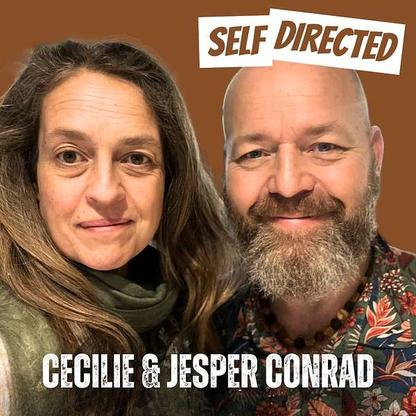



Comments