

A little chat about the state hotel and our experiences in Zamora – 11 July 2012 – and then I think we're about done with the Zamora experiences.
In Zamora we stayed at a Parador, which is a state-run hotel in a historic building in a place of historic or scenic interest. It was pretty pricey, but it was also really nice with a bit of luxury. A big bedroom, high ceilings and lovely details.
Thomas found the history of the place, and roughly speaking, the story of Parador Zamora goes like this: a widow with plenty of money in her pocket needs a bit of space; buys a whole town and all the land around it. Then she builds herself a palace, all for herself, and this palace is passed down for some number of generations in this (lucky) family. At some point it burns out, though, and just stands there falling apart, until in the 1600s it is patched up by an order of nuns and then used as a care home for orphaned children, and the elderly. From there it's not a long way to state ownership, and the conversion into a hotel.

It did what it was supposed to, and it was two good days in Zamora. This morning I watched an eagle steal a snake from a stork's nest while I drank my morning coffee on the terrace by the pool. The stork's nest was, of course, on the roof of a Romanesque church, and behind it I could see the whole landscape unfold below the town. How lucky are you allowed to be?
If you're into shopping, the town can also deliver everything. Crocodile-skin belts and hand-sewn shawls, cheap plastic at the Chinese shop, at least 30 pharmacies (!), knick-knacks and toys – you could easily have a nice time with all that, if you're into shopping. We bought a pair of shoes for Liv and some liquorice, plus some hand-held food at a supermarket. And today we drove out to yet another nature park, now in Portugal.

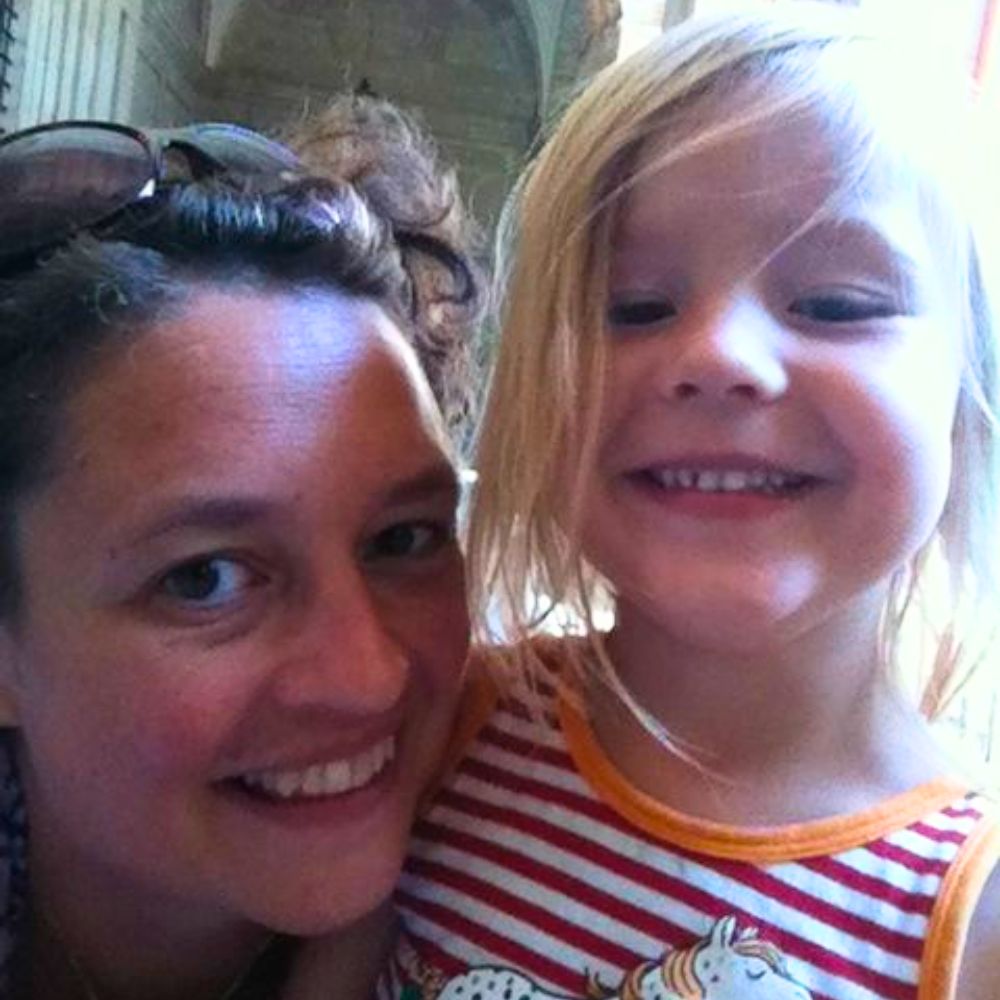
And a little P.S.: the group photo, which Thomas took, is of us sitting outside the police station (yet another historic building), where a friendly policeman lent us a lighter shortly afterwards.
Written by Cecilie Conrad. Translated from Danish. The original article is available at CecilieConrad.dk.









Comments