

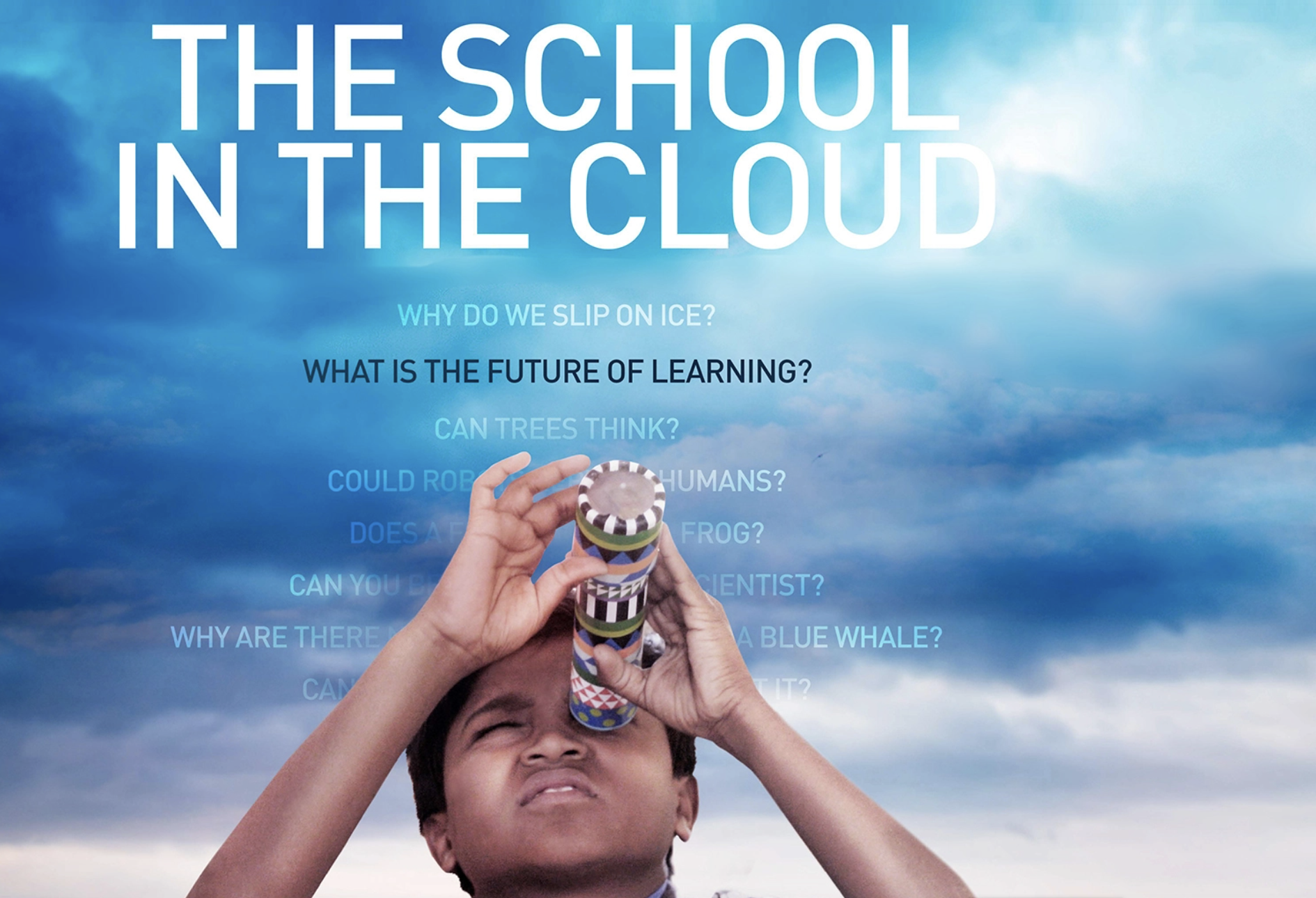
Sugata Mitra has done groundbreaking research into children's academic development; he is a man whose way of thinking gives hope for the future of the planet. Just enjoy this man's fine humour and his completely incredible out-of-the-box thinking, which can bring meaningful, engaged education to the very poorest of the world. And, actually, to the rest of us too – if we dare.
I am sharing this TED because Mitra is deeply inspiring, and he is the basis for many of my decisions – both about my children's opportunities to unfold academically, and about how, and especially how much (read: how little), I want to organize our shared life at home. Here is an excerpt from the article: Do your children play too much on the computer?
Sugata Mitra takes it to the next level when he argues that the ultimate way for children to learn today consists of four elements:
1. A computer with fast internet access (broadband, fibre – something that really moves)
2. The children's natural wonder (or else big, compelling questions, thrown out with inspiration by the 'teacher')
3. Several children, three or four of them, working together
4. Love and encouragement (he calls it the granny method)
Sugata Mitra is the man who, fourteen years ago, put a computer into a hole in a wall in the very poorest part of Delhi, and so began a journey in which he came to show that children's own curiosity, and their ability and will to work together, can take them to unimagined heights – especially when they get the care and support that comes from the loving recognition of someone who knows them well.
Sugata Mitra actually argues that the whole school system, as we see it today, is completely outdated, and that in the reality unfolding now and in the future, learning and knowing are unnecessary and therefore voluntary. He says so incredibly many true things in such a short time that I can only recommend, in the strongest possible terms, spending 22 minutes of your time watching his latest TED.
For example, he says – and it is just so deeply true – that no human being can really learn anything when they are afraid, pressured, controlled from above. And that the uniformity of the school system belongs to a past that isn't worth trying to recreate (the Victorian empire).
At the same time, he says that we ARE, and remain, homo sapiens sapiens, the thinking, knowing human, and without knowledge – what are we then? Well, there is no reason to worry about that, because the inspired hunger for knowledge comes naturally to us, and children spontaneously seek answers to life's big questions and find – in the hunt for those insights – the answers to all the small and petty problems we put in front of them in the traditional school system.
Yes – I am Sugata Mitra's biggest fan, maybe.
Written by Cecilie Conrad. Translated from Danish. The original article is available at CecilieConrad.dk.









Comments