

🎙️Watch the video episode above or listen below



☕ We do not run ads, so if you like what you hear, please support our podcast: Buy Us a Coffee
✏️ Shownotes
What if the key to raising well-adjusted, connected children lies in the practices of our ancestors?
Join us as we explore the evolved nest with Darcia Narvaez, diving into the fascinating world of natural birth, mothering, and the importance of soothing perinatal experiences. Through stories of our own births and parenting experiences, we'll uncover the consequences of our modern, medicalized birth systems and the need for a supportive, nurturing environment.
Darcia Narvaez is a Professor of Psychology at the University of Notre Dame and a Fellow of the American Psychological Association. She is a leading expert in the study of the development of moral cognition and the influence of evolutionary and cultural factors on human behavior.
In this conversation, we'll discuss the benefits of breastfeeding and the role of fathers in the nurturing process. We'll also examine the societal impact and persuasive tactics of formula companies, as well as the importance of touch in helping children and adults feel secure and calm. Discover how skin-to-skin contact and positive touch can be linked to our body's major systems, helping us learn to breathe properly and connect with one another.
Darcia Narvaez is particularly known for her work on the concept of the "Evolved Nest," which is a set of evolved caregiving practices that were present in ancestral environments and are necessary for optimal human development. Her research highlights the importance of nurturing children in a supportive and emotionally responsive environment that incorporates naturalistic experiences and promotes positive relationships with caregivers, peers, and the natural world.
As we delve into the world of responsive relationships and Allo parenting, we'll explore ancient cultures and how we can incorporate their wisdom into our lives today. We'll discuss the importance of community and nature immersion and how building connections in diverse settings can enrich our moral development.
Through her work, Narvaez aims to promote a more holistic and sustainable approach to human development that aligns with our evolutionary history and fosters individual and collective well-being. Her insights have important implications for parents, educators, policymakers, and anyone interested in improving the well-being of children and promoting a more harmonious relationship with the natural world.
By understanding the evolved nest, we can create a supportive environment for our children to thrive and foster a more connected, empathetic society. Don't miss this eye-opening episode!
🗓️ Recorded March 29th, 2023. 📍Bagnolo-Cantagallo, Metropolitan City of Florence, Italy
🔗 Links
- Website: https://darcianarvaez.com/
- Darcia on Facebook: https://www.facebook.com/darcia.narvaez
- KindredMedia.org: https://kindredmedia.org/
- Evolved Nest: https://evolvednest.org/
- Evolved Nest on Facebook: https://www.facebook.com/EvolvedNest
- Evolved Nest on Instagram: https://www.instagram.com/theevolvednest
- Find Darcias books on Amazon:
- Order Darcias book 'Evolved Nest' - Nature's Way of Raising Children and Creating Connected Communities
CLICK TO OPEN/CLOSE TRANSCRIPT(AUTOGENERATED)
Autogenerated Transcript
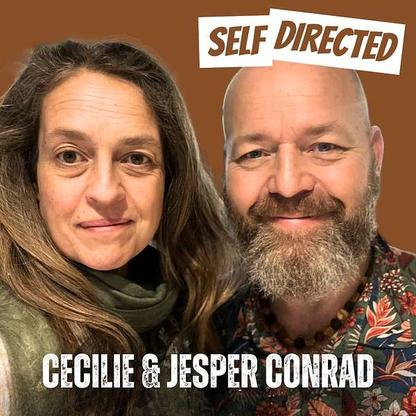
Cecilie Conrad: 00:00
You open as always?
Jesper Conrad: 00:02
I will open as always. Okay, so today we have uh Darcia Navez together with us. And the reason is that um we did an interview with Jeremy Lind, who was like, Have you read Darcia's work? And we was like, no. And he said, You must. And what you're talking about and the way you live reminded him a lot about uh the whole evolved uh nest uh line of thinking and the kinship uh line of thinking. So that's why we invited you, because it is interesting for me. The work you do is so close to how we as an unschooling world schooling family live to see the connections there.
Darcia Narvaez: 00:47
Well, it's a pleasure to be with you and such a wonderful family you are and uh living. I want to hear more about what you do and maybe how it's related to the work that I have been uh putting together for some time. So the Evolved Nest represents the the way that our ancestors raised children and actually lived throughout their adulthoods through the lifespan. And it it's a way of living that supports our optimal functioning, our optimal development when we're young and maintains our cooperative human nature. So uh the we have nine components we've identified, and you know, there could be more we identify, but there are nine that uh we have studied in my lab uh in various ways. So the first is uh soothing perinatal experiences. So that means the mother is supported during pregnancy, socially supported, feels welcomed, and and the child is welcomed. Uh, and so she has a calm uh biochemistry for the growth of the child, very important for that child to be in a positive biochemistry. Otherwise, things don't grow properly. Uh, you know, a stressful environment shuts down growth. Uh, and then at birth, uh, it's uh triggered by the signals of the baby ready to come out. Uh babies stay in the womb, uh, they vary by about 55 days. So, due dates are just guesses by doctors because you know, you don't know how fast or slow that baby's been growing and so on. And then uh the mother and baby have a soothing birth. Uh it happens without interference, ideally, of course, when there's emergency, you want to interfere and help.
Cecilie Conrad: 02:35
Yeah.
Darcia Narvaez: 02:35
Um, and then there's no separation of the baby from the mother because the that first hour after birth, especially, is geared up. They're both their reward systems, they're all ready to magnetically connect and bond, and it leads to successful breastfeeding on average, and um just the lifelong bondedness that you can't explain. Uh, in our medicalized birth systems now, that the United States especially has exported to the world, are undermining all these things. Yeah. Um, and giving formula and sugar water to the newborn babies to keep them quiet, you know, all sorts of crazy things uh and painful procedures, circumcision, and all this stuff shouldn't be happening because that's going to shift the trajectory of the child's um uh development. Do you want me to keep talking or you want to interest? I I think maybe uh you will not be comfortable with just uh listing them all up.
Jesper Conrad: 03:32
No, no, no.
Darcia Narvaez: 03:32
Well, I'm an academic, I could keep talking and talking, then keep talking.
Cecilie Conrad: 03:36
I'm interested.
Jesper Conrad: 03:39
Then we we will reflect on some of them.
Cecilie Conrad: 03:41
So respond, like now we're up to here, the child is born.
Jesper Conrad: 03:45
Yeah.
Cecilie Conrad: 03:46
So the funny thing is, I had we have four children together. Uh, one of them I had on my own. Um, the story goes that uh he was tall and blonde and not there when I woke up, and I was very young. So I had one child on my own, and then later on I met Jesper and he adopted my first daughter. So my first child I had all on my own. And it's funny you mentioned this with the supportive uh environment because I just wrote about it this morning. Yeah, actually, how unsupportive uh the environment was when I was pregnant the first time. I am from Denmark, Scandinavia, allegedly the most country in the world, the most happy country in the world. We have the welfare for everyone. But deciding to become a single mother when you are a young, almost five, what is it called? Like I almost had my first academic education, but I hadn't done it yet. I was 23 and alone, and I decided to have my child. It felt right. Didn't matter much with the father figure. I was just, I was pregnant and I was happy. But when I said, Hey, guess what? I'm pregnant, everybody would say, Oh, are you having the child? Are you gonna keep it? It was it was no congratulations, no big hugs, no like, oh what how amazing, what a miracle, whatever. I was so excited about having a child, but but only my grandmother was just happy. Everyone else had this hesitation thing going on, and it was not nice, it didn't feel nice. Of course, it changed once I told people, would you please shut up and be happy with me? Then they won't, but it was not the first response I had. So, yeah, so that was not very nice. And then I I I when you say these things, I totally, of course, obviously agree with the natural birth and and having the child the second it's born and all these things, and I fought for it with all of my four children, but three of them came with C-section. Um the first one was I can't even say in English how was it done? But the the So the problem with this b because I really had a problem, not anymore. It's been many years since I had my my fourth child. Um but it did hurt my my feelings, my female identity, that um we have this idea of the natural birth and the natural mothering and the breastfeeding and all these things. And my body actually couldn't do it. Maybe because I didn't have the supportive environment, but the reality is that I would not have survived the second childbirth, and neither would my son. So I'm very happy for the hospital. And and I think when we share this reality, because on an academic level, I totally agree with you that we're ruining everything with how we're doing it now. But still, I'm also grateful for Western medicine. I think it's it's very important we find a balance so that those who actually need help get the help and not die.
Darcia Narvaez: 07:39
Absolutely, yes, I totally agree.
Cecilie Conrad: 07:41
We also have to help the women who who maybe they can't breastfeed or they don't learn it fast enough or something goes wrong, they don't have to feel like they didn't like succeed as a woman. Yeah.
Jesper Conrad: 07:58
But but maybe that's um a development isn't no no no, but a development is needed in the hospitals because uh I remember from now it's like a polarization.
Cecilie Conrad: 08:11
It's like either you want to go have all the drugs and the C-sections and the formula and you just believe in all these things, or you want to go do like wild birthing. And and I need I would like us to find some balance where you know we can believe in the home birth and the wild birth, free free birth is the right word. Um, but also believe that sometimes we should be grateful that we can get the help we need when we need it.
Darcia Narvaez: 08:43
That's right, yeah, and not be polarized and not either or. Each situation is different, yeah.
Jesper Conrad: 08:51
Yeah, and and what I would really miss is uh that the hospital learns from what we have known for for millennia uh about how we give birth. After I mean, um what is it that uh the most children are born inside five o'clock, so they don't need to do it on a night shift. Uh and inside five o'clock before five o'clock and in the PM in the evening, because otherwise it's more difficult. So they would rather start a bird than having the woman give bird in the night time. And and that you you are lying down because it's easier for the doctors back. I mean, there is uh there's something wrong that could be relearned, and and that is as I see some of what you're doing with your work, trying to uh move this out. So let's move on with the list.
Darcia Narvaez: 09:40
Let me let me just say uh most doctors now have never seen a natural birth, they only know interference. Yeah, there's a book uh by a journalist called Pushed. She talks about how she was in a hospital labor area and the power went out from a hurricane. This is on the east coast of the United States, and all the doctors and nurses were worried. Oh no, we can't, you know, hook up a fetal monitor and hook up the woman. The next day they said, we've never seen so many happy mothers and babies.
Cecilie Conrad: 10:13
Yeah. Yeah.
Darcia Narvaez: 10:15
So there's just this orientation to interfering that is, you know, it's a shifted baseline, I call it, or you know, uh a move towards a new normalcy that you interfere all the time, otherwise people can't make it on their own, right? Which is craziness.
Jesper Conrad: 10:33
About the supportive uh nature of uh having people around you when you give birth, which I can understand on your word was net the natural way of doing it. Um we are actually right now together with uh Cecilia's um little sister, who is uh maybe what 12 years younger than her. And uh when she got her first child, they moved in together with us for a week, and it was so giving for us and for them. Uh but during my adulthood, being a normal man with all the stupidity we have, and also the uneducation on what it is to be a woman, what it is to nurture a child, I can see the lack of knowledge out there. I don't, for example, uh Cecilia, when I met her, she had our uh now oldest daughter, uh, the the girl I adopted, she's 23 and lives in Copenhagen. Um, and for Cecilia, it was natural to sleep together with her child. And I was um I came from a world where hey, uh, shouldn't children have their own bedroom, uh, and now we co-sleep. Um, but it I believe some of it is a lack of knowledge, uh, and not just made stupidity.
Cecilie Conrad: 11:52
And also the polarization, it's very important we we work against the polarization because then it becomes this reality. Oh, we free birth and co-sleep, and and people from like another perspective think it's all craziness, and we have to move towards each other rather than. I mean, we're quite radical people, we live a quite different lifestyle. But I find it really important that we can like still my sister is living with us now for a few weeks, and and she's living a more mainstream lifestyle, and I don't judge her, or I mean, we have to be able to talk to each other. I think that is very important, yeah.
Jesper Conrad: 12:34
More important than you know, but I I would love to get back to the nine principles.
Darcia Narvaez: 12:40
So we are talking about it for now, and I I agree, it's a lot a lack of experience and knowledge and practice. People just don't know how to do the evolved nest anymore. So uh not everybody that you know when I give talks, it's the northern the Europeans and the uh North Americans who go, Oh, I don't want to have to touch my child, oh you know, you're gonna complain breastfeeding, uh and then the rest of the globe is they're all nodding their head. Of course, of course, this is what you provide. That's how you do it. Yeah, yeah. So the second one is breastfeeding, uh, and that's human milk for several years. Uh, so this doesn't, if the mother doesn't is not able to provide breastfeeding, then a wet nurse, a milk sharing. Uh, there are other people that can provide it. Now, our ancestral contacts, it's usually two to six years of provision. On average, four years of milk, uh human milk provision. Uh, and that means you know, you're still doing it at night, for example. So night milk is really great because it not only relaxes the child, but it builds the brain. It's got the tri uh tryptophan, which is a precursor of serotonin, which is related to intelligence and not getting depressed and all sorts of things. So uh, and it should be the child uh signals when they need uh something, uh they need uh the milk. A newborn every 20 minutes on average, they need to suckle. And even in our ancestral context, anybody around there's an infant in distress, they will suckle the child, even the father, because there's a nipple there, right? Because that comforts the child and they need to feel like they're safe, secure all the time in babyhood for the brain to grow well.
Cecilie Conrad: 14:28
Yeah, yeah. This is also an interesting thing how it has become like just so extreme to breastfeed someone else's child. Like, would you ever do that? It's it's like in the Western world, it's of course I did it with my sister's children, but but you know, hardly ever talk about it because it's a stigma. Yeah, it's it's a stigma, and I didn't do it a lot for that exact reason because oh no, but the first few days when there is no milk, and with the first not not a lot of milk, and and and and the firstborn, where it's just in our family we have this. My grandmother had it, my mother had it, I had it, and my sister had we all had problems
Cecilie Conrad: 15:16
with the first. It was like really hard to get this system to work, and of course, we just needed help, but there was no help to get because our culture has just torn the female um community to get away from each other. We don't have this kind of connectedness and we don't live together, which is like you know, if I'm not there, I can't help.
Darcia Narvaez: 15:39
So that's our heritage is to live together, women helping one another, uh, father, grandfather, grandmother all helping with that baby. So the mom doesn't feel so oppressed and so you know, overworked.
Jesper Conrad: 15:54
And I mean, even from inside the marriage, uh, I'm not putting a glory on myself at all. Uh no, I shouldn't. No, but I I'm here today after many years as a father, and I can look back and say, Oh, I wished I would have known that back then. And and one of the goals for us to or for me to talk with you is uh also to be able to say to all the fathers out there listening, hey, it is totally natural, don't stop your wife. She actually often knows and feels what is right, but she is stopped by society, family, and also her spouse. With our first child, I was like, uh, should you breastfeed so long? It's weird. And what was in me was, to be honest, it was the uh instilled version of what was right from the society, plus anxiety on my behalf of how would my family react if my wife breastfeeded longer than one year. But I mean, Cecilia, she told me back then about hey, you know, the baby gets all uh a lot of help for its immune system with it through me towards the first year, and then was like, okay, I can accept one year because that is clever. We did negotiate it up to two, yeah, yeah.
Cecilie Conrad: 17:10
But that that was as far as I could push it, which was really annoying. But I I had to, this was the first time when we had our second child, my second child, our second child, but you know, he was not around when I had the first one. So with my second child, I had to share the responsibility with someone, and I actually had to be somewhat you know flexible, democratic, yeah. So I couldn't just say uh I'll do whatever I want.
Jesper Conrad: 17:38
No, but what is uh terrifying for me, yeah. Yeah, and what is terrifying for me to look back on is why didn't I know? Why has this knowledge uh got obliterated? Um to your wife, I could have listened to more to my wife, yeah.
Cecilie Conrad: 17:59
But anyway, now we will try to get the message out there, you know. It's not that crazy.
Darcia Narvaez: 18:05
Yeah, people don't understand that breast milk is just this magic uh elixir. Really, it it uh it's tailored to the needs of the child in the moment. So the saliva of the baby is communicating with the breast of the mother, and then the mother was producing antibodies if they're needed, or more fat, or whatever it is that if the baby's going through a growth spurt, for example. So, and it tailors to uh whether it's a boy or a girl. Uh, and it's just unbelievable. And formula is the same all the time, it's not human ingredients, it's not safely produced. It's uh, but the formula companies, uh the marketers have just convinced the world uh that it's just almost as good as breast milk, and it's so far from it. Breast milk is 80% alive, and it's got all the building blocks for the immune system. Formula doesn't have any of that.
Cecilie Conrad: 18:56
You know, how does it look in the States these days? Do people breastfeed?
Darcia Narvaez: 19:01
Uh yeah, they initiate it. I think maybe um maybe that's 35, maybe 78% or so are initiating it, trying it out. Now you have issues with lip ties and tongue ties in the baby that have to be uh noticed and identified, and then the mom needs help knowing how to do it, right? She doesn't baby friendly hospitals. That's the WHO's um um list of things that are breastfeeding friendly, essentially, help uh with this. But in the states, I think maybe at six months, um, there's maybe 35% of moms still breastfeeding at all, but then it really drops off. So nobody uh maybe 15%, 12% at one year are doing it at all. So it's pretty bad. And and the research shows that it's the United Nations, uh, United States and United Kingdom where the there's the worst um uh understanding of it, and that there's so much discouragement and so much marketing that makes formula be the the go-to. All right, so number three?
Cecilie Conrad: 20:09
Yes, yes.
Darcia Narvaez: 20:11
We will get through this. Maybe it'll be two talks. Okay. Number three is uh a welcoming uh social climate. So this is uh a welcome of the baby. So the baby is as part of the community and the child. So the first two, let me just say soothing perinatal experience of breastfeeding are really for the very young. Every other aspect of the nest is for all of us throughout life. So this next one is the welcoming social climate. Feel like we belong and we matter to a group of people, not just one person, right? It's not just mom again, right? Poor mom. These are community-provided components, the evolved nest, not just a mother or father alone. Uh, and a welcoming climate then is one where you feel like you can be yourself, you grow yourself, you're nurtured, you're in uniqueness, you're unfold, your beauty uh as a unique creature of the earth, uh, and you're able then to feel calm most of the time. So for babies, it's very calming uh relationships that respond to the needs and quickly while that brain is growing so quickly, right? Thousands of synapses are are uh uh growing a second. And um, so welcoming uh starts with a conception, or even before that, right? Because the grandparents need to have been in a welcoming environment for the the egg and the sperm that become the parents uh are uh in the proper healthy uh state uh when they join together at conception. So welcomeness is just part of our intergenerational um inheritance. It should be number
Darcia Narvaez: 21:57
four then.
Cecilie Conrad: 21:58
Yeah, go ahead. No, just How do we create that like in the real life of here and now Western world? I just have so many problems, I can hardly open my eyes. I know, I know it's like you have to laugh about it because it's against you. I mean, we could maybe we could come up with like just one good idea. I mean, I would just say homeschooling for one thing, but oh yeah, we could maybe we could say something else because it's too obvious when it's me talking. Like, what can we do to make each other feel more welcome?
Darcia Narvaez: 22:31
And well, part of the rest of the components are part of that to actually contribute to that feeling.
Cecilie Conrad: 22:38
So continue the list.
Darcia Narvaez: 22:39
Yeah, let's maybe continue. Yeah, so number four is touch. Uh, so positive uh touch, that's affectionate touch. Babies need pretty much 24-7 touch. They need to not be put down, they're just in someone's arms or on backs, uh, carried around all the time. And that's going to grow then the vagus nerve properly. That's the tenth cranial nerve that's linked to all the major systems of the body. And when it gets not properly developed, you can have seizures or irritable bowel or respiration problems or heart problems that you don't realize where it came from, right? Comes because these things show up later. Uh, and the baby then is learning to breathe outside the womb, and they need a lot of breastfeeding helps, especially with that, because they have to learn to uh breathe through nose mouth. Um and then caring, firm caring helps breathing uh grow properly. They need to learn how to breathe deeply. So that and to shift between mouth and nose breathing, when they get congested, they have to breathe through their mouths. But if they haven't learned that, they could die when they're alone in a crib and can't breathe. Uh so um anyway, so positive touch is really important for all of us, it calms us all down. It's linked to lower cortisol levels, higher oxytoce, and the colour.
Jesper Conrad: 24:00
That goes into the the the co-sleeping, which I today now find so natural. Uh I love sleeping next to my children, and and you can feel if they uh sometimes a leg comes in. I mean, just like not what comes in a leg, oh yeah, a leg like in between your legs. I need this just like uh during the night, I need a little comfort or food. Um and but but the value of being able to touch and feel each other's skin, and then again we have um a society now where people are almost afraid to touch their own children, um or sleep uh in their pajamas next to them or in their underwear, like uh skin to skin. People if you tell people, hey, I can sleep that I get that with my 70-year-old boy, we lie next to each other in the bed, they would think it's so weird where it's actually natural.
Cecilie Conrad: 25:01
That's right. I remember when I first met the word co-sleeping, yeah. So we just slept. I mean, we had a lot of small children and we were really tired at night, so we fell asleep and then we slept, and then in the morning we woke up and we got up and moved on with our day. Didn't have a name, um, but obviously we slept in one big pile because that's you know how you sleep. You especially for me, having a lot of children, it was like, okay, now we lie down, mom is really tired. Let's put out the light, and and then we slept. So I there was no like plan to it or academic thought behind it. Or I had won the war at this point with my husband about where we not not exactly okay, most of it. At least we did not own a bed child-sized, all beds in our home were like king size beds because we knew when you try to make a child go to sleep, you fall asleep. And I don't want to sleep on the floor. So if we had a bed, it was big enough for the city.
Jesper Conrad: 26:12
Again, to be honest, in a group of people. In the start, I came from a reality where a child has its own room, it has its own set of toys, uh, which is also just stupid. Uh, and uh a child sleeps alone in the dark in their own room. Today, I am sad that I tried to win that war, uh, and I'm very happy that Cecilia won it.
Darcia Narvaez: 26:36
That one you didn't get.
Jesper Conrad: 26:37
No, I didn't get it, but we started out after me falling asleep on the floor next to a baby-sized bed. It is like you're so broken in the body. Then we bought the bigger beds, and then in the end, uh, the babies have always slept next to Cecilia. In my mind, it was like when you were bigger, and I remember my thoughts, you know, in the start when Cecilia was like breastfeeding. In my mind, I was wrown my idea. Was what was imprinted on me was that a woman goes into a room and another in next to the bedroom, sit in a chair, and give the child milk during the night.
Cecilie Conrad: 27:15
And I said, Okay, forget it. Yeah, there's no way I'm getting out of bed. No, you go to the next room and sleep in a chair.
Jesper Conrad: 27:27
But a lot of women still still do this. They they go out of the bed and take the uh child off crying out of a cradle and sit in a chair and put them to sleep, and then you wonder why there are so many divorces. I mean, you must be broken with sleep deprivation as a woman.
Cecilie Conrad: 27:45
The funny thing was when someone entered our home and saw our huge bed and said, Oh, you're cold sleeping. And I was like, What's that? It sounds complicated.
Jesper Conrad: 28:00
Yeah, no, but that is where you Cecilia naturally have filled a lot of these things, and I actually believe mothers uh if they dare to if they are allowed to listen to themselves, actually knows a lot of these things.
Cecilie Conrad: 28:13
But then again, we need that supportive environment.
Jesper Conrad: 28:16
Yeah.
Cecilie Conrad: 28:18
Um the list.
Darcia Narvaez: 28:23
Well, uh, yeah, I think um again, they if we just go back to our instincts that are not complicated by culture, right? And and all these belief systems, then we're gonna end up with the evolved nest. It's uh uh that's the way it is. But and so when the the whole mega machine of the world collapses, right? Cop capitalism and all, hopefully, that's what I'm hoping for. People will oh, the evolved nest. Oh, yeah, we can do that.
Cecilie Conrad: 28:54
Maybe they will not even call it the evolved. Oh, they don't need a name, go sleeping, just go live, like go live, do what feels right and do what's maybe easy. I mean, this whole project with getting p kids to sleep somewhere else and breastfeed at the right second of the day, and all these things I mean, just chill.
Jesper Conrad: 29:15
Yeah, one one quick thing more about the sleeping. Uh, a colleague of mine yesterday uh told me that he was getting a baby, young guy, and absolutely no support system, you know, around he has mothers and parents, of course, but there's no dads who have told him before. I said, you know, a baby can actually suckle on the breast and get its milk sleeping, it can crawl up to the breast, it can smell it and drink. He was like, What? And there is there is a lot of knowledge that needs to be relearned, which is why I'm happy that we have you on as a guest today. And let's go to the next list. Yes, yeah.
Darcia Narvaez: 29:53
We have a book, uh, my colleague and I, Gabe Bradshaw, coming out in August called The Evolved Nest, Nature's Way of Raising Children and Creating Connected Communities. And it's uh each chapter is about a different animal, a different aspect of the nest, and then integrating the human information and neuroscience. So it's a popular trade book. Hopefully, people will get inspired. Yeah, sounds like a good one. And just the other aspect of touch is no negative touch. So that means no spanking, no pinching, no slapping, because that's going to shift the trajectory of that child to be more self-centered and worried and insecure that you know someone's gonna hit me. Uh, and makes them more aggressive. We have longitudinal studies showing that if you get spanked, it's like child abuse, it's physical abuse, and it has the same effects long term of making you less connected, more aggressive, and more self-centered.
Cecilie Conrad: 30:50
We wanted to be we had just had a conversation recently with a wonderful woman from New York, and we had this spanking talk because I was at that point I was shocked because it's been illegal for a long time in our country. So for me, it's like, are we discussing this? Yeah, is this a thing?
Jesper Conrad: 31:10
Do people actually just um on purpose where I come from?
Cecilie Conrad: 31:15
Wow, it's illegal, hardcore illegal. You can't spank anyone, I can't hit him, he can't hit me, and we can't hit our children. That's wonderful, it's just illegal. So, yeah, but that one is I can't believe that people are still doing it in the modern world. It's yeah, it's I just can't believe it. I'm I refuse to believe it.
Darcia Narvaez: 31:34
Well, it's it's integrated with the Protestant um puritanical temperament that you know you have to punish children to be good. Uh, and just that's this part of this. Uh it's in the States, just so rooted and spread out.
Cecilie Conrad: 31:49
It's really so weird. I didn't see that one coming from the States, but we I've never been to the States, I have a lot to learn.
Darcia Narvaez: 31:58
Well, you don't need to come here to learn. You know so much already, right? Well, yeah.
Cecilie Conrad: 32:06
I was not happy to learn this detail.
Darcia Narvaez: 32:09
Yeah. Okay, the next one play. Yes, I know. It's too distressing. Uh so self-directed play with others, multiple age mates. Uh, and self-directed play means you know, you run around and you climb a tree and you play chase or tag and you wrestle on the ground and you invent things and explore the environment. Uh, this is wonderful for brain development. And it it helps brain development at any age. So, one of the things that the lack of the evolved mass does is it undermines the growth of the right hemisphere because that's scheduled to grow more rapidly in the first years of life, where you know, and it it's the nonverbal essentially, our understanding of how to get along with others. So, there's just millions of little things about how to start a conversation, how to indicate with your face that you don't like something or whatever. All sorts of little things are learned before language starts in babyhood. But if you're leaving the baby alone, leaving them to cry, leaving them in isolated in a crib or play pen, these things aren't going to grow in their normal species normal way. So, what I tell uh adults is if you were undercared for, lack of a nest in early life, especially, uh then go find a young child and play with them. They will uh insist on you, you know, running around or playing, and you have to be in the present moment with that person. That's what grows the right hemisphere, right? To be in the present moment, you have to you can't think about the future and worry about this or that. You're here now and you have to react. And that's that helping you grow your empathy, your sense of um beingness, your ability to be in higher consciousness, all sorts of good things.
Cecilie Conrad: 33:56
And may I add, even if you were not under what was your word? Undercare undercared for undercared for, go do it anyway because it's just amazing.
Darcia Narvaez: 34:07
Yes, yes, and for kids, it helps uh uh helps you learn how to not be aggressive because your playmate, you can't be too aggressive with your playmate, or they'll stop playing with you as you have learned you you build your executive functions, we call that, right? Stopping and starting action and paying attention to unexpected events because you don't know what your playmate's gonna do. So it really is great for building a personality.
Cecilie Conrad: 34:31
And I think it's very important to really underline that adults should join this playing. I think in our modern world, we have uh made this social construct that plays for children, yeah, and it's like an irrelevant kind of waste of time-ish thing that you can go do after you did your chores or plays for everyone. We just just came from playing board games and card games with the children. And yesterday we actually had uh a lot of fun on a lawn with some ball games in the in the age complicated age group, kind of so the youngest child is five and the oldest is 17, and I'm 47. Uh and and my sister is in her 30s, so we were like all ages, and and it was a lot of fun, but it was also a great learning journey for everyone. Like, okay, Aunt Sicily can't get up that fast anymore when she falls. And so you have to convers a break. And maybe the five-year-old, when we play football, you have to make sure she gets the ball sometimes. And otherwise she'll be it's not fun. It's it's no more fun than you know, the youngest is having fun or the oldest is having fun. It's it's even when you're like 17 or or 35, there is something to learn and something like to adjust just a little bit from the playing. So we we take uh we take play seriously. We take it seriously, yeah.
Darcia Narvaez: 36:09
That's great. Oh, good good uh illustration, good explanation.
Jesper Conrad: 36:14
But but one one thing about play, uh which uh Peter Gray, which whom we also have had on the podcast, he he he mentions that uh now play has been uh misunderstood as adult-led uh outdoor activities uh for many people. It's not playing, so it's not playing sending your child to a football game where everybody is asegregated and it's uh uh controlled by an adult, it has nothing to do with play. Um, so yeah, it's just if anybody's like, oh, my child is playing, is he?
Darcia Narvaez: 36:50
Yeah, it's better than nothing, better than sitting at home in front of a computer or something. Absolutely it's complicated because we did play games yesterday.
Cecilie Conrad: 37:00
The the story I just shared was about games with rules. We did play football and we did play another ball game with rules.
Jesper Conrad: 37:08
Yeah, but it was not like it was not like serious. No, no, no, no. Sorry, let's let's continue.
Darcia Narvaez: 37:14
Okay,
Darcia Narvaez: 37:14
that's in our ancestral context. Uh work and play. I mean, they didn't labor for wages or whatever, but they did what needed to be done to live life, and all that was mixed with play, you know, it's just enjoyment of being together with others, right? So you don't have to separate it from as a separate activity. Uh all right, then there's responsive relationships. We've sort of talked about that. So in babyhood, that means uh your caregivers are keeping you calm. So they carry you around. And if you start to make a face as a baby, that means something's not feeling right. And so they'll move in and pat you or rock you or something. So uh waiting for a baby to cry, that's a late signal. That's actually harmful, right? And in if it, especially if it goes on very long, uh, because it melts the connections that are happening in the brain at high levels, the cortisol, uh, that's the stress hormone. So uh you want to keep that baby calm and pay attention to the signals. Skin-to-skin caring is really uh vital for that to learn how to pay attention to your baby six signals. Um responsive relationships throughout our lives. We need mentors, we need someone who shows us how to do things, and then we can pitch in, learn from observation, and and then pitch in. Uh, and we, you know, we need support at every age, except I suppose when you're a hundred years old, there's nobody left up there ahead of you. But otherwise, we all need to feel like we're supported and people are again uh guiding us through living a good life.
Jesper Conrad: 38:55
About um uh seeing babies' needs, then it it took me the first two babies we had together to uh with deferred. I I said yes to the uh fabric diapers because again I was normally against uh stuff like I think a lot of men are, or maybe I hope it's not just me. Uh but I remember when we changed to them how quickly our child uh got to know his um his body compared to the others, and how quickly we became aware of okay, this sound is I need to pee, this sound is I need to uh do number two. And there was never any mistakes, you know, and it was uh there's so much we have uh removed uh of the learning we we should have and that should be given uh together from like you say, the close uh support from families and and yeah. So I hope many more will go down the fabric diver and watch your baby and listen to them.
Cecilie Conrad: 40:04
Actually, we did the fabric or recyclable or whatever it's called, but we also just did no diver. Yeah, yeah, with number four, so it took me some time to convince him, but I think we finally get there. And uh yeah, that was it, really, was a game changer. To just let go of all that and and trust the child to be able to figure it out, and that is our ancestral way of doing it, right?
Darcia Narvaez: 40:33
You didn't have diapers in the you just recognize the signal and then you held the baby over wherever it was.
Cecilie Conrad: 40:40
And if something goes wrong, then you just wash the clothes, which you do anyway. So yeah, clean it up and move on, yeah.
Darcia Narvaez: 40:49
Yeah. So then another one is aloe parents or aloe mothers or other caregivers, right? So this is really important. Uh it's part of the responsive relationships, but you need more than mom, more than mom and dad. You need to have at least at least research shows at least three people in love with you as a young child, three people who are there to uh be present to meet your needs, and so on. Uh, and so allo parenting again is this uh mentoring that we need throughout life, just emphasizing that it's more than just mother, which otherwise, you know, in some primates is just mom taking care of the offspring, and and they don't trust uh other people because the baby could be killed by anybody else. So the mothers hang on to their babies, but that's not our how we evolved. We evolved to raise children together, and that means that we have learned uh our species trusts others to care for that baby, and you pass the baby around, right? And and so it's again that communal way of raising our our human nature, of being cooperative, connected, and mind reading and perspective taking and empathy all comes from having aloe parents or aloe mothers. Where do we go find them?
Jesper Conrad: 42:07
Unfortunately, everybody leaves two people alone.
Darcia Narvaez: 42:11
Well, when you have a larger family, then your all the older siblings become part of the allo parents, right?
Cecilie Conrad: 42:17
Yeah, yeah.
Darcia Narvaez: 42:18
Of the young.
Cecilie Conrad: 42:19
But it does work, but also in our lives. I just think that this is part of the community lifestyle that is harder to come around these days to find someone with whom you will share your life and you will with whom whom you will trust throughout your whole life to take care of your children. And I find this one really hard to establish in our life. We talked about this a lot because we live this extremely different life, and because once you take your children out of school, the problem is that all of the other children are in the school, so there are not many playmates to find. It's not that we're not social, it's because they're not there, they're trapped inside the schools, and um finding someone who we can share our lives with, who we trust, and who we like, and who we share values and interests with, and and you know, has been hard work. I I I will say I think we did succeed, but it it is the hard part. Yeah, this is where the the we really have to work as homeschoolers in Europe.
Jesper Conrad: 43:35
I think it's different in the states, but here it's a more rare phenomenon, and and we had to but what I'm searching for, Darcy, is the the bridge between people living in small Honda uh gatherer communities. Uh and uh well the reason I know Jeremy Lend is well, I was interim CEO of Gaia Education uh for a period, and it's a wonderful organization, but they You know, um the education is more or less it's very simplified now. Hey, go and build an eco-village. Uh this is how you do it. Uh it's of course a lot a lot broader than that, but a lot of the people attracted by the education was people who wanted to live in close community and more in nature, which I think is a wonderful idea, but uh it it is less than what uh less than one percentage of the world that want to live like that today. So so what have you been thinking about how to bring these uh principles out to the world? Because I I I think that's a long way for getting people to live in intentional communities, eco-villages, and hunter-gathering communities.
Jesper Conrad: 44:47
People love their flats and living in the cities. Um, so I don't know how we go there.
Darcia Narvaez: 44:54
I think some communities have uh drop-in centers for families and children, right, in cities, uh, so that you can go there and and play with others and talk to other parents and things like that. So I think that's one um way of getting supports. Uh, another is to go to parks. I I was born in Minneapolis, Minnesota, and every six blocks, there nobody's further from a park than six blocks. The city was designed that way. And so that's another way that unfortunately we have laws now where you can't leave your child unsupervised in a park to play. You get arrested, or you know, uh it's crazy. But anyway, you should be able to leave your child to go play in the park and run around. We grew up that way myself. Um, so there are little pockets of of things to help. And I think um people have to mean they they're so untrusting in the states now, in part because the nest hasn't been provided, right? So you don't learn to trust people. You're you're you're in the bracing mode against others and always suspicious because your biology, neurobiology just didn't get set up for all the flexible attunement that that all these things uh of the nest provide and support. So you've got people with distrust and they'd rather be in their homes and they'd rather be on a screen because that's what they know, and they don't have all those skills of getting along. And I think COVID kind of uh uh undermined development in some ways for that face-to-face uh flexibility and joy, social joy of being with one another. Uh in my classroom, I was teaching my college students how to play folk song games. I first so they have to build their calmness, right? So a lot of them are very anxious and depressed, and uh, so we learn belly breathing, so they can have a tool to help themselves calm down and pay attention to how you're feeling. Is your jaw getting tight? Okay, take a deep breath. But that's not enough to get back to our human normality. We would play folk song games to build their ability for social joy. So folk song games, hunting, we will go, hunting me, we'll catch a little fox and put them in a box and then we'll let them go. And you have this big circle and you're holding each other's hands and you're singing, you're looking at each other, your vagus nerve is getting stimulated, your right brain's growing, and and it's so much fun, you're laughing. And then we would go teach those to kindergartners, teach the games. And then they would be there with the young children jumping up for joy because they can't, you know, they don't uh restrict their themselves. And the the students then have a sense of joy and being with one another, and wow, I can do this. I don't have to sit in front of my computer with my phone in my face, right? So I think we have to get back to um finding little ways to connect, right?
Cecilie Conrad: 47:53
And I think also when you say this is with you call it allo parents, or yes, yeah. At least if we pay attention to this need that we actually need to find someone we trust and someone we will hold on to. And if it doesn't work out, we'll go look for someone else so that we don't become too self-contained, which is really could be a trap for a family like ours because we live in a van and we move around, and you know, we we now we are extremely social, so it's not like a trap we will fall into, but could have been uh that it becomes enough within our own circle, and and I think it's very important to have others who are almost equally important, like having really close friends or siblings or extended family members or mentors or just people that we find inspiring and important. And in reality, we can't all we will not all live in small intentional communities, but we can pay attention to the need for more people in our lives and in our children's lives, and and to to learn to trust these other people to look after our children, not complete strangers, like you know, leaving them in a kindergarten, but someone that I know too and whom I trust and who I like and and and to take these people into our lives and and let them play a part.
Cecilie Conrad: 49:29
I think that is possible, but more than you know, hoping for everyone to move into communities. There is something to do before the apocalypse, before capitalism falls.
Cecilie Conrad: 49:42
Yeah, we can work with this tomorrow. Think about a best friend and and you know, yeah, we can't put it all off.
Darcia Narvaez: 49:52
Right. That brings me to the next one because aloe parents can also be in the natural world. So the next one is nature immersion and nature connection. So we have to well, part of what we uh well, part of the nest is to feel connected to the landscape where you grow up and to feel like uh well, awareness of the sentience of the trees, of the animals, of the plants around you, and you have a sense of community with the natural world. So you're not alone ever, because you know, there's always a spider around. You could you know talk to the spider or even a rock. Uh, in uh in Native American communities, rocks have spirit, right? And they move uh uh on their own to places, uh, and you know, they're there as teachers, and trees are they're all teachers of us. We're the younger species on the planet, all these other entities have been here for millions of years, mosses 400 million years, right? So yeah, yeah, so nature immersion is really important in childhood. I talk about receptive intelligence, you know. You want your baby to be able to just sit there and and watch the birds and feel the winds and and touch the earth and without you saying, Oh no, don't touch that, that's dirty, or oh no, don't do that, you might fall. No, none of that, right? Let them be themselves and play in the natural world. They're smart like other animals. They have an they have to develop that animal mind, the animal senses. And uh, and then young children need to be able to run around, and children need to be unsupervised out there in the natural world so they can grow their risk-taking abilities and understand, you know, that they can do it. You know, we undermine their self-confidence in so many ways when you uh leave out the nest components and and children and adults then sit there and they don't feel like they know anything or can do anything because we haven't let them at the sensitive periods of time when they're ready to learn. So you have to follow what those uh the interests of the child are and support them. So even like um learning how to fold the laundry or wash dishes, toddlers are ready to help. They're not very good at it, they'll make a mess of it. But that's I mean, they they learn, uh, but that's a sensitive period to learn how to be a community member, a um cooperator in getting whatever the family's work done or the community's work done. So uh in the States, most children are set in front of a TV or a screen of some sort, and and the mom does all the work or the dad, right? And then the at teenage years, the parents say, Come on, help take out the garbage. The child doesn't want to help then that had the sensitive period passed. Now it's a you know it's power, uh power issue, then yeah.
Cecilie Conrad: 52:55
Do you think it can be fixed? Do you think it's worth it to be like uh 45? No, no, no. I I'm thinking on a personal level, I'm thinking, okay, if you think you grew up in in in an apartment and in the kindergarten and and with no nature and no free play, do you think it's worth it to just go crazy when you're an adult, take off your shoes and and go out on the lawn and and do a crazy dance and pick some flowers? Yes, do it. Will it fix it? Do you think so? Yes, and I I wrote a I I agree with you. I think it's it's really worth it to just you know, just go just go do it now. It's never too late to have a good childhood. That's right.
Darcia Narvaez: 53:35
You can always grow. Yeah, you may not be able to fix everything in your body or brain, but you can do a lot, it will improve. Yeah, John Young uh just wrote an essay about what he recommends. He's a a nature connection guy who wrote the Coyotes Guide to Nature Connection. He's done work with groups all over the world, and he's been collecting all the wisdom from our ancestral uh context, mostly the San Bushmen of Botswana, uh, and what they do. And they spend a lot of time connecting, they greeting each other and looking into each other's eyes, speaking a language you don't know, and you talk at the same time in your language, and they they're right there, and they have to greet everybody in the group. Uh, and then you feel bonded and you you express gratitude for something in the moment, you shake off the dust of where you just came from, and now you can be present and be with the the others uh instead of preoccupied with whatever you just came from or whatever. And then he this is applied to nature connection as well. So you go and find a sit spot in the natural world, you go there regularly in the same place, and you and you work on opening your senses to pay attention, and the animals will get used to you coming if you come at the same time, especially, and and you're just sitting there, and then they'll start to appear, and they'll start you'll notice this and that, and uh it's just back to um being a member of the earth community. We kind of forgot that, right? When you live in a city with four walls, you know, or you know, and you sit there all the time. You forget this is an earth community, we're all here together. Yeah, yeah. There's one more. Yes, give it to us. One more is routine or regular healing practices. So the San Bushmen three or four times a week have grieving ceremonies. Grieving is what we all need to do now because we've lost so much and we've, you know, our own pain of um that we suppressed, you know, or our lack of support that kind of shut our hearts down and made us, you know, uh afraid to really be ourselves. Uh we have to release a lot of that, right? And the somatic therapy really helps the body therapy. Um grieving or ceremonies. Grieving ceremonies or other kinds of ceremonies are are routine, then, where you allow yourself to express emotion. There's usually a healer around who just puts their hands on you and and uh helps you release that. Um, all of us can do this in the in the Bushman or the Sun uh people's way. Everyone learns to be an expert in nature connection, in connecting to others. And we sort of forgot that too. But we all have these capacities in us, and we have to then learn to um develop them again with the mentoring that we need. But mentoring comes through dreams too. So dreams and and even a stranger can say something to us that will go, oh right, and helps and shifts our path in some way towards a greater expression of our uniqueness.
Cecilie Conrad: 56:53
So the mental healing process as a routine thing might be for the Western world people just begin with accepting that we cannot always be happy that the grieving and and the vulnerable emotions and and the sadness and sometimes you're like just really tired. It's all okay, it's all alright, it's all part of human life, and and uh I think we have this fear of of negative emotion, fear of of not performing, of not being at our best and and our most excited and and uh uh peaking, it's always peaking. Uh so whenever this kind of emotion shows up, as you said, we suppress it. That's how it's also how children are very often brought up. Like if if they have something within them, we try to make it go away rather than sit with it for a while. It's it's such an easy practice. You know, I'm a trained psychologist, so I could just make a lot of money on people's emotions, but I'm not going to because it's it's not that hard. It's very the the just sit with it advice. If there is a negative emotion, just sit with it for a while, give it some space. Uh it's it's it's so efficient. It's something we're not used to doing, and we're not very often not allowing children to be angry or sad or frustrated or scared. We're trying to keep them in the happy state. So they don't learn that it's okay to be all these negative things, and it's also emotions we all have to cope with somehow. So, so I think it's just a very good place to start. Maybe if it sounds to me, it's not crazy. Let's go sit in a circle and and have grieving sessions twice a week. But for a lot of people, it would be too crazy. So maybe just to start with acknowledging all of the negative emotion, just allow the sadness when you're sad and allow the anger when you're angry and and the fear when you're afraid that that would like be a really a game changer, I think.
Darcia Narvaez: 59:43
Yeah.
Cecilie Conrad: 59:43
To just sit with it for one.
Darcia Narvaez: 59:45
You put on music that draws it out, right? That makes you sad and cry, and you can feel it uh then. Uh or your angry music, right? Dance around angry.
Cecilie Conrad: 59:59
When I was in my twenties, I had my twenties, I had a big pile of plates, like really cheap ones from the secondhand shop. When I when I was really angry, I would take one and smash it. And and my roommate was was nice. Uh, she would go pick it up and clean out for me.
Darcia Narvaez: 01:00:17
So I used to throw it really worked, it did work. I used to throw uh exercise shoes, you know, tennis shoes. Yeah.
Cecilie Conrad: 01:00:28
Against I like the sound of, you know, ah, the shoes.
Darcia Narvaez: 01:00:32
Yeah, it really works.
Cecilie Conrad: 01:00:35
No, just get it out. But we have another good advice with negative emotion. We we use a lot. We say give it 20 minutes because you can like dive too deep into it and and get lost. So give it 20 minutes. When it's had 20 minutes, get up, do something else. That's what I usually say to people.
Darcia Narvaez: 01:00:53
Yeah, yeah, you can otherwise start to ruminate and it'll just go round and run in your head. Yeah, it's not a good thing, it's not a good thing.
Jesper Conrad: 01:01:00
No, Tasia. Why did you end up working with the Evolved Nest? What is it that is so powerful in this for you that you have written several books around the same subject uh and uh dedicating so much time? What is it?
Darcia Narvaez: 01:01:24
Yeah, I my I've had multiple careers, but my uh PhD was in moral development, and that area at the time was is still is focused on reasoning, moral reasoning, you know, just make the right decision and then you can make your will happen, uh make it happen, you know, and take the right action. And it didn't make sense for me because I grew up where if um if I felt threatened, my brain would just freeze and I couldn't talk. And and yeah, I might want to do the right thing or reason, but I couldn't do it in that state, right? So what's wrong? That didn't make sense. I wanted to be a moral person and
Darcia Narvaez: 01:02:07
be good, you know. I grew up as a good girl and all this. Um and so it it was a puzzle for me, and I started to read widely about things, and uh at the same time the Iraq War occurred, and I had been one of the millions protesting the warmongering uh that was happening in the United States uh administration, and uh, but we went to war even though the the evidence was so flimsy, you know, and there's nothing there, and and I couldn't understand how, and then the popular support of the war, I couldn't understand how a population could support this uh so easily and so blindly and mindlessly. And so that got me looking at the neurobiology. I've just stumbled into various authors, Alan Shore, Juck Penkscept, and James Prescott, and started and then the book Hunter-Gatherer Childhoods, where Melvin Connor says, uh, well, this is the hunter-gatherer childhood model. It's been around for millions of years. I wonder maybe uh maybe it matters.
Jesper Conrad: 01:03:14
Maybe it works.
Darcia Narvaez: 01:03:16
Yeah, so that's where all this came together in the Evolved Nest. Uh, and then I related it to moral development. So when your uh neurobiology is not fully developed, you're you're enhancing through babies being left alone, left to cry, being punished, spanked. Uh, you're enhancing the old parts of the brain, the survival systems that are there to keep you alive. And then you don't grow the stuff that has to grow after birth from experience, which is those social skills, the sociality, and the compassionate morality, which comes then when that integrates with your executive functions, which finally finish themselves supposedly by age 30. Uh, so all that gets undermined, and you end up with this, you know, very bracing against the world orientation. And then you go to school and you learn the right answers, and yeah, you can take a test and get high scores on moral reasoning, but when you act, you know, you're not acting from your heart because you have no heart. You didn't develop your heart, you're not acting in a virtuous way. Uh and so all this um is all coordinated and related to me. So it's the big like juggling elephants putting all this information together.
Cecilie Conrad: 01:04:28
Well, it's interesting because I was actually reflecting with someone recently about can't remember the context, but anyway, our children grow up unschooled and and obviously not age segregated and and not judged by their age either. So what we do is we spend a lot of time with a lot of different people from a lot of different cultures, um having a lot of conversation. We talk all the time, and and I thought about this uh moral ethical discussion. It was the train situation. We had a train situation with a lot of tourists who need to needed to get on a train, and they obviously came from everywhere because this was a big tourist attraction, and we were waiting in line or in the big group, and and it was a horrifying experience of people just not paying attention to each other's needs, and and our oldest son, he was in shock for like, I don't know, eight 24 hours. He couldn't stop talking about it because he had seen a young man push an elderly woman back into the train as she was trying to get out. He just wanted on because there was obviously like I don't know, eight times the amount of people who could actually get on the train was waiting. And he couldn't even wait for her to get out, let alone give her a hand.
Jesper Conrad: 01:05:57
He was even first in line.
Cecilie Conrad: 01:05:58
I mean, he was first in line. He would obviously. Get on. He just had to wait for people to get off first. And he couldn't do that. And she was like too slow for him. So he pushed her back in. And my son, who was not first in line, so he couldn't help. He could without pushing people over, he just could see it like we were like three or four rows behind. And so this sparked a lot of conversation about moral, about ethics, about cultural differences, with line, what do you call it? Like waiting in line systems are different everywhere. We've experienced a lot of different systems for this. And they come with the with the rest of the culture. It's actually quite fun when you look at it when it's not this horrifying experience. And I just thought about how a moral system, an ethical system also comes from living your life in real life, not like having a test with a theoretical question, but you actually experience something and you have this. Oh, sorry. Uh you have this emotion, this you really feel this was wrong. Someone is pushing an elderly woman over. This is not, you know, you feel it in your stomach, not in your reasoning mind. And and you get to talk to a lot of people about it, the follow because this is a story he now needs to share with his friends and with my sister who just arrived. And you know what happened? And and and this is just the natural development of moral, which I find a very, very important part of growing up and of growing throughout your whole life, that you keep reflecting on what's okay and what's not okay, and how how how can I contribute, how can I act in an ethical way? Which I think this is lost, completely lost in the age-segregated lifestyle that most children have up until their mid-20s, even. Okay, did that make sense?
Darcia Narvaez: 01:08:00
Yeah, it makes sense. And think of that young man who pushed the elderly woman. What kind of upbringing did he have? What was going on? Well, we could say that he's thinking only of himself, right? And so he's in a dregulated, self-centered way, and that's what happens when you don't have the nest around.
Cecilie Conrad: 01:08:19
He was afraid to not get on the train, which for him must have been a disaster. He couldn't even see the big picture of might be another train coming, you know. It's not like the end of the world if I'm not getting on that train, maybe you know. So yeah, we discussed his state of mind and his where does he come from and what happened to him when he he ends up being the kind of guy who would push in a lively woman?
Jesper Conrad: 01:08:42
Yeah. Well, one of the things we see, which when we meet other unschoolers and homeschoolers, and children brought up, I would I would call it more natural, is um it's quite easy to see on an outside group. Sometimes we are meeting with people in the park, and you can see the other unschoolers or figure out who they are because the children are more respectful around each other and more polite. Um and and and more chill. And more chill. And we experience sometimes when we go to museums how um we call it ageism, what we sometimes experience when we go talk to a person on the museum and they talk to the adults, not to the children. But they are a product of the world where they have only experienced children who are annoying when they're in museums. So when we come with our children and they actually stand there and ask questions for half an hour, you see these people light up and and and just be happy. But yeah, I'm just talking about my my main point is your point. My point is that I think that when I look at what you tell about the evolved nest and on all these principles, it fits so well into the theories about unschooling and the way the parenting is in unschooling and the trust there is in the human. Uh, where but where I also can see that people who are going down the road with unschooling should should look at the principles you have mentioned, which is why I'm super happy that we invited you because there are otherwise people sometimes tend to live too enclosed in their own world if they don't look at uh the whole nest uh as as you're calling it.
Cecilie Conrad: 01:10:33
Um I think the most interesting question I've I've asked it a few times, or we've we've touched on it together a few times during this conversation, is how do we start? We can't wait for the apocalypse. You know, how do we start now? What's the most important thing we can do? Let's imagine we're over the beginning. Most people are not exactly pregnant right now. Maybe they have a five-year-old or a 10-year-old or a two-year-old. So so we didn't get you know on the right track from the beginning, but we're right here in the middle of life, and and somehow we got to listen to this podcast or read your book. How can we just improve just a little bit?
Darcia Narvaez: 01:11:17
Sure. Well, I would recommend slowing down for you know five minutes, ten minutes, and connecting with your child or your spouse or family members and playing and doing something silly. Have a pillow fight, you know, have a running around tag game and and let yourself be a child again. The adults have to learn how to do that again because they've been you know told to you know uh adult up, I suppose. Yeah. Uh and so getting back to that playful way of being, uh, if we look at the um, I think it also helps to understand what thriving looks like in our ancestral context and have a sense of, oh, this it's okay to be this way, or the something to aim for, right? So these people have quiet minds, they're able to just be chill, right? They have a gleeful childlike uh happiness, uh, they're vital and energetic, they have uh autonomy, they make their own decisions, they don't succumb to authoritarianism, for example, right? They're honest with their feelings, with their uh emotions, but they're also sensitive, so they're very empathic. They have a sense of humor, so get that sense of humor going. They're uh able to get along in the landscape, so get to know your landscape, the animals and plants around you, and make connections with them. So there's a lot of different ways to go and to learn how to connect to the spirit, the unmanifest, to the things that really matter in life, and let yourself connect to those and not just get stuck in your intellect, which is what we in the Western world have learned to do, that that's the best thing. Most religions of the world say that's a dangerous place to be because that's that left brain ego consciousness that thinks it knows everything, doesn't it is unable to pay attention to the dynamism of life and relationships, which are the key, is only able to look at objects, static uh categorizations of things. So you have to not be in that mode very much. It's useful for problem solving, but you should be in the more open, relational, attuned, uh flexible way of being with others, and you can practice that. It takes practice. Uh and and so anyway, a few ideas.
Cecilie Conrad: 01:13:38
Yeah, and I think if it's too far away from your comfort zone to go out and play tag or or pillow fight, or that's like you even have to engage the whole body in doing something, it's not used, but it can be too much, yeah. Start small. But let's be realistic, it can be really confronting. And I think uh the playing games actually can be very liberating. Um, find some card games or board games or dice games or whatever games, uh not computer games to begin with, and uh sit down around a table, make some tea, and be just waste your time doing this, uh, get invested, find a game you like. You know, maybe you have to buy 10 different games before you find one that really works for the family, but it's just it can be really hilarious to to go through all of the emotion and all of the thinking and all of the silliness that that gaming um provides, and and then you don't have to engage the whole body. That can be like step two.
Darcia Narvaez: 01:14:53
Yeah, yeah, the step two then could be put on some music and dance. Oh yes, silly, yeah, and go crazy the whole body again. Oh no, or go find some live music, even better, and dance with a group, yeah, and people will be dancing. You let down your inhibitions, yeah.
Cecilie Conrad: 01:15:17
Let loose and let go of the tick boxes, yeah, yeah.
Darcia Narvaez: 01:15:21
Another thing you could do just sitting is to express gratitude. Yeah, what are you grateful for in this moment or today? And and that shifts your mindset away from your self-centeredness, right, and getting things and wanting to control things to ah, receptiveness. Oh, yes, look what they did for me. And that takes practice too.
Cecilie Conrad: 01:15:44
We have a general rule in our family: whenever we cross a bridge, we express gratitude. It can be really hard. We're in Italy at the moment, everything is everything. It's either a tunnel or a what's it in English? Viaduct, like a bridge you're driving on viaduct. Okay. Um it's just all the time. It's like tunnel, viaduct, tunnel. I'm grateful uh for my toothbrush. I'm grateful. Which is hilarious, but it's really a lovely thing to do. We made when we walked the Camino like stupid, silly rules. Like, so a tunnel would allow you to be angry for something, and a bridge, you had to be grateful. And yeah, okay, but the grateful one stuck. The other things just faded out. But it's just uh if you want to work with gratefulness, I think you see this general advice very often sit down in the evening and write three pages in your gratefulness journal. But you know, maybe you won't get that done. I so I think this this just find a thing if you see a red car or whatever happens every time you open Facebook instead of opening Facebook.
Jesper Conrad: 01:17:02
Yeah, yeah, yeah.
Cecilie Conrad: 01:17:04
No, but something that will happen like at least three or four times a week. Have that as a general rule for a gratefulness, and then we say it out loud together. So everyone has to say something, and we can make jokes. It's okay to say you're grateful for your toothbrush if you're like distracted, and yeah.
Darcia Narvaez: 01:17:22
Well, Native American groups uh have gratitude ceremonies all day long, right? They're grateful for the water, they're grateful for this food, these berries or this meat from this animal that's giving them permission to eat them, right? So you're asking permission, you don't just impose your will on all these sentient uh world entities.
Jesper Conrad: 01:17:45
One of the things we have uh the things we have been talking about makes me reflect on some of the changes that has happened in our life, uh, where I was the go-to-work dad when we unschooled and homeschooled our kids in Copenhagen, and Cecilia was the stay-at-home mom. So I was uh entrapped in in normal life uh for for 22 years uh in an office, uh kind of for me. Uh but but these last five years uh traveling, one of the things I um see that we do and makes me uh it made me think about it talking with you about is that as we have a van, uh we drive around with a guest house, so we uh move in together with friends and family, we stay next to friends for a week or two, or until they say now it's time.
Cecilie Conrad: 01:18:41
Sometimes several months.
Jesper Conrad: 01:18:43
Yeah, sometimes months, but this the this gives us the opportunity now to live together with other people, and that is by far besides number one, is to be able to be together with my wife and my children all day, 24 hours a day. That's wonderful, but to live together with other people, uh, it gives so much, and also in the reflecting when we move on, we're like, okay, they live in some ways like this, where we are like here, uh, and you see the differences is how you parent, and often we come away inspired to okay, let's let's take a little of this family with us. Um, and that is just the greatest gift to live together with other people, and our culture today is one family in one apartment or one
Jesper Conrad: 01:19:31
house.
Cecilie Conrad: 01:19:32
Yeah, and social life is this this construct where it's like, okay, let's have dinner, and then you arrive, and then there's the the hello, and then there's the dinner, and then you go home. And but when you move in with people and spend time with them like that, then within the first 24 hours, you've been like naked and brush your teeth, and done the dishes and shouted at someone and lock the toilet on you're just human, and it happens like this, and then you friendships grow very fast, and and the reality of social life emerges. And I I can't do these dinner dates anymore. I I don't enjoy it very much now. Well, sometimes I do, but I prefer the other kind of social life where it's just the free flow of life. Also, I don't have to sit down and be social, you know. If if if I want to call my sister or or knit something or start the laundry, I can do that because it's it's like a flow state that life goes on in a flow state with other people. Yeah, it's much nicer.
Jesper Conrad: 01:20:32
But as as we try to keep our um uh podcast episodes not uh more than one and a half hour, it is around time to round up. Um I think it's wrap-up in English. Wrap up, yeah.
Cecilie Conrad: 01:20:47
Maybe we have been speaking a lot of Danish this week, so we are not very good at speaking.
Jesper Conrad: 01:20:52
We immerse ourselves. So, but but if people want to go and understand more of your work, uh where should they start? And uh, if you can tell a little about um the different books you have written and how they could uh involve themselves in the work.
Darcia Narvaez: 01:21:13
Well, the website to go to is evolvednest.org. Uh, and there'll be a lot of information there about the evolved nest, including a checklist for parents who send their children to daycare or early care centers, um, how to uh examine how nested they are, how much nest they provide, for example. And then books. Um, I have the the new book coming out in August is The Evolved Nest, Nature's Way of Raising Children and Creating Connected Communities. A book that came out last year is Restoring the Kinship Worldview. And this was done with four arrows. Uh it's a dialogue book. We um quote uh 28 precepts of the kinship worldview and then talk about them. So the quotes are from mostly Native Americans, but other natives. And then the uh more um academic, but it's written for everybody book, which has all the pieces put together is neurobiology and the development of human morality, evolution, culture, and wisdom. So this is mine. It's won several awards. Uh so if they want to go deep, that's the one to go to. And otherwise, there's a lot of information also at kindredmedia.org, a lot of um essays, as well as the podcasts and videos that you can find at evolvenest.org.
Cecilie Conrad: 01:22:40
Yeah.
Cecilie Conrad: 01:22:40
So we put it in the show notes.
Jesper Conrad: 01:22:42
Absolutely.
Cecilie Conrad: 01:22:43
And I want to ask just uh are your books available for uh e-readers or do I need to buy the physical?
Darcia Narvaez: 01:22:50
Um the the recent ones are so the restoring is an ebook, but not the audio book. Neurobiology is not, it's uh well maybe it is. Okay, I'll take it out. I'll take it out. I read the other one with yes, but okay. And the new one is audio, will be audio and e okay. Thank you very much. Thank you. It's so marvelous. Stop forever.
Cecilie Conrad: 01:23:20
Yes, we have to stop somewhere.
Darcia Narvaez: 01:23:24
Well, all the best uh in what you're doing. Uh it's really uh your role models for the rest of us. It's just marvelous. Thank you.
Cecilie Conrad: 01:23:33
Thank you.
Cecilie Conrad: 01:23:34
We're trying to do something different.
Jesper Conrad: 01:23:36
Thank you for listening. We hope you enjoyed today's episode. And if you liked it, then please share it with all your friends and family. We would also love it if you gave our podcast a word to you. And if you want to support our podcast, then you can find us on patreon.com slash the convert comment.com.com. And if you want to check out, please follow us on Facebook at the combat. You can also report on the blog post on our website at the comrades.








Comments