

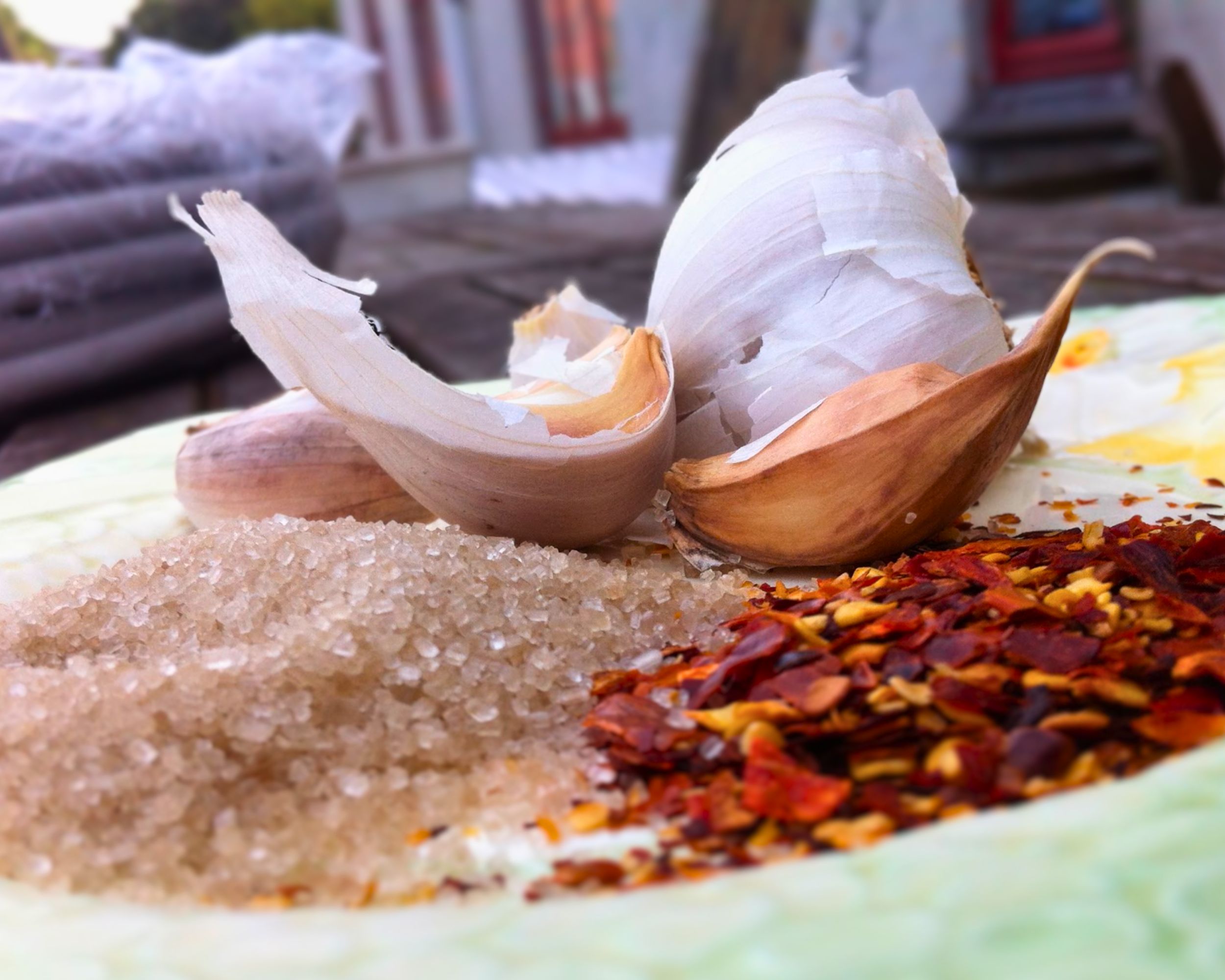
Discover the secret behind a delicious, homemade sweet and sour chilli sauce, which I lovingly call Thai ketchup. It's organic, free of additives and full of flavour!
Spice up your food with homemade Thai ketchup
Sweet and sour chilli sauce without guar gum, flavour enhancers, synthetic citric acid and flavourings: this is the organic version of Thailand's very own ketchup. Easy, delicious, almost organic and very satisfying. We love chilli, but only for the grown-ups (and the teenager), so any kind of chilli that can be added to the food at the table is a hit.
I am against chemical additives that aren't really made for human consumption, and I have made a habit of learning to make the things we truly love – and keep 'cheating' and buying anyway – myself. One of them is Thailand's answer to ketchup, the red, sweet, lovely chilli you just pour over rice and vegetables.
And when you make it yourself, you get to decide which chilli and how hot it should be.
But don't skimp on the sugar. The sugar is what preserves it, and it balances the vinegar – so it gets very strange if you are scared of sugar. In that case, make kebab chilli instead and eat more Middle Eastern-inspired food.
Ingredients: What you need
- 2 dl (200 ml) sugar
- 2 dl (200 ml) vinegar, nothing fancy, just a clear (organic) vinegar
- 1/4 dl (25 ml) water
- 1/4 dl (25 ml) fish sauce of decent quality
- 1/4 dl (25 ml) Noilly Prat or another sherry (the only alcohol in our dry house, apart from hand sanitizer – rather funny)
- 6 cloves of garlic, chopped or pressed, whatever suits you, but not whole
- 2–4 tbsp crushed dried chilli, more or less depending on how hot you like it, and how hot the chilli you are dealing with is. It can of course also be made with fresh chilli, but that's not necessary.
- Also a little cornstarch, dissolved in water, about 2 tbsp.
Method: How to make Thai ketchup step by step
Boil the whole lot together, except the cornstarch. Let it simmer for at least 10 minutes. Add the cornstarch mixture and boil for at least two minutes, so it thickens and turns clear again. Taste: try a little on a spoon. The experience should be sweet first, then sour, then hot and finally salty. Adjust.
Storage: Tips for keeping it

This keeps for a long time, but we keep it in the fridge, simply because it's practical. We pour it into an old, cleaned-out ketchup bottle, the kind that stands upside down and has a built-in no-drip gadget. Otherwise it gets so sticky and gross. But you can do whatever you like. It's not important at all.
Written by Cecilie Conrad. Translated from Danish. The original article is available at CecilieConrad.dk.













Comments