

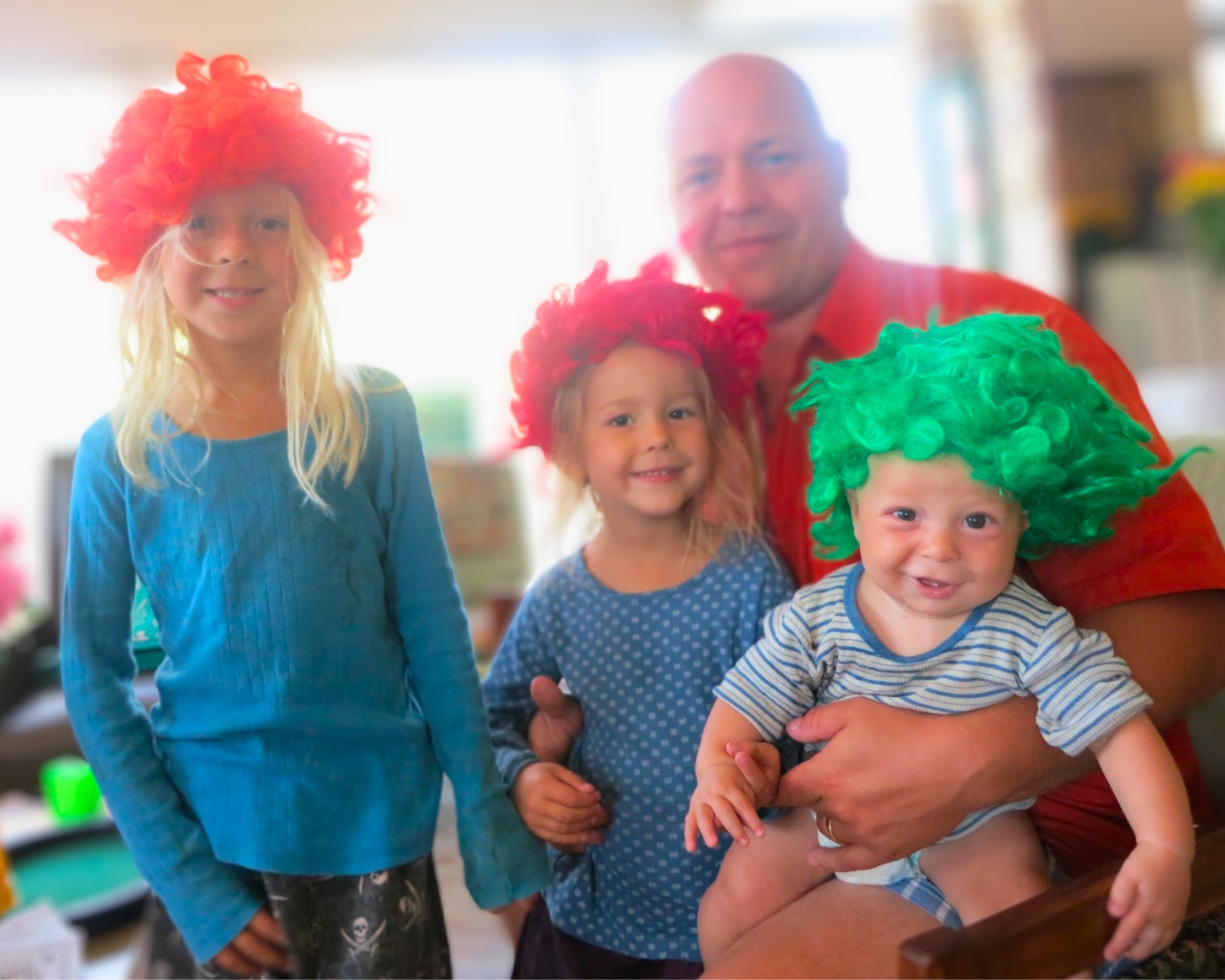
Three of the kids goofing around with their dad in Paris
On the subject of language and how we use it – about the word 'unger', which carries a lot of weight in my personal story.
'Unger' is a Danish word for kids – somewhere between 'kids' and 'rascals'. In my book, 'ungerne' (the kids) is a word full of love, trust, self-knowledge and care. I use it all the time, and there is a widespread misunderstanding that it is meant a little condescendingly, that it means a messy bunch of grubby children – but in my book the word 'unger' has the following story:
When I was five, my parents divorced, and I ended up living most of the time with my mother. Four years later my mother got a new boyfriend, a lovely man who left his wife and his two children to live with us. It is common knowledge that this is not an easy family constellation, and in the early eighties it was not quite as common, as well described and as thoroughly researched as it is today.

Here is my first 'unge', big and lovely in a pool in Andalusia
My stepfather handled it with style. He was full of fun and mischief, pulled a lot of the practical load and, without any doubt, lifted the mood in our family. And all along he was completely honest that we (my brother Thomas and I) were not his children, that he missed his own children, that it was hard for him. He said that he liked us, later that he was fond of us – but only after a few years did he say:
You're my bloody unger, you are!
It was a big day, I remember it very clearly – even though it all just happened over the frying of meatballs and the ordinary chaos of the big blended family we had become by then. Apart from my husband's and my children's, this is the greatest declaration of love I have received in my life. And that is why the word 'unger' is so special to me.
We all have these special words, this unique language anchored in our stories. Shared stories create a shared language, and with it a deeper, more personal community between friends, in families and at workplaces – yes – obviously: in communities. It is fascinating to ask about other people's language and listen to their special stories, and it is important to know your own. And to know when it fits, and when you need to adjust so that you are understood.

Here are my husband and three of the kids on a burial mound in Odsherred
I have chosen to explain it here, because I would so love to be able to use one of my favourite words on my public website, where almost nobody knows my personal story.
Comments
Comments on this article from my old site (translated from Danish):
***
I love the word unger too, because unger are also children who run out into the open, into their own world, which belongs only to children. Where you do all the things you need to do as a child to understand the world at your own eye level. We were a gang of unger when I was a child, running out into the open, whether it was out and about in "Crosserskoven" (a little wood where the kids came with their bikes and rode up and down some insane hills without helmets at a crazy speed, and adults would have totally lost it if they had seen it), or on the school grounds in the twilight from the streetlamps, or in the field with a blanket, a room with the door shut, yes, anywhere we could gather without adults, where we could be together and have all kinds of experiences. There we were unger, a litter that learned and understood. My kids are unger too, because I want them to have the chance to have a "space" of their own, where they are children having experiences with each other, and if you know that you are giving a huge portion of love and honesty, loads of kisses, cuddles and hugs, a bundle of connectedness between siblings and between adults and between children and adults, well, then you can let them loose, because then they will come and ask if something is too much, and they will step out when it gets too much among the unger. For me, that bunch of kids was fabulous, and the hours when we did all sorts of things together as children are the ones I remember as my clearest experiences. - Mille Holm
You are cool ..... - Trice Tomsen
For me, the word unger comes out of love. - Signe Monrad
***
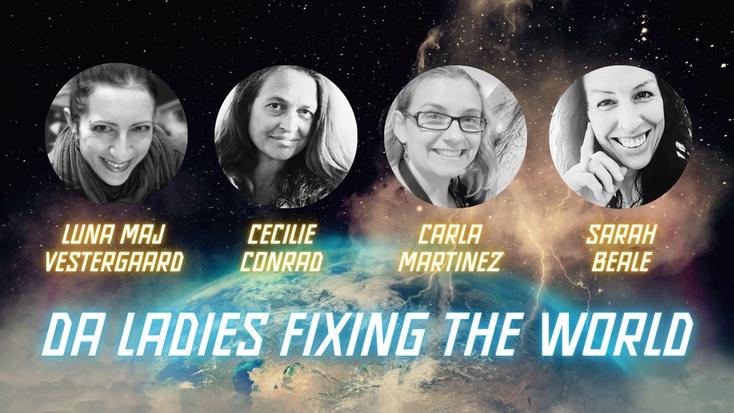
Written by Cecilie Conrad. Translated from Danish. The original article is available at CecilieConrad.dk.






Comments