

🎙️Watch the video episode above or listen below



Also available on all other podcast platforms - find the links here.
✏️ Shownotes
How does a typical day look in an unschooling family’s life? - This is one of the first questions people ask about unschooling. It often carries an unspoken hope for reassurance, structure, or a picture that makes the choice feel understandable.
Cecilie Conrad, Sandra Dodd, and Sue Elvis approach the question from different lives and contexts, letting it stay open rather than pinning it down. Their perspectives point toward patterns, values, and rhythms instead of schedules.
What emerges is a sense of how unschooling days are shaped less by plans and appearances and more by time, attention, and relationships lived over many changing seasons.
🔗 Links from Sue Elvis to this episode
- The Changing Seasons of the Unschooling Year
- Why Unschoolers Do What They Do
- What Do Unschoolers Do Each Day?
- Typical Unschooling Days
🔗 Sandra, Sue and Cecilie's websites
🗓️ Recorded September 2, 2025. 📍 Åmarksgård, Lille Skendsved, Denmark
See Episode Transcript
AUTOGENERATED TRANSCRIPT
S3E6 | Ladies Fixing the World
Cecilie Conrad: 00:00
Good morning. This is episode six of season three of The Ladies Fixing the World, where we talk about everything unschooling, and I am here today with Sandra Dodd. Hi, Sandra. Hello. Very much not morning in Sandra's End in the US. It is very late in the evening. Thank you for staying up. And hi Sue.
Sue Elvis: 00:23
Hi, Cecilia. It's afternoon for me because I'm in Australia. Yeah, this is Sue Elvis also on the podcast.
Cecilie Conrad: 00:32
As usual, today we are going to talk about typical days. And uh I will hand the stalk talk stalking stick. Talking stick to Sue because I think you've got an introduction for this one for us.
Sue Elvis: 00:49
Yes, off the top of my head, not planned, but I suggested this topic because when we first started unschooling, I remember reading a very rare book. There weren't many books about unschooling all those years ago. And I read the book, and then I thought, but I still don't know what they do. The best I could come up with all my reading was this family who they got up in the morning, they went to collect the eggs, they made pancakes, they sat at the table and ate them, and then they all got their roller skates on, and they skated down the long, long, long drive to the mailbox to pick up the mail. And I thought, well, I don't want to skate, and I don't, we don't have any chickens or chucks. So that didn't give that didn't help me. I wanted pictures. I wanted to be a fly on the wall in lots of unschooling families to see what was going on and why. Because later on I realized it's the why, why we do things, not particularly what we do, but why we do them. And so I that's the basis of my blog is lots of stories. And I think people do, I've had a lot of people come by to read my stories to find out what unschoolers do. But the reason I suggested this also was because I know that your days, Sandra, were probably very different from ours. And Cecilia, your days are definitely definitely different. And I thought it would be nice to give three different views because I don't think there is uh one way a day, unschooling day can look. There is lots and lots of different ones, but I think as we're talking, we might discover that each of our days has some principles, some features, something in common. So that was my introduction, and I'm gonna pass that on to who would like to speak first.
Cecilie Conrad: 02:58
Yay. Go ahead. No, let's go, Sandra. I was just cheering you up.
Sandra Dodd: 03:04
Oh, okay. Okay, Sandra. I was talking to someone I had visited in Portugal recently, and I said, I hope that when I visited, she didn't feel like I was an inspector coming to see her unschooling. And I said it was really valuable to me to have stayed with so many families and seen them interact in their normal uh surroundings. And she said, no, she felt more like I was like David Attenborough visiting them. And I thought, oh, that's cool. So she didn't feel like I was I was spying on them or judging them. And that was that was sweet, that was nice because I really wasn't. And it helped me, it's helped it helped me to see a range of physical plant, as it were, you know, what kind of stuff people have, how much room do they have, what range of of freedom do the kids have to go inside, outside, find some privacy, hang out with the parents. That was not that was great. So it's a big range. But people would come to unschooling discussions over the years, and they would just want to like stop in like they were going to buy a vacuum cleaner, you know, like I'm stopping in, show me your vacuum cleaners, I'm gonna get one, I'm gonna go. We're like, yeah, it's not gonna work. Um, but they would say, okay, tell me what I have to do, tell me what I can do, tell me what a typical day is, and then I will say goodbye. And we used to say, Well, at first, I think a standard answer was it's like every day is a is vacation from school, or every day is a Saturday. But that was insufficient because they didn't all agree on what they did in those days. And also a lot of times if kids are in school for five days a week, they're using that Saturday to zone out and recover. So that was an it was an interesting question. It was an interesting question that we couldn't answer easily. The things that Sue's saying, it took us a while as a discussion group to come up with that really quick answer. It's like first you become unschoolers and you see what learning looks like, and then you just live like that. You live like unschoolers, but that's not the answer to what's a typical day look like either. So I do have a collection of times that people were effusively describing a day that they thought was cool or interesting. And I was in a book, our family was in a book called Patchwork of Days. It wasn't just unschoolers, we were some of the only unschoolers in there. It was a lot of more structured homeschooling, religious homeschooling. But what they said was pick a day in advance, you know, pick a day that you're going to document. So we didn't wait till later and pick the good day. We just said, okay, this day. And then years later, they said, okay, we're doing a follow-up book. And the girl who was visiting us that first time was there again. That was cool. Um, and that was just coincidence. That was not planned, that was fun. So I've been analytical, I've been myself pinned down and say, report on the next Tuesday that comes along or whatever. Uh, document this. But I think when kids are in school, there there are typical school days because they're gonna be in in in the in New Mexico where I live, 180 days that you come to this building at this time and we'll let you go at this time, lunches at this time, and probably the subject matter is in the same order. And it's gonna be the same bathroom, it's gonna be the same playground, playtime. So I think sometimes people think we're replacing this 180 days with some other 180 days. So tell us what it looks like. And it's it's fun. It's fun to see that one of those steps in the process of moving from one way of being to another. I like that. So I like to think about it.
Cecilie Conrad: 06:40
We have been asked several times, our family, to to participate in documentaries and also in TV shows, uh a bit like your patchwork day book, can we visit different families, see how they live, document the day? And we've always said no. Because uh for many reasons. Most mostly the lack of control of the outcome, but all but also because whatever day you show up and film everything we do, if you give that the headline, this is the unschooling family in this patchwork of different lifestyles, whatever we did that day will not share the story of unschooling. It will be misunderstood. Whether it's fancy and we read Shakespeare and do math and push shops all day, and people think, oh my god, they those kids do a lot of things. And how is that in and they will, I don't know, they might be impressed, or we hang out on the sofa watching Netflix, or whatever we do will not be the full picture. There's no way it can be the full picture. We need a lot of conversation, we need a lot of philosophy, and it just needs to be a bigger picture, like like Sue's blog. It has to be that big to show the whole thing, or we have to do the brain work, we have to do the talking, we have to explain, and that's why we don't want to appear on other people's broadcasting because we don't know the editing process and we don't know what will be the meta message of the outcome. So we don't usually don't sometimes we do little things, but we usually we say no. It's too hard. It will look for in most cases, it will look like that Saturday. It just isn't.
Sandra Dodd: 08:43
I don't remember right now if it was newspaper or TV, but there was some local thing I had been interviewed for, and so they're sending photographers. I think it was probably TV. And it was brief. You know, the thing that they the part with me was brief, but what they tend to do with those sorts of interviews where they're trying to show, they're in good faith trying to show what you're typically doing. But it's not gonna work. So I uh they called me and I said, Well, you should you should go right now. You wouldn't have to go far. My son's at work, he just works about a mile from here at a gaming store. My daughter's in a Harry Potter cards tournament that's just like three blocks from here, walking distance from here. You should go film them doing that. And they said, No, we want to come to your house and show them learning. And I said, Well, it would look like them sitting in front of a computer or watching a movie or sitting and looking out the window. It's not gonna look like what you want it to look like. But what they're doing right now is photogenic and learning, and they're like, Yeah, no, we're not gonna do that. So I just I just kind of blew them off. I said, Well, it's not worth doing then if you guys want us to stage some things, we're not gonna stage something. And yet, there were many times when learning just all of a sudden started happening like fireworks, unplanned, unforeseen, and we that's typical. It's typical that for some reason something's gonna stir everybody up and sparkle stuff up, and no one knew that was gonna happen. If people get to where the parents are not worried anymore and they're accepting and participating in in this production of opportunity, then they see that happen quite a bit. And if someone's not open to it happening, they'll be preventing it without meaning to. They'll be trying to manage and suggest and drive their kids around, you know, not in a cool way in a car, but you know, to uh shuttle them here and there in the house, as though a photographer's coming over, maybe, you know, the parents are self-conscious about what it should look like. So first they have to relax, but I also think that if they think, okay, every day has to be we get up and do something really interesting and fun. Every day we go to a museum or a field trip. I think I just think, well, compare it to school, think about it. Maybe in a school year there'll be two field trips. That'd be pretty exciting. Usually there's one. And you could do one a month. You could do one a week, you could do one every day for a while if you want to. Yeah, act like you're a tourist in your own town, like play like you can only be there for a week, and what would you see? Or actually get some tourists, some visitors, some relatives, some other unschooler friends to come with you. And what would you show them if they were only going to be there for a week? Do some of that. But don't do it every day because kids will be exhausted. They need some days where there's nothing happening. Where they just do familiar, familiar home things.
Cecilie Conrad: 11:34
But I really think also from the unschooling point of view that it's it's a fun experiment to think about what if someone came and tried to make a documentary. Um you're talking about Sandra how it's sometimes a lot of learning is happening, and it's obvious everyone can see it. But I think from this point of view, even when you can't see it, it's happening. Because it's a big part of the unschooling that there is all this space to contemplate, to think, to work with things that don't look like school learning, that there's enough space to just work through all the things that happened, or process some emotion, or work with a new drawing tool for a long time, and maybe there's some drawing learning going on there, and you're learning a new skill with a new material, but at the same time, all the pieces of other things that happened are falling into place, all of the emotions of that stage of life is being processed, all of the whatever also is going on will maybe land or ignite and show its face and say, I need processing. And then you have a child coming out of a drawing session completely devastated about some question or emotion or whatever. But there is time for this, and that means that when they learn the things that are parallel to school, I think it's a big part of the reason that when they're learning things that are parallel to school, it happens so quickly. Nothing is getting in the way. I have not seen my children have to rehearse over and over and over things, or that I had to, if they ask me a question about whatever, something I know, something about, maybe literature or art, I tell them once. I remember when I was teaching my second daughter to to hand write with her, like with a pencil. She could do the capital letters. She learned that when she was very young, like more like a playful drawing thing. And then at some point she said, But I want to learn the small, what are they called in English?
Sandra Dodd: 14:02
Lowercase, usually. Lowercase, yeah.
Cecilie Conrad: 14:04
We call them big letters and small letters. That's fine too.
Sandra Dodd: 14:06
Yeah, that works in English.
Cecilie Conrad: 14:08
Okay, so she wanted to do the lowercase small letters, and when I was in school, that took like maybe a school year or took a long time. I remember we had a full hour or class on each letter, how to write it and how to write it perfectly, and there were exercises, and then tomorrow we will learn the next letter. Not so that wouldn't be a year, that would be maybe two months of working with that. But this day I just sat down, took out a big sheet of paper, made the lines, big did the capital letter and the lower letter next to it, and she was watching, and then I put it on the wall, and from that day she could do it. That was it. Took an hour. And this is just one example of things that take a very long time in school and take a very short time at home. And I think one of the reasons is that when they are ready for it, when they ask for it, they are ready for it, and it nothing gets in the way. So, all of the things that we would film that looks like this, nothing, it's a lot, it's a big part of the picture. So now I'm talking, and I would have to do a lot of voiceover on a documentary like that, because otherwise, like it, like David Atingborough, actually. Uh the child here is now singing, and it might look like that'd be really fun. Maybe we should make one of those. I think you can actually use David Addenborough's uh voice on an AI now, can't you? Oh, that's funny.
Sandra Dodd: 15:43
You could say the mother looks very frustrated, we think she is, but she has tools, and in a few minutes we expect her to have taken a few breaths and cheer herself up without having to interact with anyone. Here it comes.
Sue Elvis: 15:57
Really funny. I might have got this wrong, but didn't John Holt visit different families and sit there and observe them to formulate his uh knowledge, he gather knowledge and formulate his theories on how children learn.
Cecilie Conrad: 16:15
Yeah.
Sue Elvis: 16:15
So I I read um read some of his books, but I thought there's also another book, I think it's called Children's Play or Children's Work, it might be children's work, and he was actually friends with the family. There was a girl and a boy, and he often sat at their table or followed them around and chatted and observed the kids. So I guess John Holt is our David Attenborough. Um but I um if if somebody had come to film us, I think they would have had to have come back at different times of the year because I found that our unschooling days changed depending on where we were in the year. And I'm not just talking about seasons, but seasons had a great influence on our days, but also music exam uh seasons. There was times when my kids were really in, well, they had to be, well, I say had to be, they chose to be because they had exams, but their music practices, singing and piano were a major thing in their day. And then NanoRimo novel writing month in November, I think. That was a writing month. We they didn't do a whole lot more than write in November, and then A to Z in April for more writing. But things happened, and also school holidays. A lot of people always say it doesn't matter whether it's the kids are in school or not, our days aren't influenced by the school terms, and but ours were, and that's because I'm married to a school teacher, and also music lessons and things always stopped during the school holidays, but we had my husband home during the school holidays, so we took advantage of that and we'd go on lots of outings, go away, uh, just spend a lot of time with him, and other things would fall by the wayside. We wouldn't work so much on our own projects while he was home, uh, especially if it was summer. So I'm just wondering whether you noticed that with your days, whether they were influenced by the seasons and not just the weather, but other things that recur at similar times of the year. Did you sort of gradually move into different seasons and out and pick up something else along the way? I imagine, Cecilia, that your typical days are influenced by where you are in the world. And if you're about to go to another world schooling event, your days will look different than what they are at the moment on the farm in Denmark.
Cecilie Conrad: 19:06
I mean, the obvious answer is that there are no typical days. I think for all unschoolers, that would be the short version. Of course, it's also obvious looking at my nomadic life that our days change because our context changes. So there are things we can do in one place that we cannot do in another place, and that's a little bit like the seasons. We just move around, so our context changes more. Sometimes our season doesn't change at all. I remember six months of spring, that was really fun. We started far south in Sicily and it was spring in Sicily, and we just kept moving north for six months, so it was always spring. That was fun. Um, yeah. So that's obvious, but I think we're not much we're not good at planning. We're really good at planning. Very often we stop and we talk about it when we have a series. Mindset. We need to become better at planning. Sometimes it's our new year resolution that happens many often that we like at the end of a year, we say, okay, if there's one thing we can do better next year, we do more planning. But I don't know, we're too busy living. I'm too busy doing what I'm doing today to think about what I'm doing tomorrow.
Sue Elvis: 20:22
Can you explain that a bit, Cecilia? Why what do you think you'd gain by doing a little bit more planning? Why is it sitting at the back of your mind you thinking we're not very good at planning, but the idea doesn't go away? So what would you gain?
Cecilie Conrad: 20:39
I think there are some hiccups that really could be avoided. Some of the, yeah, obviously some logistics that becomes a little bit panicked. Uh sometimes we sometimes it just gets too late in the night before we're done with things we actually have to do that we could have done a week ago. And then there's the preparation that as we're traveling, sometimes it would be nice to have read a book about the place we're going before we go. And I panic, read read things late at night and early mornings before we go see them. So that's the planning. And then just doing the whole fitting all the pieces together so everything is met. Sometimes I run out of or I realize that something has been lacking too much for too long. And maybe if I had stopped to just do a little more brain work, it wouldn't have happened. And I say we're not much planners, but I think it we do plan a lot. I we just often feel we don't plan much. And I'm saying all this because you said if we're moving into a world school event, is it different? I would say it's different when we're at the world school event because moving into it is just another moving, which is something that happens routinely all the time. And we're not we're just not preparing much. We're doing so much that there's not much time to prepare for the next thing. We're we're like preparing, doing, and evaluating more or less at the same time. I think the typical days I I've noticed that there are things that are typical. There are things that we take with us through most days. There's some peace that we all need. There is some the whole family is doing some sort of, we like doing some sort of workout or running, or most of us actually do that every day. Um, we like to have at least one sit-down meal together. That happens. Obviously, there's a lot of conversation. It's not a good day if we haven't had a good talk in all the different constellations, so that's a lot of time. And I often say that unschooling is carried by conversation. The method is conversation. There's a lot of talking, and it's very valuable and very important, and that actually always happens. I don't go to bed without having had a conversation with at least all of the three children that live at home. So if I was to answer what's the typical day, I would say these things actually always happen, more or less.
Sue Elvis: 23:18
But there's some ingredients of an unskilling day which you could apply to any day, though the days can look very different, but there are certain ingredients that are always there, like conversation and times to listen and what else? Time to explore, maybe. There's always opportunities to learn, regardless of what that learning looks like.
Cecilie Conrad: 23:45
Well, time is the key here, that the time is not pre-structured by a commitment to a school system where you study 30 or 40 hours a week, which is fair enough if you want to do that, but then you've committed a lot of your time to something specific. Whereas for the unschooling family, lots of days, not all days, but lots of days are open, and everyone gets up and have to come up with what's the most meaningful thing I can do today, what's the most important tasks, what what do I have to do, and what do I want to do? And and they also have to go to bed at night with that. I chose this, did it make me happy? Is this what I wanted to do? Do I want to do something different tomorrow? Not that we we don't do a sit-down evaluation, but we all go to bed at night with some sort of emotions and and some sort of awareness of how what we did affects how we feel and and maybe ideas about how we would like to moderate tomorrow. And and sometimes that's a very bad idea to start thinking about late at night, actually. Um so so but that openness and freedom and time that's a constant for unschoolers. That's not a constant for uh people living the mainstream life. They have a routine, and that can that can be a different kind of freedom. You don't have to make choices, you don't have to consider, you don't have to evaluate all the time. You can actually just do the grind, do the thing. And if you decided to do it and you want to do it, if it's voluntary, then I think that's all good and fine. But that's a meta thing. You can't film the fact that you have that openness every day.
Sandra Dodd: 25:38
And if someone said, here's what we're going to do today, they need to be for this to work really smoothly, they need to be flexible enough to know that if it's not going well, change the plan. Or if it's going really well and you had figured we're gonna be at this place, museum, zoo, park for three hours, and you get there and everybody's having a really great time. Why does it have to be only three hours? It there may be a really good reason. Maybe somebody has an appointment, but maybe that was arbitrary and you can negotiate renegotiate as you go. Or maybe you all get there and it's raining and there are bugs and it nobody's having fun, go do something else. And I think that flexibility should go on the list of what makes the day alive. And I think that's no, you go ahead.
Sue Elvis: 26:25
I interrupted.
Sandra Dodd: 26:26
Well, I was I was gonna go back to what you asked about school because you're working with school because your husband's teaching, so you you're you have days when he's not in school and that makes that day flexible, special. You can do things that you couldn't do without him. We used to work around school the other direction. We knew which days were more likely to be field trip to the museum days for school groups, Thursday and Friday. There are gonna be more museum trips for school groups, even to parks the last four weeks of school. And so we would try to go to the museums early in the week and don't try to find a park where we can just have the whole park to ourselves if it's near the end of school, because sometimes they throw kids on a bus and take them to a park and do running and playing, but it's more structured. You know, the adults are telling them where to run and how to run and when to run, sometimes more than our kids were used to. And one time we were at a park and we were several unschooling families were there, and Marty was probably six or seven, and he sat up really straight like a little prairie dog or like a mere cat, and he said, School kids! And there was a bus that had just pulled up to let out about 30 kids, and he said, Let's go home. And I said, It's okay, Marty. You know, let's just stay here. They may not even be coming to play because we were playing a sandbox, so they may not even be coming to play over here, and it was fine. He settled down, but he wasn't he had never seen a bus of school kids let out at the park. So that was funny. And sometimes we would infiltrate a school group at a museum or something because they'd have a docent with them, a to a tour guide, and we would just sort of sneak up and follow along until the kids weren't interested anymore. But that way they saw the difference in the way they were seeing the museum and the way we were. But we were not obligated to stay with that group, and that was that was also some flexibility on our part.
Cecilie Conrad: 28:21
We do the same, we avoid as best we can. But I'm I'm I need to say this with respect because it can come out, and it is true that my children have always preferred to not be around groups of school children because they are noisy and and um well, it's just very different, for example, at a museum. It's for the school kids, it's a day that is different from all the typical days. It's a day with uh a level of freedom they wouldn't normally have, and and they are at the museum not because they want to be there. So they're maybe not interested, which is fair, but that means they have a lot to talk about with each other, and that happens in a maybe more noisy way and and chaotic way than is optimal for those who want to actually immerse in what's going on at the museum.
Sandra Dodd: 29:16
So sometimes that's a learning opportunity because I remember Holly being in a karate class, and she didn't like she didn't like the class situation because she said the other kids aren't paying attention, they're just goofing around, they don't listen to the directions, so then the teacher has to come and tell them again, and I'm waiting for us to get to the activity. And I said, you know, a lot of those kids didn't choose to be there. Their parents told them you shouldn't you need to take a class, and they've been in school all day. Finally, they're not having to sit in a desk. There's some other kids that they could talk to. So I was trying to help Holly have some compassion for school kids, but she tended not to.
Sue Elvis: 29:57
Yeah, it's uh one of those things, isn't it, that our kids it's a learning opportunity, I suppose, because my kids went to after school activities with school kids, things like St. John Ambulance, uh things that they were really interested in, but would get affected by the less than attentive behavior of the school kids. But I guess it was a learning opportunity for them to learn how to get on with other people, patience maybe, but also gratitude that they didn't have to be in school all day. I always remember coming, we used to make music videos uh very early in the morning. We used to get up about 4 or 4:30 in the morning and then go out and film. Uh be we had to be at our location before the sun came up, before first light. And we would be finished around about the time that kids were going to school. And I can always remember coming back and we would be on our way, well, we had a picnic at breakfast, and then we'd be off home to edit the video, and we'd see the busloads of kids all going to school, and that feeling that we were so privileged to be heading home and doing things that we all enjoyed, and we weren't putting on uniforms and getting on school buses and going to school. It was a great feeling of how thankful we were for our life. And yeah, it's hard, I suppose, being a school having been a school kid myself. Uh it's I was glad that we didn't have to go through that with our kids. We had that flexibility, those hours, the freedom to arrange our days to sit ourselves. And well, the thing I was interrupting you for earlier, Sandra, I wrote it down just so I didn't forget, was you were talking about flexibility. And I think that uh and being spontaneous, and that sometimes we'd get up and we'd have vague plans for the day. We'd always start off with, what do you plan to do today? What are you has anybody got a music lesson? And if I used to always ask if uh any of my kids needed my help. But we always had a vague idea of but what the possibilities of the day. And then I remember one day in particular, I was, I think I might have already told this on this podcast, but we were listening, well, I was listening to the radio in the old school days and heard there was a whale sighting off the coast. And as we lived on at the coast at that time, we all just piled into the car and went whale watching for the day, an unexpected adventure. And those sort of became our catch words, unexpected adventures. Watch out for the opportunities to have unexpected adventures, uh, and never, never, never put other things ahead. Just imagine if we'd said, oh, look, we planned to do the shopping today, we planned to finish that reading book, we planned to do this, that, and the other, and we had missed the whales. But so many of my homeschooling friends would say, oh, look, we can't come over today, or we can't join you at the beach, we can't do whatever you're doing because my kids have to get their schoolwork done first. Uh, homeschoolers, and they had to want to tick all the boxes of things. And I used to think, oh, it is so sad that they would miss out on these adventures because they felt the need to tick off all the boxes. And then by time, by the time that was done, the opportunity for whatever it was, the exciting adventure, was over. Um, and I was grateful for that, that we were tuned in and if we heard of something exciting that was going on, we would throw a picnic in the basket, get in the van, and head off to do whatever had come, whatever was had it was on the radar that we had discovered. But um we often had advent my words are gone today. Um planned adventure days. That doesn't sound too interesting, does it? What we would do is we'll say, we'll have an adventure on Wednesday, say, what shall we do? And then we'd all throw some ideas into the hat. I want to go for a bushwalk, I want to go to the coast, I want to do this, and we'd have an adventure. And I think that sometimes planning an adventure is good. What's for us, otherwise we wouldn't do it. Sometimes you had to make plans so that uh you made space in the day or in the week for this adventure. Because sometimes it's so easy to let other things take over the day, and you think, oh, another week's gone by. And we didn't go to the coast or whatever. I got caught up with errands, I got caught up with family matters, friends, whatever. We never did that adventure. So did you have planned adventures, Sandra?
Sandra Dodd: 35:16
Maybe like let's go to the mountains, and we didn't have a plan to for when we would be there for what we exactly we would do, or we could go to Old Town, something like that. So that there are things there that you could do, but we didn't decide a little schedule. Like we will go to this store and we will go to this restaurant. We let it unfold. You mean like that?
Sue Elvis: 35:35
Oh, just that uh you're looking ahead the f in the week and you think, for example, when you've got lots, especially when you've got children of all different ages, and then maybe one of the older kids would like to come to the beach if you went to the beach, and they would have said, Oh, if we'd known you were going to the beach, I wouldn't have made my other arrangements. So, or you'd plan if someone was sharing a car, maybe will plan to go somewhere on Wednesday. I must make sure I've got the car and it's full of petrol, or let's just make a plan so that we have picnic stuff. Sometimes I used to think that the word planning was a forbidden word. We wouldn't wouldn't be able to use it. You had to get up every morning and just do whatever. The first thing that came into your head, I get up, I'll have my coffee, sit there, now what shall we do? And then in a household of nine people, that really you don't get much done because you've got uh you've got conflicting ideas about what everybody wants to do anyway. But just um drifting, that's what I call drifting. You just and sometimes it's nice to drift. I drift a lot at the weekends now because I just need the rest. And I I love getting up in the morning before everybody else, making coffee and just doing nothing or reading or whatever comes to mind. But I I came to the conclusion that if we lived every single day of every single week that way, we wouldn't accomplish much. And then I'm not talking about learning, because learning happens, but there were certain things that all of us wanted to accomplish. Like music exams, for example, I've already mentioned. If you belong to St. John Ambulance, you might have a commitment that you have to do before the next meeting. Um I own work too. I'm sure both, well, I know both of you, you had your own work as well as helping your kids and being facilitators and sharing their adventures. I had my own work that I wanted to fit into the day. And my kids had novels they wanted to write. And if you only write once every six months, you're never going to finish a novel. But I would be really interested to hear how I know you're both busy people, and especially you, Cecilia, how do you fit in your own work into your days and at the same time be available for your children so that you can listen, have those conversations, take sort of be the driver to take the younger ones wherever they would like to go. How do you do it?
Cecilie Conrad: 38:26
I don't know. I was actually just making notes in my diary about it this morning, and I noticed I do some journaling in the morning sometimes. And uh it's been 10 days since I did it last. And last time I did write something about all the things I'm not getting done, it's systematic, what kind of thing is always lacking, and how could I try to navigate that? And then now I sat down again, opened the journal, and realized, okay, I've done nothing of that in those 10 days. So apparently my planning didn't have much of an effect. And then I noticed that I was thinking about how to backwards engineer my own values, hoping, well, I am sure, that what I choose to do is more important than the things I choose not to do. So, as I haven't done the things, I wanted to do more serious work about around this podcast. I wanted to sober up, just there are some some bugs on my website. I wanted to fix, I wanted to write more blog posts, I wanted to work on the book that I'm writing and all the things. Computer where I have to sit and have my own mind space. And I haven't done much of that. So, what have I done instead? Because I'm I'm I'm not much of a chill out person. So it's not because I've done things that I regret doing. I haven't been doing my kids use the word dumb scrolling. I haven't done anything, I haven't. Done anything that I regret doing except for twice where I've been arguing with my husband. That's always a waste of time. But besides that, I have all the things I did, I wanted to do, and I found them the most important thing to do in the moment, which means they are must be more important. Even so, even knowing this, then I did still stop and I wrote the word serious. What about all the serious stuff? And then I had to stop again and think, why am I still this is de-schooling happening live for you, the audience? Why am I still considering things that look like mainstream work more serious, quote unquote, than the things I actually do? Which is having the conversations, going for the walks, maintaining the household. I've noticed because I've taken on more work recently because I'm launching these world school villages, and there's a lot of work on in that zone, and that's just more work outside my core family and outside the lifestyle of traveling. And I've noticed that I think you sue, I can't remember what word you used. Did you say you flow or drift? That the drifting, I don't have much time for that. I'm speed cooking, I'm panic washing clothes, I'm running out of basic stuff in my kitchen, and because I'm I'm not in the mindset of these things as much as I used to be, and as I as I normally would be, but I have more, yeah, I have a new thing. So, and I've noticed this means we run out of clothes. I pick up a computer or a camera or any electronic device that needs charging and it's out of battery. We run out of basic stuff that we would never normally run out of. I I I wake up, I have no coffee, which is a panic situation. Um, we run out of toilet paper, we forget to add top at blue on the car. Basic things that just need to work suddenly don't work because I'm not drifting. Because those are all the little things I do when I drift. I just make sure everything's alright. I think I read once in a novel. I wish I could come up with the author's name. I read a series of crime novels that all take place in Sicily. I suppose the author is Sicilian when we lived there, and uh he explains that there is a word in the Sicilian version of Italian. I don't know that this is true, I just read it in a crime novel. There is a word for all the little things you do when you're not actually doing things, and I thought those are all the little things that are really important and really serious and need to be done. We're back to the coffee problem. Lots of husbands of home uh unschooling mothers are criticizing or being not in the beginning, don't really understand the concept of how much coffee is being drunk around dining tables and the importance of sitting there with the coffee. It looks like weekend, it looks like a pause, but these things are really, really important. So, how do I get my work done? The work that looks like work, the work where I sit at a computer and write a blog and a book and do podcasting. I can't I am not sure I can answer the question. It seems like sometimes in my life, suddenly there is space for it and then and the energy at the same time, and then I get a lot of it done. And sometimes in my life I don't, and it's standing still, and nothing happens. I'm not posting anything on the blog at the moment. In 2023, I gave myself the challenge of posting every day, and I did, more or less, and now I think I've done three or five this year. I just can't I can get the calls done when I do the work with the people I work with, maybe because that's more clearly in the calendar, and it's someone right now waiting for me. Obviously, I'm never late for that. Um, but the other things I think I just have to realize that they are less important.
Sue Elvis: 44:52
I used to always say that sorry, that I used to always think about the things that were important to each of us and how were we going to achieve them. So they had to be individually chosen things and things that were important, not things that look good, things for other people, but things that things that we all really did want to achieve because they were important to us. And I've got a good example at the moment I'm drifting because I've got this book that I've got a format and I was telling Sandra about it earlier. And I've been drifting for nearly a year over it, and I'm not getting it achieved done. I'm not sure why, but I had a drifty day today, and I'm not saying drifty days are are bad because it depends why we feel the need to do it. But I didn't do all those little things that you did, Cecilia. I I still haven't gone and refilled the toilet paper in the bathroom, which is a very simple thing to do. I've just sat and drank coffee, but there's been no one to talk to except the dog, so that's not even uh useful. But maybe those sort of days are necessary every now and then. But yeah, I don't know where I'm going with that. But what I really would love to hear, because I've been talked a lot, I haven't got a very clear idea, Sandra, of your typical, well I'd say typical, of your some of your different days. If that film crew had come along and you said some that particular day, they could have gone down to the game store and they could have gone and observed this tournament, I think you said. But can you give us some different days, a few different days, some of the sort of ingredients which were common to all of your days?
Sandra Dodd: 46:42
Sure. The kids, when they were preteens and young teens, before any of them could drive, and I was the driver for everything. We'd have we had a big wall calendar, and it was, you know, Kirby's karate when Marty was playing ice hockey or whatever Marty had going. Keith and I were in a medieval studies club. Sometimes we had things to do, or one or the other one of us. Usually in the fall, we would have a music group. The kids, our kids weren't involved. As they got older, they were sometimes a little bit. And so that would be on the schedule too. People would come over and we would do medieval and renaissance Christmas music, just vocal a cappella stuff. That was fun. There would be people who had never sung in public before, you know, they'd never been in choir at all. And so we're doing this period stuff that's going to be done in costume and for the big Christmas feast. There'd be a few hundred people to listen to them. So it's a big deal. Keith and I had been in music programs in school and out of school, and so we, it wasn't a big deal for us, but we knew that we were providing this for some other people. So the kids saw that too. They knew that some people were really excited. We were at a my my daughter-in-law got a PhD lately, and we were at a party a few weeks ago for her having graduated. And there was one of the guys there who's about halfway between our age and our kids' age, and he was just gushing about how how fond memories he had of that of those music things. And he said, sometimes about shopping with his wife and the music in the in the craft store, whatever, will come on and he starts singing and he knows the words. And she's like, How do you know that? So the kids knew things that we were passionate and enthusiastic about that had been on the schedule since before they were born. That was not a big deal. So the night before, I would say, okay, before every before anybody went to bed, I'd say, Holly has a play, a rehearsal for her play in the afternoon or a dance class. Kirby doesn't work tomorrow. I have a meeting online or you know, whatever. I'm doing a I used to do chats, like just text chats a lot. People would come in and ask questions in real time typing. And if one of those was scheduled, sometimes I would hire the neighbor to come over for $3 an hour. She had two little sisters, but she'd much rather take care of my kids because and then I'd give her $3 an hour, which wasn't much, but she was only 11, 12. So for her, it was come over and play at my house. If the kids need water or a snack, or if they start fighting, can you just make peace? And I'll be here if you know she really needed me. So whatever was on the schedule, we would review the night before because part of the review was do you have clothes for this? Is there anything I need to wash? Uh everybody needs to be up at eight, or Holly needs to be up at eight. I can just take her and leave the other two of you here, whatever it might be. So we would just recite the next day's needs. And sometimes it was we got nothing on the schedule. You guys can sleep late if you want to. Also, in those days, the internet was new and there was dial-up only on one computer. So we we would see what the other people were doing on the computer. Holly didn't last long, she'd want to play a couple of games, and Kirby was playing some serious games that took longer. And if I had the chat, I that was scheduled, they'd give me the computer. But we would just we had a sort of um rotation that it was, I don't remember which order, young to older or older to younger. They could stay on as long as they needed to if nobody else had a specific scheduled need. And then sometimes it'd be 15 minutes, sometimes it'd be two hours, and the other person is next. So that was the way the schedule went, you're next. And that was interesting too, because we weren't separated in different rooms using the computer. We could look over those people's shoulder and see what they're doing. So the kids saw what kinds of things I was doing when I was helping other unschoolers. But they had been used to that since they were born because I went to La Lecha League meetings all through those years when they were little. And then we hosted a play group that sort of morphed from a La Leche League play group to an unschooling playgroup as some families' kids went to school, the ones who didn't stayed and kept meeting. So that was on the schedule too, if we were going to one of those meetups. So there was a there was a a routine schedule, sometimes seasonal, if it was plays or sports. And I just always reviewed it the night before. So we knew in advance if it was going to be a really busy, tightly scheduled day, and sometimes the kids just are riding in the car while other kids are being delivered. Holly did a lot of riding in the car with me one season when Kirby and Marty had it was like 5 to 6 and 5:30 to 6:30, about 12 miles apart. And so Holly would be with me in the car all between, letting people out picking them up. And in those cases, the educational thing that was going on wasn't necessarily what they were learning in the hockey practice or at the karate dojo, but it was the conversations about it. And Holly seeing the boys when they're le sometimes they're hesitant or you know, reluctant to go to the thing and they come out happy. Or sometimes the other way around. They go in like really enthusiastic and they come out like, ah, it was hard, that wasn't fun. And so she would get the review of what happened. What causes people to start off yay and come back or the other way around? I don't want to go, I don't want to go. It was great. And that was nice that it was shared, that people got to express their emotions that way. Um, I think some seasons that would become too routine. We always knew Wednesday was the play day, and Tuesday and Thursday were karate and blah blah blah. But as they got older, it was easier when we didn't have to all go the whole group all the time, for people to have two or three things going on at once. And by the time they were all teens, that was very often what was going on, is they were we were gonna be in four different places. And Keith at work, and he's the only one who had a really strict schedule, but he had to be there at a certain time. So uh I think the more different kinds of days a family can have, the more that becomes typical unschooling in a way. That needs to be a big variety of things that are going on and working around the routine. So if we had an afternoon, somebody might make a proposal, can we go to that movie? Or can we go have pizza? I haven't had pizza for a long time. And that those kinds of last-minute spontaneous things could very often be worked in. And we were used to that.
Cecilie Conrad: 53:21
I think well, I just want to comment on my personal deschooling learning journey here, that the planning the day before is a really smart thing to do, and that's one of the things that often doesn't really happen in our family. That we might have some stuff in the calendar, but we don't really realize until the morning, and sometimes it's very late in the morning, and we only have one car, and we realize we both need it, or we need to go to some outing and we don't have the appropriate clothes because they're not clean or whatever. We forgot them at some place and we forgot to pick them up. It's smart to sit down and plan the day before I'm not very good at doing it. So, notes itself. The thing I actually wanted to talk about was that uh allegory? Uh, with the jar with the stones, we've all heard it, right? So you have this jar, how many stones can I fit into this jar? And if you take the big stones first, and then you put some smaller stones and you shake it a little bit, and then you put some even smaller stones and you shake it, and then you fill it up with sand at the end, and then you ask that question, can I put any more into this jar? Is it full yet? And the audience will say, Yeah, now it's full, now that you've added the sand, and then you pour in. Uh, my dad would always say, Then you pour in a glass of wine, and uh and the take home from that story is there's always time for a glass of wine. Anyway, could be water, could be coffee. But I think we need to realize what are the big stones, and some of the big stones they go into the calendar. And I I said earlier in this podcast that I'm not very good at planning. Uh, that doesn't mean that I'm not doing a lot of planning, and and maybe it'll just never be enough. And sometimes there will be hiccups and mistakes and things I didn't think about. And I do a lot of planning because I'm nomadic. I need to know where I am, I need to know more or less where I'm going or how I'm going, when I'm going. I need to make decisions about all these things all the time. And and I need to do that with my family because I'm not the king of our family. We have to have talk about where do we want to go and why. So there's a lot of that going on, and those are the big stones. And I realize also that I have a concept that I call the family braid. I've talked about that for many, many years. I've been doing this, that I sometimes stop and then I take out sheets of paper for every person, including every dog in the family, and I write down what does this person need? How would a good day or a good structure for our life look for this person if we didn't have to take into account everyone else? Just to get it from my mind into something that I can see as a list. And then I take all these pieces of paper and then I make this complicated uh Lord of the Ring elf style braid where I try to get everything in, fit everything into the puzzle, everything into the calendar, everything into whatever kind of routines, everything into the budget that could be in the budget. Um and that always means that something has to give because it's impossible to take all the boxes. Um, but that also means that something that's had to give for a while, that stone grows, and in that way, the stone allegory doesn't really work, but it becomes a bigger stone if something hasn't happened for a long time and the same person has said this or need this, and it keeps going down the list. Then at some point it just has to go to the top, it has to go into the jar first. This thing that's really important for this person in our family needs to be the big stone in the jar, goes into the jar first, and then everything else has to fit around that. So what I'm saying is I think unschooling style planning and unschooling style, typical days, routines, that does happen. That we sometimes have a life that looks like so. We're doing it this way. It's just especially obviously if you live in one place. My life has to be changed all the time because I'm moving all the time. But but if you live in one place, it makes total sense to have a karate class and have routines on Wednesdays, we do this, and on Fridays we do that. That that's just e it makes things flow. And you've got your stones in the glass and you've got them in the calendar, and it all works nicely. But if you take an unschooling family in 2022, their routine in October, I guarantee you, in 23 October routines, different. So that's another kind of can we make a documentary and look at what we're doing? No, because it will change, because we have to look at what makes sense for people in the family, what's important, and who is giving and who is getting at this point in time. I think I I forget where I came from, but yeah, I I hope I said something that's worth.
Sue Elvis: 58:51
So you think that children's needs change and their ages change, which their needs change. So you've always got to be flexible that way.
Sandra Dodd: 59:01
I didn't set the kids down at night to discuss it as a group. I just sort of followed them around as I'm saying how to go today, you know, what do you need for tomorrow? Here's the schedule. Here's what's on the schedule. So it was it was more like that. I might tell two or three of them at the same time, but it wasn't like a meeting. It was just before they went to sleep, I said, or don't stay up too late because I got to get you up at seven, or do what you need to do because I'm not getting you up that early. We don't need to get up any particular time. We had a one of the few rules we had was be quiet till noon. If it's one of those days where people don't have to get up to the same time and leave, let people sleep. If you do get up early, don't do anything noisy. If if you know, let them have till noon. And if you have to do something noisy, wait till noon and then do it. So that was if we were home, the mornings were quiet ish.
Cecilie Conrad: 59:51
It's one of the rules we have as well. It just doesn't have a time, but it's respect other people's sleep. That it's just, you know. If if someone's sleeping, be quiet until they are not sleeping any longer. And if someone wants to sleep, you also have to respect that. Obviously, no one is claiming their sleep space if there's a party going on.
Sandra Dodd: 01:00:15
But yeah, we just kind of say you can sleep, you can sleep as much as you want between dark and noon, and otherwise, good luck.
Cecilie Conrad: 01:00:22
Well, it's like what uh it says in the Pirates of the Caribbean. He says it's it's not rules, it's more like guidelines.
Sandra Dodd: 01:00:30
Well, this one, this one, this one was a rule because we just say it's not noon. Don't turn the music up loud. Use headphones, it's not noon.
Cecilie Conrad: 01:00:36
I'm sure it was pretty flexible, anyways. If there is a good reason to make noise that day, then you probably do make the noise. Uh nope. Nope. Okay. An actual rule. Wow.
Sandra Dodd: 01:00:49
There just wasn't a good reason. There wasn't there wasn't a better reason than sleeping. And very often nobody was asleep anyway. You know, until everybody's awake. If they're awake, make all the noise you want. But if there's anybody still asleep and it's not noon, they have the right of way.
Cecilie Conrad: 01:01:02
I've noticed that one thing that is very persistent in our family that we carry with us through most of our changes, and also that was more or less the same before we left, even though before we left, I had when we left, my children were six, the youngest and 13, the oldest that went with us, and the 18-year-old was living with her boyfriend at the time. So obviously that's different from now, where the oldest youngest is 13 and the oldest is 19. But I noticed that it seems like the mornings is are relatively quiet, and everyone in the family is more or less focusing on his or her own thing. So we all get up, we do our thing, we do our reading and and working out and whatever, food prepping, studying, drawing. We just have our own space. And not until after 12-1-2 we start getting together and do more things that look like yeah, that we have to do as a group. And it's only if there is something in the calendar that we need to do before 12-1 that I'll have to tell people the day before and do exactly what Sander's doing. We we don't do family meetings very rare. We've played around with that idea, but it never works for us. No one likes it. And the dinner table usually for us is not a family meeting because we're so social that there will be other people at that table and they're not interested in our planning time. Our planning time, if it's as a group, mostly happens when we drive because then we're all in the same space, and most often no one else is there. So that's a constant, I feel that we need this space in the morning to do our own thing, and and then the ideas for the rest of the day kind of grow out of that morning. If they were not there already, the kids will come up to me and say, Can we go to the charity shop today? Can we, I don't know, can we read some Shakespeare today? Do we have time to do a complicated food project or whatever they want to do? They will they will propose it more or less before lunch. And then after lunch, we're all ready for the day. We've done our things.
Sandra Dodd: 01:03:40
I came across some writing just the other day of from years ago, me saying that I usually stayed up until the last kid went to sleep and got up when the first one got up. I had a lot of energy and I used to sleep four or five hours a night. That was fine. Now I sleep 10 or 11 hours if I can, you know, if I don't have to go somewhere. But that's just me being old, I guess. But yeah, I would I would get up and and help the kids be quiet, partly. And to if they wanted me to make food, I would. And if they wanted to make their own, I would help them if they needed it or not. You know, I was just I was there to help or do or leave them alone.
Cecilie Conrad: 01:04:16
When my kids are small, or a small, they're not small, none of them are small any longer, but when they were small, that was the one rule that was not a guideline, it was a rule. We all sleep at the same time. There's a window for sleep, and that window has to be long enough for me to get enough sleep. So this means I get to decide. Or I mean, it's not like I've been a dictator, but I wouldn't have thrived on four or five hours of sleep. I can do it once or twice, but I can't keep going, and I couldn't when the kids were small either. So as they needed me in the night and in the evening, and they need me in the morning, I sat, put my foot down and said, anyway, okay, but then we sleep at the same time because otherwise that window will be too short. So I didn't actually unschool bedtime because they needed to go to bed at the same time so that I could get at least six hours. Because I, especially when I had breastfeeding smaller ones that needed me during the night and would maybe wake up really early in the morning and start their day and then have a nap later. So that was that was a non-negotiable. Now it's obviously different.
Sandra Dodd: 01:05:35
But when you're traveling and you're staying in an RV, you don't have a lot of privacy. You can't there, it's not as easy to let people sleep a couple of extra hours.
Cecilie Conrad: 01:05:46
But we're very good at that, actually. We're quite good at that. Um for practical reasons, we all have to go to bed at the same time because the car is uh built that way that either it's a car or it's a bed. So, and the rummaging around to do the rebuilding of the car so that it becomes a bed makes a lot of noise, and part of one bed is in the other bed, and you know, no one can go to bed until it's bedtime. But that doesn't mean people have to sleep. So we go to bed and then we read books and watch movies, and and maybe we even have whispering conversations. If someone's sleeping, you can sometimes get away with whispering a little bit. But otherwise, we we all enjoy reading, and you can even watch a movie together, just uh share the earpods, you know. You have one each. So so now it's not about sleeping, and they're very we're all very good at respecting each other's sleep, except for me. I I usually I'm usually the one to wake up everyone in the van because I'm making coffee and that makes noise. But they I can only go so far into my day without having a cup of coffee.
Sandra Dodd: 01:06:55
So um in Sue's intro, she said something that I was that I had wanted to say. I'll say it again. And that is it's not what you do that's so important as why you're doing it. And I think that's how typical days or unusual days or boring days, whatever range of days you have, become unschooling days when the goals that you have are peace and opportunities to see new things, taste new things, touch. I have a page on my site called checklists. It may just be check, I don't know if it's checklist singular or plural. But it's about how to look at the world in such a way that you cover more information or opportunity than you might have otherwise. And one is by taste, touch, you know, the five senses. If you're not thinking of something clever, you haven't done anything lately that you know the mom's not thinking she's done enough or she doesn't know how she can expose her kids to more things. You know, what what about smell? Is there anything about sense that you haven't done ever or lately? Can you play around with that? Tastes are easy, different food from different shops or whatever, seeing different things is pretty obvious, hearing different things people forget about sometimes, put on some music that you people haven't heard or that you haven't heard for a long time, or musicals that you can sing with, whatever, whatever. But to go through lists like that is valuable. And there are other lists, fantasy and reality, like other versions of a story or what could have happened, just that sort of speculations. I just watched a movie called The Magic of Belle Isle, I think. And it's about a guy who's a writer, and this little girl asks him to help her to learn to write. And he's what he keeps telling her is things like look down the road, what do you see? Nothing. Okay, what could you see? Tell me what you don't see. And so it was about using your imagination to come up with a story that isn't real, that hasn't happened, but could. And that's a way that unschoolers can play around with things too. Well, what if dragons? Well, what if Ice Age? You know, what what would we need to do? And it wouldn't come all in in one second. What would he what will we need to do? Can we stay in this house? That sort of sort of science fiction thinking can be fun, especially for little kids who are doing that anyway, sometimes all the time. But I also think if somebody wants to learn formula or have a routine, that's absolutely going to change. If they start with young children, it's going to be different when they're all 16, 18 and are driving, or can take the bus, or can get out and get away by themselves and do things that don't need their parents or the whole family every moment. And so if you start with the philosophy of we want people to be at peace and to be learning and to be seeing new things, tasting new things, then that makes it easy to that could be your routine. You know, we're gonna eat, can we make it interesting? We're gonna sleep, can we make it more comfortable? And if you're staying in one house all the time, it's really easy not to run out of toilet paper or coffee and to have a big calendar on the wall. So that's an advantage of meeting up and sleeping in the same house every day is that people can relax into knowing what's going to be happening in a way. They know where the food is. They know how far it is to their friend's house and and which days they can go visit, stuff like that. I have a section on my website of typical days that have been collected over the years, but there was one one big discussion one time, and several people wrote a day up. And what's interesting about seeing it in writing that way is it's the mom reporting on her surprises and expectations. Did it go the way she hoped it would? What's what really surprised her and made her impressed with how things turned out? And uh there are at least 36 of them because I counted one day and said there were three dozen, but that was years back, and there have been others added. So from that one page, it has a quote from what they wrote, and then a list of things, of happenings or activities or subjects that I added, and then you can click through to any of those that look interesting. And there's one recorded interview of Janine Davies. She lives in Wales now, she's English, and she was interviewed about typical days, and it was really, it's really fun what she said. It's 15 minutes, it's on that page. So that's centerdod.com/slash typical without a capital.
Cecilie Conrad: 01:11:47
We'll be in the show notes. Oh, I hope so. Uh we hope so, yeah.
Sandra Dodd: 01:11:52
If we if we get that time to Well, I keep saying I'll I keep making lists of of links that I want to send to you guys, and then I just find the paper later. I didn't actually send them.
Cecilie Conrad: 01:12:02
Well, I think we all know that part.
Sue Elvis: 01:12:04
I think the question go and do a search on your website though. Anyone can go and do a search on your website and probably find the page if although for some reason we omitted the link.
Cecilie Conrad: 01:12:17
Or should we email or a note and ask if we if you really need it and you can't find it, then we will answer.
Cecilie Conrad: 01:12:24
Yeah.
Cecilie Conrad: 01:12:24
I think the question of typical days, we've all met it. So, how does a typical day look? And we've all said, um, because that's really hard to answer. But the question either it comes from a curiosity of you don't understand this lifestyle, and you're used to typical days, so how does how does your typical days look? It makes complete sense to ask the question. That's one version of it, and another is the people starting out and they want to do it right, and they ask, so how does a typical day look? This is the reason for the question. You you want to know to do it right. And I just had that question. Um I've just started recording a third podcast, this one in Danish, with uh someone just starting out unschooling, and she's asking all the questions, and we're having conversations about how it feels for her, and and um, yeah, it's a different one. And she was actually asking that question in the first episode. So, what do I need to do? And I think maybe that's what we could try to see if we could answer. Is there anything we do? I was thinking this, especially because you, Sandra, re just a few minutes ago said the word exposure. That's a word that's floating around in the unschooling conversations all the time. So, that how do I make sure I expose my children to this, that, and the other? And is this I feel like there's a little bit of a danger zone in the word exposure? And I like the way you said what about the senses and what about fantasy? Because I feel when the question comes up and people say, I want to make sure I expose my children to all the things, it feels like you could do it wrong, and you could you have to make sure they're exposed to math and they're exposed to geography and they're exposed to history, and and for me at least, for the most part, maybe not all, but for the most part, I trust that growing up from yeah, well, where I come from, school starts when you're six and it ends when you're 16, and then it's the youth education that's a different story. So those 10 years living a life will expose you to all the things. I there's nothing I have to do to make sure my kids meet all the things, all the subjects, all the different categories that would have been met in a school system. So my question is, should we beware a little bit of the word exposure?
Sandra Dodd: 01:15:20
Nope, because you're driving your kids around Europe. So what you're saying is is noble and all and untrue, because you you're you are exposing your children to other countries and you guys like museums and you guys like Shakespeare. If there's a family that doesn't travel, that doesn't have any money, that doesn't, doesn't the mom doesn't have any ideas about what to expose her kids to, she can easily, and I've seen it done, get into a rut where she doesn't do anything interesting. She doesn't take the kids out to do things, she doesn't bring other people into the house. There will be people who say, Oh, my kid's 12 and he doesn't have a friend, and now I don't know what to do. It's like what were where were you when you was six, seven, eight, eight and a half? You should have been already finding other people, doing things with other families do it. But if she's just sitting home waiting for that kid to live his life and be exposed to all the things that they would learn in school, it's not gonna work. Because part of it needs to be mixing it up, seeing things you haven't seen before. Doing things, even the main the basic beginning example is go to a different grocery store. Yeah, it's nice to be able to zip into the grocery store and get the five things you want to get and not have to look at anything else, but you have a child now who hasn't seen these things. You could linger around and look, you know, look at the vegetables and say, This is I don't even know how to cook this one. You know, here's the name of it, but it's not something I know how to cook. And then go to a different grocery store that the mom hasn't been to either. So the mom is also looking around. So the mom can remember what it's like to for things to be new and to not know where the milk is in that store. So that that as an example, if people start with that, it's like, what can I do to help my kid learn something? Go to a different grocery store. And it can be the same style of grocery store, just you know, drive a half a mile or an up or a mile to get to a different brand, different company. I don't know if you're used to waitress, go to Tesco, what little stuff like that. And so if they see that, if they do that and they feel it, they know what I'm talking about. You know, if they do, it wasn't my idea, actually, it might have been Pam Surishids. But if they see the benefit in that, then they can figure out some other stuff. Go to a different park, go to a different swimming pool, go to a different filling station. Don't get in a routine that's convenient for the mom at the expense of the children being in the same car seat in the same back seat in the same store, in the same house. They need to see, hear, taste, smell other things. And that's what the mother can do, and that's the exposure I'm talking about. If they've never seen or heard any Shakespeare, why are they gonna want to read Shakespeare with you? And I'm not saying everybody ought to go out and put Shakespeare in front of their kids and say, just watch it, watch it. I'm saying that if they see you watching something in the other room and they come and say, What is that? You tell them that may be all for the next year or two. Or it maybe they sit down and watch it with you. I sat down and watched Othello with Marty and was shocked at how much he was understanding it. He was 13, maybe 14, but he didn't need me to tell him what was going on. It was great. And so I think I don't want to apologize for saying that kids need to be exposed to things because that's the job of the mom. If she's not going to send them to school, she needs to provide something that's better than school, not nearly as good as school, not half-ass, not yeah, the same but different. And it better be sparkly. Because that's how learning.
Cecilie Conrad: 01:18:57
I totally agree. And I I stand corrected. I think you're right. It's like you can sleep or could sleep five hours and and still function. And I in my personality, there's all this drive towards new things and and adventures and traveling and museums and all these things. So I don't need to worry that much about exposure. I still want to just, yes, I agree. It has to be better, it has to be sparkling, it has to be fun. Um, but it I just want to underline it doesn't have to look like school.
Sandra Dodd: 01:19:32
The fun and it doesn't have to be every day of the whole year, sparkly and different and fun.
Cecilie Conrad: 01:19:36
No, and you can actually quite easily ask your children or observe your children what do they want to do? And um if and did it make them happy? When are they happy? When are they excited? And then go do something more of that.
Sandra Dodd: 01:19:51
Yeah, well, I don't think parents should have to ask their children if they had fun or if they thought it was exciting either.
Cecilie Conrad: 01:19:57
No, that can be observed. That can be observed, it's quiet. Easy to see if they're excited about things or not.
Sandra Dodd: 01:20:02
And if they're enthusiastically being effusive about that, it was awesome, that was the best thing. That's a thing maybe to try again another day. Or maybe it won't be awesome the second time. Maybe it was just the first time that it was so surprising. True. I used to think.
Sue Elvis: 01:20:18
Oops, sorry. I keep interrupting.
Sandra Dodd: 01:20:20
No, no, go ahead. No, you go ahead, Sandra. I was just gonna say I used to think that physical activity made kids sleepy. But it as I watched my kids more and more hanging out with kids they had not hung out with before and visiting cousins or anything like that, different kids, that made them sleepy. Seeing something, playing with some new playground equipment or some new physical toy, it doesn't have to be uh you know something that makes you run and jump. But something that really made them think made them go to sleep early and hard. Go ahead, Sue, sorry.
Sue Elvis: 01:20:59
That's right. I'm not very good at joining the conversation at the right time. You while while I'm listening, I've been writing stuff and things that you're saying and spark ideas, and then I'm not very good at jumping in to uh share them. But anyway, I was wondering whether we could whether a curious attitude, encouraging a curious attitude in ourselves and in our kids, maybe that's a foundational thing. And I I was thinking about even when you stay home all day, if you've got a curious attitude, you you can have a great learning adventure and enjoy yourselves. For example, I uh my kids used to love if we had a family read aloud book. And it was one of the things that uh we had to slot in the day at a particular time so that everybody knew that if they wanted to hear the next chapter, then they had to be there. And it also made it so that I kept that commitment going because I knew I was going to read, for example, after morning tea, get a cup of coffee, I'd sit and read. But we always had always with a curious attitude. We were always asking questions about what we were reading. What do you think about that, Mom? Why did he do that? And I can remember so many times we got started Googling things, uh, answers to things. And I do rem I can't remember the book we were reading, but we wanted to know how I think what how time was discovered. How how why do we have an hour? Well, who decided that this is an hour? Who decided that this particular length is a meter? And so we did a lot of on-the-spot research just because someone asked a question. But it's also like you hear a music and then you think, is there a ballet that goes with that? I'm sure that that music comes from a ballet, and then you start Googling and think, oh, there's some clips on YouTube, or uh, there's a movie on, I don't know, wherever. And come on, quick, grab your coffee. We're going to sit down and we're going to watch or listen, or and that sometimes with a curious attitude, one thing follows another, and you're doing things that you didn't expect to do at the beginning of the day, and you're answering questions that you didn't know you wanted the answers to at the beginning of the day. So it's all sort of organic, but it all comes from having a curious mind and thinking, wow, I wonder where why that is, or I wonder. And I think that always starts with us. Are we curious people? Are we asking questions? Are we learning at the same time? Do we want to know the answers? So it was just an example of, I just was remembering how we had quite a lot of lovely days at home. I was sort of comparing, we didn't travel much, we spent, didn't go very far, but sometimes we didn't have to go very far because we went in our imaginations and with our Googling. And you can bring a lot of experiences into the home, especially these days with all the resources we have. And I do love your ideas, um, Sandra, about going to, you know, a different supermarket or whatever. And I think that that is fostering an adventurous attitude. I sometimes think that we we always go to the same cafe. We live in an area with dozens of cafes. It's a tourist area. And we think, well, today we won't go to that cafe. We'll go try somewhere else. We'll be adventurous. And I think that um it's good to be adventurous. It's also good to be curious. And when you're adventurous and curious, you don't have any trouble learning things and filling your time. Uh, and then at the end of the day, thinking, oh wow, that was a great day. We did loads of things we didn't expect, but I learned so much. That was all I was wanting to say. I was just um yeah, I just I guess it's another example of how we've all got different stories, but they do connect, I think.
Sandra Dodd: 01:25:24
Part of de schooling is for the parents to get that sense of wonder back, the curiosity and the willingness to learn and the excitement about what they've seen, because it's very easy to feel like I'm gonna go to school, and when I get out of school, that's it. I don't have to read, I don't have to learn, no, uh, there's not ever gonna be a test. And for them to shut down that part of them, if it hadn't already been shut down a few years earlier, where other kids will make fun of you if you're enthusiastic or if you're doing really well, if you come up with an extra project that it was not assigned by the teacher, boy, they'll kick your butt for that one sometimes. So if unschoolers can recover from that, then it's easier for them to set an example of enthusiasm and curiosity. And it's also easier for them to appreciate when they see their children being, I don't know what I said before, the effusively expressive about something that they've seen, you know, something that's happening and the kids get excited. If the parents can see that and appreciate it, that's one more step for the parents to do that again in a different context. And you know, when I said go to a different grocery store, that's sort of a beginner move for new unschoolers. I don't mean go to a different grocery store every week for the next 20 years. I mean let yourselves see what can be learned and seen and done by just getting your groceries a different place, by taking the kids into a building where they've never been.
Cecilie Conrad: 01:26:54
I remember a thing that we did when our kids were small and we lived in a house, ties into both of your stories, into the reading and where that spirals off to, and uh into the doing something just slightly different. We would we would make a reading nest by moving one of our sofas. So we have two sofas and they were more or less the same size. So if I moved one in front of the other so that the sitting was facing each other, it became this nest, this little enclosure, and we would fill it up with blankets and pillows and books, and that would be our reading nest, and we would sit there and read books. And just the fact that some of the furniture was moved slightly and the books were taken off the we would go to we had I still have it in my storage, big library of children's books, and this is when they were small, and it was books with pictures and nice stories, and they would go pick all kinds of books off the shelves, and and uh the nest would be full of way more books that we could read in a week. But the fact that things moved around from where they were usually located in the house, that was enough change to make it sparkly. We would always read books in bed at night before we slept, but this now it's a reading day, and we have the reading nest, and everyone were excited, including me, I love reading books. And it was cozy and fun to get in and out of that thing we made by just moving one sofa, some blankets, and 40 books. So so that's also a way to change things enough for the mind to start working in a different way. And I've I've often given this advice if it seems that things are becoming boring and too much of a routine. Maybe have your meal in a different room, maybe sleep, camp out in your own living room. Don't sleep in the bed, sleep somewhere else in your house, or cook somewhere else in the house, or yeah, you can come out, we move the furniture around. Yeah, play with the kitchenware instead of the Legos, build castles.
Sandra Dodd: 01:29:04
We moved to a we moved to a bigger house when Holly was five, Marty was eight, I seven, eight, and I don't know, Kirby was a 10, turned 11 around those ages, and it was a scary house. It was big and you know, it was different. And Keith was living in Minneapolis, working in Minneapolis for a couple of years. And so what we did was we took futons. We didn't move, we didn't have to move out of. I just said this house, because I'm back in the house we used to have because it's flat and I'm having a hard time with stairs. But we I the kids and I took futons and we would sleep all in one place. We slept in four different rooms, just sort of to break the house in, you know, so that all the rooms were familiar. And we played sardines, we invited other kids over, and sardines is like backwards hide and seek, where one kid hides, and the kids separately go looking for them. And when they you have to hide in a place that's big enough for everybody or almost everybody, and you so you make sure nobody's seen you find them and you hide with them. And pretty soon there are only a couple of kids looking. So, because of that game, they had been in all of the little dark corners, too, in the closets, and so it wasn't it was a way to keep that house from being scary. So when it was still pretty empty, we broke it in like that, and it was really different. So we're still sleeping together, we could reach over and touch each other. And we got that house so they could all have their own rooms, but there's no sense putting them into their own rooms when the house is still big and spooky. So it was a that was nice, that's a good memory. Oh, I know. I thought of something for the new people, for new unschoolers or people who are considering unschooling who are listening to this. I think this it might seem like I'm jumping the track, but I hope I I hope you can see how it gets back to it. I don't remember the name right now, but it's I could I could dig on my site and find it. One of the unschooling moms from discussions long ago said that she didn't mind cleaning up after her kids craft stuff or something. She put it away after they were asleep or whenever, you know, and they weren't using it anymore. And she felt like she was creating a clean canvas for them. And I thought about teachers, teachers who clean the classroom up, you know, on a on a day that you know after after everything's done, they reset everything and put stuff back so that the kids can come in and do it again. If unschooling parents tell the kids, if you make this mess, you have to clean it up. What will happen is there's a problem. I had a friend who um I knew her from being a midwife, and she was so she's a midwife, she had two kids, she wanted to unschool, and I told her as much as I could, and then she started doing it. And she explained to me, she was so proud of herself, she said, I told the son, um, I told him he can read any book he wants to as long as he finishes any book he starts. And I said, Wow, he's not gonna start books. You blew it. Yeah, so it's the same with it's the same with making kids clean up after their own art or their own cooking. Yeah, you can cook if you clean up the whole kitchen. Okay, never mind. So this is something else that new unschooling parents need to be willing to do because if you're setting up a situation to replace what school could provide, school doesn't say you can't go home until you clean up after what we did today. And when the bell rings, they go boom. And if the teacher leaves the whole mess, nobody can do anything the next day. So that's part of resetting the table, kind of. You know, you clean the table, you don't leave the dirty dishes on and then just shove them over for the next meal. You take them away and wash them, and you have some clean dishes. So it's the same with projects.
Cecilie Conrad: 01:32:49
It's your job, basically. I I've talked about that quite a lot, and it's part of that flowy days for me at least, to prepare everything to get everything ready, to clean up after things that were done, wrap up things, do some dishes, clean the house, just get everything ready so it's nice and ready. I'm even down to sometimes sharpening the pencils for my kids, even though they're quite old. Just because it makes sense and it's part of my flow, and I might be listening to a nice podcast and just have some hours of doing things and getting things ready. And as you said, if you ask them, you want them to explore cooking, but you make this quite 1950s conservative rule that if you touch it, you have to put it away, then you're getting in the way of their process. You're not helping the process, uh, you're just making it harder for them. So if there's anything we have to do, it is we have to be willing to do the work, to move that sofa and also to move it back and put all the books back in the right order and and shake the blankets and open the window, get in some fresh air while you cook a meal and the washer is going and someone needs uh a new band-aid on it. There's a lot going on when the kids are small, it's it's busy times, but it's it's also happy times, actually.
Sandra Dodd: 01:34:18
Um as they get older, you can say, Will you help me do this? Can you bring the dishes to the sink? You know, gradually get to where they're they've done it all, they've done all the little parts. And then when you say, Could you help me there? It's easy it's a lot easier. But just in case new unschoolers are are trying to come in here trying to figure out typical days and what their duties and responsibilities might be regarding that. I've seen unschoolers who have the voices of grandparents, their parents, I don't know who, all in their head, and they just recite this stuff as though it's fact and can't be compromised, can't be reconsidered. And it has caused problems in some families where the kids don't want to hang around with the mom anymore, they think she's mean. They don't want us, they don't want to learn to cook because they don't want to clean the whole kitchen. Because partly because the mom's complaining about how hard it is to clean the kitchen. I'm not going to clean after you, too. So if the mom makes things seem negative and harsh and hard, and she's a martyr and she can't stand to do dishes anymore. I'm so tired of cooking for you. It doesn't promote good relationships. And without the good relationships, you don't get the good conversations that would that lead to the good connect connections of ideas and connections of people, of family members. So it seemed like I jumped. It seemed like I jumped, but some of the things that we had talked about, I was thinking, oh, some of those moms are going, it's gonna make a mess, and I'm not gonna clean it up.
Sue Elvis: 01:35:41
So I think it doesn't even make sense, does it? That you think about it, if a child is cooking, are they gonna eat all that cake or all those biscuits or whatever they've cooked by themselves? No, we're all going to share them, aren't we? And so it seems to me that if we want to share, if we're gonna talk about what's fair, if we're going to share, we're gonna have to do something to help as well. It just doesn't make any sense to say they have to clean the kitchen. Uh in our family, we always, whoever cooked the dinner never washed the dishes. Uh, it we were all grateful someone cooked the dinner, so everyone was really willing to jump in and I'll wash the dishes because you've cooked the dinner. But the other thing you were saying, Sandra, which um just sparked a thought about finishing books. And I think there's this um too widespread idea that we've put so much into a book, we might have read two-thirds of it or half of it, that we've got to finish it because otherwise we're wasting our time. But I was watching uh a video yesterday by Daniel Pink, and he was saying that it was guidelines for points for better reading bet of reading better, and one of them was give up on quit books that you don't you're not enjoying. But the interesting thing was he said, uh, which is good for us, Sandra, no good for kids. How do you know you've read enough of the book before giving up? So it doesn't apply, it doesn't apply to children, but it does apply to older people like us. All you have to do is take the number 100 and subtract your age. And if you've read that many pages, you can give up. The idea being, I suppose, that if you're older like us, we've already read so many books anyway, we get a good idea of whether what we like or not. But it wouldn't work for children because you can just imagine a six-year-old or a 10-year-old and they've got to read a lot of pages. But I thought, wow, that's the first time in a long time. I'm glad I'm older that I only have to read a few handful of pages before I can give up on this book, if that's the accepted guideline. Huh? What what is the handful? I have to read 36 pages. Yeah, that's more than one hand in my opinion. It's a handful compared to having to read the whole book.
Cecilie Conrad: 01:38:16
Yes. I actually read a frame on a book two days, three, two, three days ago, not gave up, but I decided to not read the rest of it, even though it's a very, very long book, and I've read almost all of it. I'm almost done. I have like 50 pages left, but I realized I'm not enjoying reading this. I'm actually not enjoying it, I don't like it. So I'm only reading it because I read the 950 pages before that I also more or less didn't enjoy. And now I'm going to stop without reading the end of it because I know the end of it. That's well, I don't I would have stopped anyway, I think, but I think we're allowed to do that. We allow ourselves to do that. Sorry, go ahead. No, I just wanted to circle back because I often say suck it up and do the work, actually, to mothers. Like it's just your job. Just do it. And all of this um, if you start the book, you have to end it. If you're doing an art project, you have to clean it up, all these rules, all these things that become obstacles, and all this, it has to be fair. And my husband has to do half of the laundry because we're equal, and all these things, you know, get over yourself, do the job. I say that often, but I just also want to say that in reality, I think it's all good, fair, and fine to say you're not doing a big art project with paint and brushes and three canvases, and and we have to lay out the plastic and it's It's on our only table. You're not doing it today because I simply do not have the space or the energy or the time to support that project. I'm sorry. This is a no. Of course, you can do that. You can also do it. I frequently do it with the kitchen projects. We're doing this all, it's all nice. You know, the kids would say, Can I do this thing today? Do we have time for that? And then I might say, We have time for it, but we don't have the ingredients, and I'm not driving to the supermarket today. I was just there yesterday. I have a lot of things to do. I don't want to be in the supermarket every day. Or I don't want to clean the kitchen after that. We have too much going on. We have people coming over tonight. I promise to make that cake. There's a lot going on in the kitchen. There is not two hours of an empty kitchen for you, and there's not in my space of time space reality today that half hour of cleaning more in the kitchen. I can't do it. It's fair to say no. It's okay to say no when you actually cannot do it. It's just the reality of blocking the children by handing out these rules of them having to always do it themselves. It's just creating negative energy. It's just blocking things. But of course, it's fair enough if you actually don't have the time or the energy.
Sue Elvis: 01:41:22
And another way to make it. Walk to the village store to buy that missing ingredient and to wander back and to cook those cookies and just sit and enjoy them while you have reading a book together. There's isn't it magical when it does fall into place like that and you're not having got too much on your plate and you haven't got too many outside commitments? It doesn't always happen, but those are the days I think that we always remember the most is those days when we were able to do that, that there's sometimes it's good to have empty days where you can have those unexpected, relaxed days. And maybe we all need them every now and then. But though they don't always happen, as you said, Cecilia.
Sandra Dodd: 01:42:22
It can be a more positive spin if instead of saying no, I can say no, I have the right to say no, say today's bad, but what about tomorrow or Thursday? And then put that on the calendar. Make that the big rock. Exactly. The book comes, and if that day comes and you show that kid that rock and say, you have to make a cake because it says on the calendar, is that you do you still want to do that? Do you want to do it now? Because the urge might have passed. Um, sometimes when a parent has voices in her head that say, You if you make a mess, you have to clean it up, if you start something, you have to finish it. It's easier and more healthy to think about that voice and consider turning the volume down or replacing it with some other messages than to keep it, than to keep it, which is causing guilt and stress and something to argue about. It's better to get rid of those things. I had a friend when I was 21, one of the other teachers was about to retire. She was 62 at the time when I was 21, and I rented the house right next to her. She knew who I was, but I didn't know her. She had been a teacher, but not my teacher when I was in junior high. So she had observed me, and now I'm living next door to her. And I used to go hang out with her a couple of times a week and just talk. She had, she read mystery novels, and she would take notes on little three by five cards of all the characters, plot, how she liked it, whether she wanted to read it again. And she said usually she would read them, read it twice to see how they set it up. And when she got older, when she was 64, 65, she said, I'm I've stopped reading books twice. Here's what I do. I read the last chapter. If I don't like it, I'm done. If I like it, I read it the second time. Because she said, I was always reading it the second time anyway to see how they got to that point. So the cool thing about reading the last chapter first is she knew which characters were still going to be there at the end. And that changed her note-taking. So that's that's that reminded me what you said, what you said about Daniel Fink about, you know, how how old you are affecting how many pages you ought to read before you decide. I thought that was a good plan for her. She was not willing to give up on her whole routine, but she'd read a chapter and a book instead of a book twice. That's fun.
Cecilie Conrad: 01:44:31
Yeah, that makes sense. I also think we have to think about is it becoming a thing that happens very often that we say no, we don't have the energy for it when the children come with their agenda, and then we have to do the de-schooling process. Is my agenda so much more important than their agenda that I'm spending all my energy on the things that I think we have to do? And whenever they come up with things they want to do, there's no energy in the energy plan left. So if an art project or a kitchen project or an outing something that could be done is not done because I feel I can't do it, and that happens all the time. That's a point to stop and think. How am I actually structuring what I could I not do so that whatever my child wants to do can be done? I'm not advocating for handing out this no all the time. I'm just saying, I just feel like if I say suck it up and do it, it's your job and make sure the space for your children, then I feel like I have to counterbalance that by saying, obviously, if you don't have that energy, then you don't have it. You could even have a negotiation with the child and say, I don't feel like I have a lot of energy today, and we only have an hour and a half, not three hours. So, how about we do the watercoloring thing where we don't have to change the clothes and lay out the plastic and all the things? Could we modify this? And could you participate in the cleaning up because I'm gonna be busy because I have to cook this dinner for our guests, whatever it is. So there's this conversation that can be held around it, which I think is also more respectful for both ends. And I also think if we have these rules in our minds, how things have to be done. Some people have the same rule as Sue, and I think it's probably have been beautiful in her end, but if you cook, you don't clean. I've seen that in many families, and that's a good gold standard if it works for the family. I have met, I'm right now living at the farm in Denmark where it's the other way around. If you cook, you clean. And the logic basically is no one's forcing you to cook, no one was asking you to cook, and we cook quite elaborate big dinners for a lot of people, and it's a there's a fair amount of dishes to do after. Everyone, no one signed up to do dishes for 40 minutes, plus the morning work where we have to empty and put things back, and so if I'm not willing to clean up after my own project, and this is a logic that works for adults, if I want to make a complicated dinner with three pots and two salads and I'm having all the gear out, and and there's a bin that has to be taken out, and an hour's worth of work of cleaning the kitchen, I decided that had to be done, that dinner. No one was asking me to do it, and I also therefore clean up after myself myself. They could we could all just have cornflakes if I don't want to clean up, or even here's what I do an ounce.
Sandra Dodd: 01:47:48
If I I have very often lately made made dinners that involve three three really dirty pans at the end. I don't know why. For Keith is staying with me after a surgery and he's recover recuperating from a knee replacement, and I keep making very messy meals. But here's what I do I put them in the sink with hot soapy water, and I make sure everything is soaking. You know, there's no bug or raccoon that wants to drink soapy water, you know. So people go, oh, I can't leave anything in the sink because bugs and animals will come. I'm in my 70s now and I have never had animals come in because of that, maybe ants. Very occasionally at our other house, the kitchen's upstairs. There's nothing coming. There's nothing gonna come. And so the idea that you have to have to do your dishes because you've just finished your meal is not universally true. And it's another rule that could be reconsidered. Because if I'm too tired to do it, I put soapy water in there, and in the morning, maybe, or in the next afternoon, I come and load the dishwasher or wash the stuff that I need right away because it's very easy to wash things been soaking all night. But that's I had a German, I had a German guest, a guy, he lives in Texas now, but he grew up in East Germany and he's exactly my age to the day. And he came to visit me, and we were gonna go see some stuff, you know, like we had a plan. So we ate breakfast and then we like are getting in the car, and I have three little kids, so it's me, Wolfgang, three little kids. And he turns when he's at the top of the stairs and he looks back and he sees that I've just put the dishes in the sink, and he was like immobilized, like a dog that you that won't go. You know, come on and the dog doesn't go. And he said, I have never left a house with dirty dishes. Oh my gosh, I have, let's go. It's okay. So that was fun for me to see that it's that some of that stuff is very cultural. And that some if somebody grew up in such a way that he's never can't leave the house with the dishes dirty. I I can. So that was priorities. Let's go now because it's early, it's morning, it's not too hot, it'll be fun, it'll you know, whatever. So that's another thing that unschooling parents might want to reconsider. If you have if you have grown up with rules about who has to do, can't do, should do, put that aside a little bit and go peace and learning, peace and learning, peace and learning might require that the dishes wait till the next day. And the people who are sure that bugs will come in and eat all of that food that they left on the dishes, well, replace that food with hot soapy water. It'll cool off before the morning and it'll be easy to wash.
Cecilie Conrad: 01:50:37
I think rules basically around these things. Uh rules in households are basically the spoken version of a routine. And a routine is often there for a reason, for a good reason. Or at least it got installed for a good reason, but then it got dry it travels down generations, and the spoken version, the rule can become attached to a lot of blaming. Are you a good enough person? All these things, and it can travel quite a lot of generations. And I think one thing that keeps coming back in the unschooling conversation and the deschooling process is we have to question that. We have to stop and question why, why, why is this real for me? Why do I have this rule in my mind? Why do I think kids have to say thank you to the cook when they are done eating? Maybe there is a good reason. We're talking you're talking about bugs and raccoons coming. There are no raccoons where I come from. One on your live right now. But when I live in Spain, you don't want to leave any food out for as long as 15 minutes because you've got a thousand ants in your house if it's on the ground floor. So, I mean, and that's context. The context for rules, and there's a reason they are there, and you've got some explanations in your mind. I've had that one. You if you cook, you don't clean because that's fair. We share the work, that sounds logical. But then I've had this other logic. No one was asking you to cook an elaborate meal. I'm busy, I'm not interested. I'm I'm grateful you did, I'm happy. It was a nice meal, but I could have had a sandwich and enough time to finish my report on whatever I'm doing or my sewing project. I didn't sign up for this. That's fair. And that's another version of fair. So being allowed, having a space to question these rules, very often the questions come from the children, they refuse. They're like, I don't want to do it. And then you come with the the with the index finger and the morals, and that's morals traveling down maybe five generations that you're a bad person if you don't say thank you to the cook. I mean, it's all good, fine, and nice to thank the person who did the piece of work for you. But are you a bad person if you never learned to do that or if you've got or whatever? Maybe the cook can see that you're happy and that's enough. So stopping and questioning the rules, where do they come from? And do they actually align with what I think is all good, fine, and fair? And maybe even, and that's a very interesting version, having conversations about these rules. Why do we do things this way? Why do we think this is the only right way to do it?
Sandra Dodd: 01:53:40
Why do we one rule that a lot of a lot of people have inside them is finish what you start with food? Like you have to finish, you have to clean your plate. Or they'll say, Well, if you if just if they're talking about anything else, like sometimes classes or being in a play or being on a team, he he committed himself, he has to finish it. Or what? Or it's it's a it becomes a morals charge, like you're saying, you bad person. So if they have to finish every season of sports that they begin, they will stop beginning seasons of sports. And so that goes back to that. But they'll say you have to finish what you start. And then I would say donuts. In the discussions, I say, what? It's cheaper to buy a dozen donuts than to buy two or three. The donut, each donut's cheaper, right? So you're gonna make them eat all dozen. And they go, No, I that's stupid. Okay, well, what where is two dozen? If you get two dozen, it's even cheaper. What if you got a truckload of donuts? That would be really inexpensive. That's a good deal. How many do they have to eat? Maybe you bought too many donuts. Maybe, you know, there just shouldn't be a rule that you have to finish what you start. And people would also say, well, he wanted a horse, and so he has to do all of the care. He wanted a dog, so he has to do all the cleanup, all the feeding, all the watering, all the everything. It's like, mmm, that's a good way to cause friction that lasts however long a dog or a horse lives. 16 or 20 years. That's not good. That's not helpful. And so I'm not saying the mom would should need to clean up everything, but this is a this is not a teddy bear, this is a living creature. And you can't give an eight-year-old the responsibility for the health and well-being of another living creature. But because people have voices in their heads, they will do that. They'll say, Well, yeah, it'd be nice to have a it would be nice to have animals, but my kids won't take care of them, so we can't have animals. That's their fault. So it's hard, it's a hard thing to consider resetting that canvas every day and what the duties of the parents might be regarding unschooling because it's not gonna, it shouldn't be it'll be less expensive than a super private school with high tuition and especially a boarding school or a school that has uniforms and makes you buy your books. It'll be cheaper than that, but it shouldn't be free. It's gonna cost some money, it's gonna cost some time, it's gonna cost some preparation, and so all of the typical days are gonna involve some of that. You don't have to spend a lot of money, but you have to spend some money sometimes, and same with time. You can't say, I'm I'm not gonna put any more time into unschooling that I would put into getting my kid ready for school and delivering him to school, picking him up later and giving him a snack. That's all the work I'm gonna put into it. Well, let him go to school then. If the parents can't do something uh better than school by having all kinds of different things available, doing lots of things, sometimes don't do anything, sometimes recover recovery days at home, peaceful comfort food that they've eaten a hundred times. Sometimes days like that, sometimes days very different. But always have in mind relationships and and learning in peace, I think. So that's the why. Why are you doing this? Not what are you doing? There are a thousand things you could do if you're if you have that little template in front of you for what what the purpose of these days would be.
Cecilie Conrad: 01:57:08
So we're running really long format podcasts today.
Cecilie Conrad: 01:57:12
No, I'm just wondering how tired I would be if I was in the US. Do we want to how how are you guys with time? I just wanted to address.
Sue Elvis: 01:57:23
I've I'd love to uh wrap up soon. I've got people who have arrived home, if that's okay with you. But if we have something really, really that somebody wants to has remembered they want to say in this podcast, I'm quite willing to sit here a bit longer. I can just tell I've I'm I'm getting a bit stiff.
Cecilie Conrad: 01:57:43
Well, we've been we've been doing the two hours, so I just want to check in and see if you're I just I don't like running over without talking about it.
Sandra Dodd: 01:57:52
I do want to put that link out for the typical days, which is sanderdot.com slash typical, but uh maybe a clickable link. Um, because those seeing all kinds of different families from all over the place, different age kids, different situations, I think that seeing the range of it would be a different kind of learning opportunity. I agree.
Cecilie Conrad: 01:58:13
Is it possible to recap what a typical day is or what we talked about? The short version, there's no typical day. Is that even true?
Sue Elvis: 01:58:25
Typical days change. They could you could have a time that's pretty typical for a short period of time.
Cecilie Conrad: 01:58:35
Maybe we could say that typical days look very different, but the reasons for them are the same. Yeah, that sounds good. And uh I like what did you say? Peace and learning. Learning peace, peace and learning relationships and just the question things mindset. It ties into the question everything, be curious, do things in the new way, be open-minded.
Sandra Dodd: 01:59:06
When you become an unschooler, then your days will be typical unschooling days when you're good at it, when you understand it well.
Cecilie Conrad: 01:59:13
Yes, exactly. Well, maybe that's the conclusion, and I should say thank you and let Sandra Dodd get her rest, her more than five hours. Maybe you're just catching up now.
Sandra Dodd: 01:59:24
Yeah, I got nothing in the morning. Keith is well enough to take himself to his physical therapy. Yay!
Sue Elvis: 01:59:30
Well, I hope, Sandra, that you can uh sleep in in the morning and nobody makes the noise until midday. Thank you.
Sandra Dodd: 01:59:39
It helps that my kids are scattered all over now, but yes, thanks.
Cecilie Conrad: 01:59:44
And you enjoy your loved ones who uh just came home. I think it was Sue and I'll end the working day. Yeah. It's been really lovely talking to you both. It was fun, yeah. Thank you.
WE HOPE YOU ENJOYED THIS EPISODE




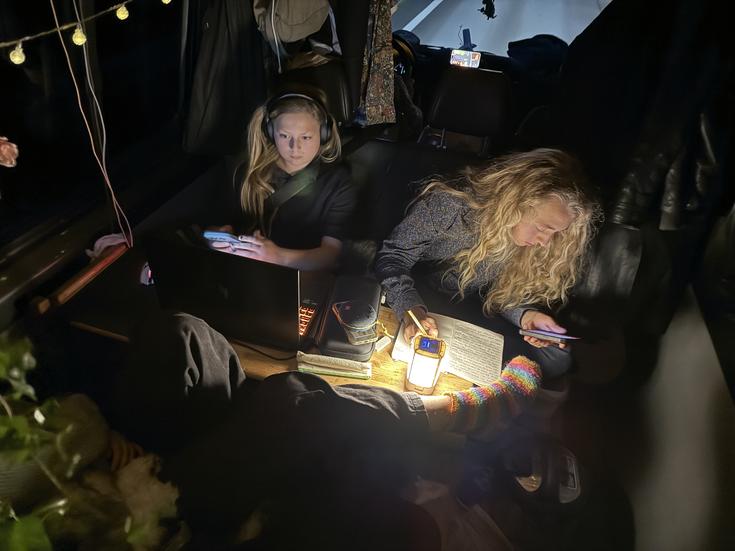

Comments